
Himachal Pradesh Imposes Widow and Orphan Cess on Petrol and Diesel
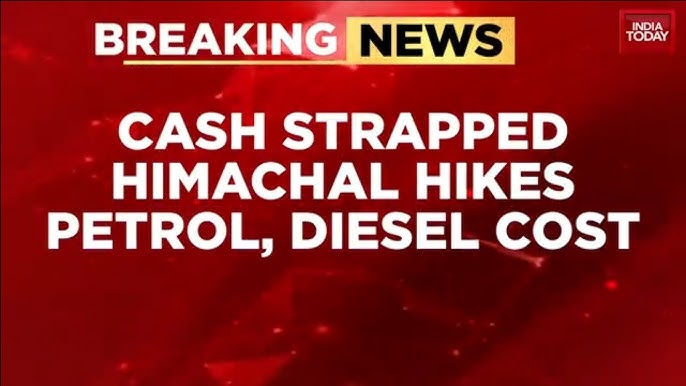
On August 11, 2026, Himachal Pradesh introduced a Widow and Orphan Cess on petrol and high-speed diesel under Section 6-A of the Himachal Pradesh Value Added Tax Act, 2005. The cess, enabled by the Himachal Pradesh Value Added Tax (Amendment) Bill, 2026, took effect from midnight of that day. It is collected at the first point of sale within the state at an initial rate of ₹0.60 per litre, with a statutory maximum ceiling of ₹5 per litre. Revenue generated is credited to a dedicated Orphan and Widow Welfare Fund to support welfare schemes targeting widows and orphans in the state. The levy applies to both petrol and high-speed diesel, and was introduced amid political debate, with Chief Minister Sukhvinder Singh Sukhu defending the measure, and BJP leader Jai Ram Thakur opposing it.
On this page
Key Facts
- Implemented on 11 August 2026, effective from midnight of the same day.
- Applies to petrol and high-speed diesel sold within Himachal Pradesh.
- Authorized under Section 6-A of the Himachal Pradesh Value Added Tax Act, 2005, amended via the Himachal Pradesh VAT (Amendment) Bill, 2026.
- Maximum cess allowed: ₹5 per litre; initial levy rate set at ₹0.60 per litre.
- Cess collected from oil dealers at first point of sale within the state.
- Revenue earmarked for a dedicated Orphan and Widow Welfare Fund for social welfare expenditure.
- Introduced by Chief Minister Sukhvinder Singh Sukhu; opposed by BJP leader Jai Ram Thakur.
Background & Context
To establish a dedicated and sustainable funding source for welfare of vulnerable groups—widows and orphans—Himachal Pradesh amended its Value Added Tax Act in early 2026. The amendment authorized imposition of a fuel cess with a ceiling of ₹5 per litre on petrol and high-speed diesel. The government stated the revenue will support schemes for economically disadvantaged widows and orphaned children, aiming to provide steady welfare financing. The proposal was introduced, debated, and passed during the 2026 budget session amid political contention from opposition parties concerned about increased fuel prices.
Why This Matters for Exams / Exam Relevance
This policy is significant for understanding state-level taxation mechanisms, amendments in VAT legislation, and targeted social welfare financing through fiscal measures. It illustrates how state governments can introduce specific levies (cess) to fund social programs. It is pertinent to current affairs and public policy components examining taxation, social welfare initiatives, and political debates surrounding economic burdens on consumers.
Points to Remember
- The cess is specifically named 'Widow and Orphan Cess'.
- Effective date: 12 August 2026 (notification dated 11 August 2026, midnight).
- Applicable fuels: petrol and high-speed diesel.
- Maximum permissible cess: ₹5 per litre under the amendment.
- Initial rate fixed at ₹0.60 per litre.
- Collected from dealers at the point of first sale within Himachal Pradesh.
- Revenue credited to the Orphan and Widow Welfare Fund aimed at social welfare spending.
- Bill introduced and defended by Chief Minister Sukhvinder Singh Sukhu.
- Opposition leader Jai Ram Thakur criticized the levy as burdensome to consumers.
Sources & Further Reading
| Document / Website | Link |
|---|---|
| Widow and Orphan Cess on Fuel begins in Himachal Pradesh | Open Widow and Orphan Cess on Fuel begins in Himachal Pradesh ↗www.gktoday.in |
| Himachal Pradesh Proposes Orphan and Widow Cess on Fuel | Open Himachal Pradesh Proposes Orphan and Widow Cess on Fuel ↗indianexpress.com |
| Himachal to levy ‘orphan and widow cess’ on petrol, high-speed diesel | Open Himachal to levy ‘orphan and widow cess’ on petrol, high-speed diesel ↗www.tribuneindia.com |