
Indian Railways Launches Eight New Freight Reforms Under 'Reform Express' Initiative
On 14 July 2026, Indian Railways announced eight new structural freight reforms as part of its ongoing 'Reform Express' initiative, raising the total number of implemented reforms to 17 out of a planned 52 within 52 weeks. These reforms focus on promoting containerisation of key commodities, introducing a unified licence for Container Train Operators, simplifying freight tariff structures, allowing private sector participation in wagon design, enhancing construction contracting norms, launching a land acquisition portal, and permitting oil companies to operate specialised tank wagons for petroleum products to modernise and streamline freight operations across India's vast rail network.
On this page
Key Facts
- Date of announcement: 14 July 2026
- Total freight reforms implemented to date: 17 out of 52 targeted
- Introduction of a unified licence system for Container Train Operators (CTOs) with a fixed registration fee of ₹25 crore
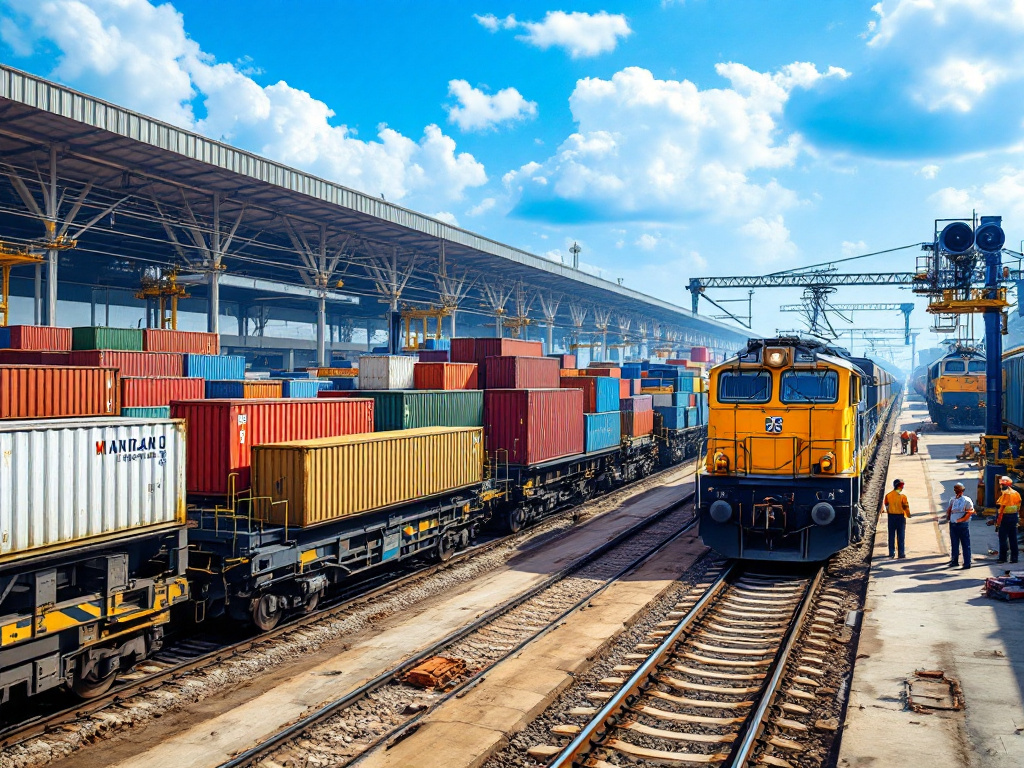
- Containerisation promoted for cargoes including fly ash (moved in closed containers replacing open wagons), fertilisers, foodgrains, flour, and pulses with allowance for individual container storage at rake points for demand-based distribution
- Simplification of freight tariff system from multi-slab slabs to a per-tonne-per-kilometre rate structure specifically for fertilisers and foodgrains
- Launch of Rail Bhoomi portal to facilitate streamlined land acquisition processes for railway projects
- Private industries and manufacturers can propose specialised wagon designs tailored to industrial requirements; such designs require approval and trials by the Research Designs and Standards Organisation (RDSO), the technical standards authority of Indian Railways
- Construction contracting norms updated to require 10% performance security deposit upfront and introduced higher eligibility criteria for bidders
- Petroleum oil companies permitted to procure or lease specialised tank wagons for petroleum products and operate them on Indian Railways network
Background & Context
Indian Railways operates one of the world's largest rail freight networks under a single management system, critical for moving bulk commodities like coal, fertilisers, foodgrains, cement, petroleum products, and industrial goods across India. Recognising challenges related to efficiency, cargo handling, tariff complexity, and private sector participation, Indian Railways launched the 'Reform Express' initiative with an ambitious plan to implement 52 freight reforms in 52 weeks starting in 2026.
Containerisation is a globally accepted freight transport system involving the movement of goods in standardised containers that facilitate easier loading, unloading, storage, and transfer while reducing transit time and damages. Indian Railways is actively promoting containerisation across various commodities, including replacing open wagons for fly ash transport with closed containers, enhancing the operational and safety standards.
The simplification of tariff structure by shifting fertilisers and foodgrains freight charges to a per-tonne-per-kilometre basis aims to provide transparency, ease of calculation and fairness while aligning with international practices. The Research Designs and Standards Organisation (RDSO) functions as the authoritative technical body responsible for standards, design, and testing related to rolling stock and infrastructure, ensuring quality and safety in wagon innovations.
In addition, the introduction of the Rail Bhoomi portal is intended to streamline the complex land acquisition procedures involved in railway expansions and projects, improving project timelines. The reforms also facilitate greater private sector involvement, both in specialised wagon designs and operations such as petroleum transport, aimed at improving competitiveness and innovation in railway freight services.
Why This Matters for Exams / Exam Relevance
The 2026 'Reform Express' freight reforms by Indian Railways are important current affairs topics for competitive exams in India, particularly relating to subjects such as infrastructure development, transport logistics, government initiatives, and economic reforms. Key specifics such as the date of announcement, number of reforms implemented, cost of the unified licence for CTOs, and functional changes like tariff simplification and containerisation are frequently tested themes. Understanding the roles of bodies like RDSO, new digital platforms like Rail Bhoomi, and the strategic push toward private sector collaboration in freight transport is critical for answering questions in current affairs, general studies, and economic development sections.
Points to Remember
- The 'Reform Express' initiative was launched to implement 52 freight reforms in 52 weeks starting in 2026.
- A unified licence system for Container Train Operators was introduced, replacing the earlier multi-category system, with a fixed registration fee of ₹25 crore.
- Containerisation is promoted across commodities, including fly ash in closed containers replacing open wagons, and allows demand-based individual container storage.
- Freight tariff for fertilisers and foodgrains simplified to a transparent per-tonne-per-kilometre charge from a complex multi-slab system.
- Private sector and manufacturers can now propose specialised industrial wagon designs subject to RDSO approval and trials.
- Performance security for construction contracts set at 10% upfront with enhanced bidder eligibility criteria.
- The Rail Bhoomi portal was launched to digitise and ease the land acquisition process for railway projects.
- Oil companies allowed to procure or lease and operate specialised tank wagons for petroleum products on Indian Railways.
Sources & Further Reading
| Document / Website | Link |
|---|---|
| Indian Railways launches Reform Express freight reforms | Open Indian Railways launches Reform Express freight reforms ↗www.gktoday.in |
| Indian Railways Freight Operations and Reforms | Open Indian Railways Freight Operations and Reforms ↗indianrailways.gov.in |
| Research Designs and Standards Organisation - Indian Railways | Open Research Designs and Standards Organisation - Indian Railways ↗rdso.indianrailways.gov.in |