
Union Govt Releases ₹1.09 Lakh Crore as Additional Tax Devolution to States
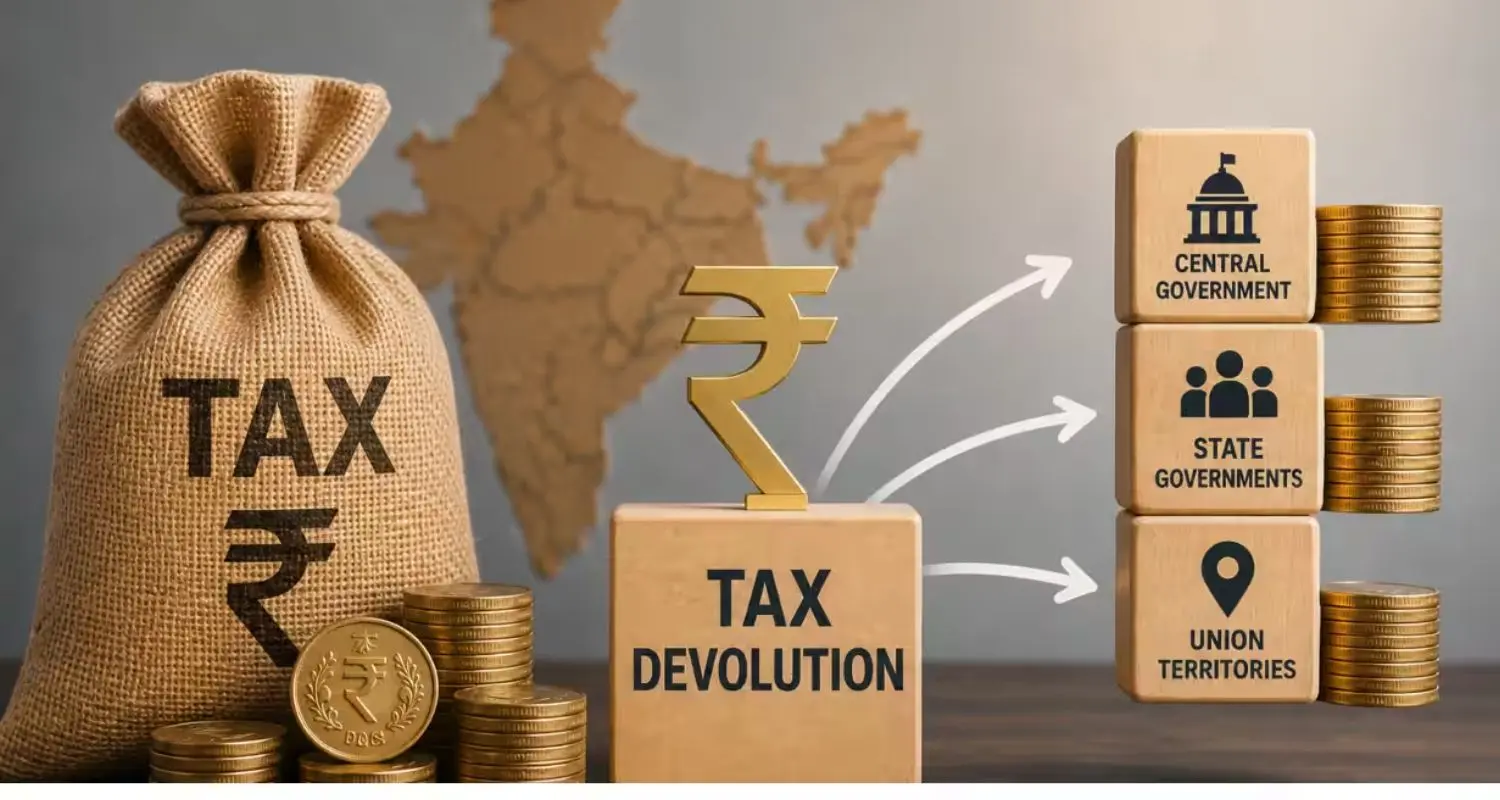
On 1 August 2026, the Indian Union government transferred an additional ₹1,09,019 crore to state governments as part of tax devolution, ahead of the regular installment due on 10 August. This early release aims to support state finances and development expenditure. Tax devolution, based on Finance Commission recommendations, mandates states receive 41% of the Union government's net tax proceeds. Major beneficiaries include Uttar Pradesh (₹19,208 crore), Bihar (₹10,845 crore), and Madhya Pradesh (₹8,010 crore). The move follows robust GST collections exceeding ₹2.11 lakh crore in July 2026 and underscores the constitutional mechanism of fiscal federalism in India.
On this page
Key Facts
- On 1 August 2026, the Union government released an additional ₹1,09,019 crore to state governments as tax devolution.
- This transfer was made prior to the regular monthly tax devolution installment scheduled for 10 August 2026.
- Under the current Finance Commission formula, states receive 41% of the Union government's net tax proceeds.
- The largest shares in this additional installment went to Uttar Pradesh (₹19,208 crore), Bihar (₹10,845 crore), Madhya Pradesh (₹8,010 crore), West Bengal (₹7,866 crore), Maharashtra (₹7,022 crore), and Rajasthan (₹6,460 crore).
- Goods and Services Tax (GST) collections in July 2026 exceeded ₹2.11 lakh crore.
- GST was implemented in India on 1 July 2017.
Background & Context
Tax devolution refers to the transfer of a share of the Union government’s net tax proceeds to state governments, based on recommendations of the Finance Commission. This constitutional framework promotes fiscal federalism in India by enabling states to meet their financial requirements for capital and developmental expenditure. The formula currently mandates states be allocated 41% of the net tax proceeds collected by the Union government.
The early additional release of ₹1,09,019 crore in August 2026 was linked to ensuring liquidity for state governments to better manage their finances and developmental projects. This financial support came in the context of strong GST collections that crossed ₹2.11 lakh crore in July 2026, which is one of the cornerstones of India's indirect tax system introduced on 1 July 2017.
Why This Matters for Exams / Exam Relevance
Understanding tax devolution and the role of the Finance Commission is critical for topics related to Indian fiscal federalism, Centre-State financial relations, and constitutional provisions concerning finance. Key data points such as the 41% devolution share, early disbursal dates, and the linkage with GST collections provide relevant current affairs content commonly asked in economics, polity, and general studies exams. The event exemplifies real-world application of fiscal policies impacting state finances.
Points to Remember
- Tax devolution is a constitutional mechanism under the Finance Commission framework for sharing central taxes with states.
- States currently receive 41% of the Union government’s net tax proceeds.
- The Finance Commission recommends the tax sharing ratio and formula periodically.
- GST, introduced on 1 July 2017, is a major indirect tax system influencing India's fiscal architecture.
- The Union government released an additional ₹1,09,019 crore on 1 August 2026 to support states ahead of the regular installment.
- Uttar Pradesh received the largest share in the additional devolution amount.
- Tax devolution differs from grants-in-aid, which are conditional fiscal transfers from the Union to states.
Sources & Further Reading
| Document / Website | Link |
|---|---|
| Centre releases ₹1.09 lakh crore tax devolution | Open Centre releases ₹1.09 lakh crore tax devolution ↗www.gktoday.in |
| Finance Commission of India - Functions and Role | Open Finance Commission of India - Functions and Role ↗fincomindia.nic.in |
| Goods and Services Tax in India | Open Goods and Services Tax in India ↗www.gst.gov.in |