
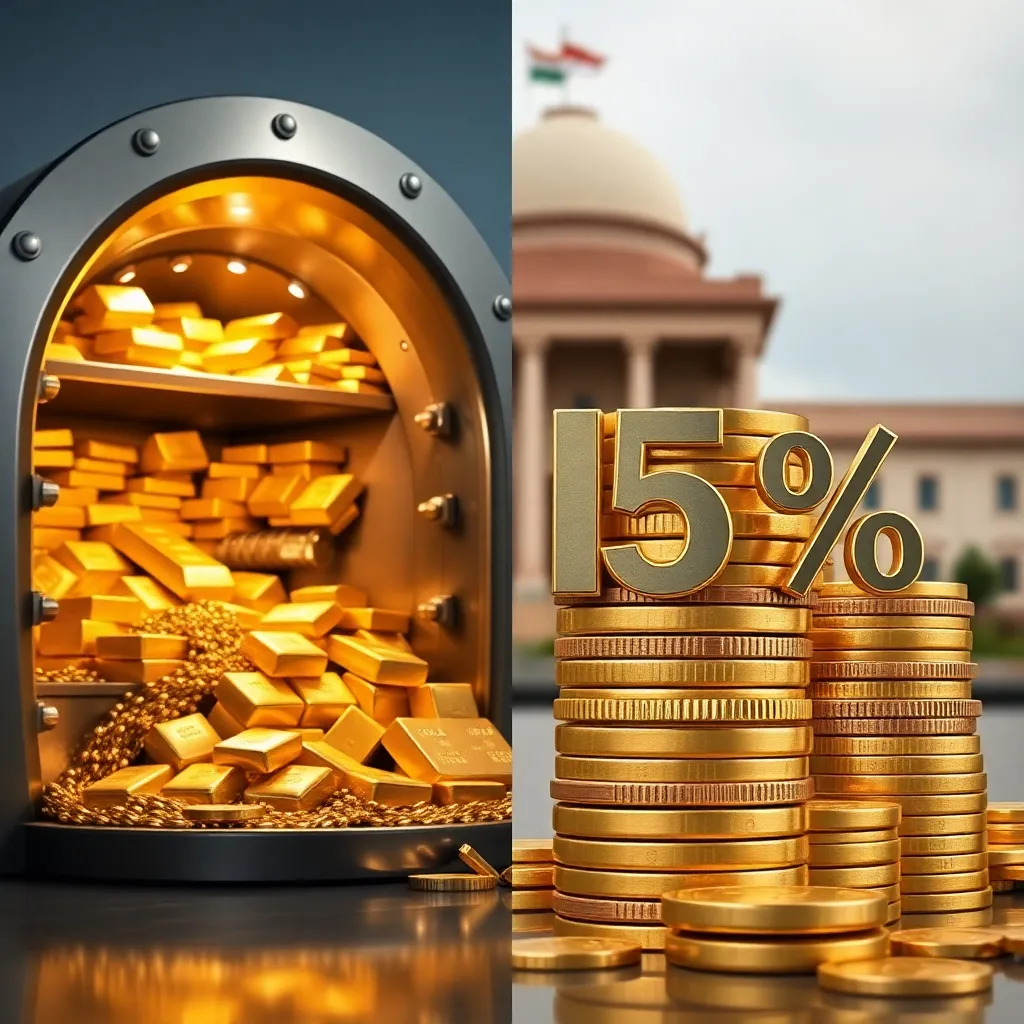
India Raises Gold and Silver Import Tariffs to 15% in May 2026
On May 13, 2026, India increased the effective import duty on gold and silver from 6% to 15%. This duty consists of a 10% Basic Customs Duty and a 5% Agriculture Infrastructure and Development Cess (AIDC). The increase aims to curb excessive imports, reduce pressure on foreign exchange reserves, and support the Indian rupee amid global economic challenges. In the 2025-26 financial year, gold imports surged 24% to a record $71.98 billion, making gold the second-largest import item after crude oil. The tariff hike also applies to gold imports from the United Arab Emirates under the fixed-quantity quota system and covers jewellery findings and industrial precious metal imports. This policy move is significant for managing India's trade deficit and foreign exchange reserves.
On this page
Key Facts
- Effective May 13, 2026, India raised import tariffs on gold and silver from 6% to 15%.
- The revised 15% duty comprises a 10% Basic Customs Duty (BCD) plus a 5% Agriculture Infrastructure and Development Cess (AIDC).
- Gold imports in 2025-26 increased by over 24%, reaching $71.98 billion, becoming the second-largest import after crude oil.
- The higher tariffs apply to all gold and silver imports, including those from the UAE under quota allocations.
- The tariff hike also covers gold jewellery findings and precious metal-related industrial imports.
- Increased import duties aim to manage the current account deficit, stabilize the rupee, and conserve foreign exchange reserves.
Background & Context
India is heavily reliant on imports to meet domestic demand for gold and silver, which are significant components of its import bill. The surge in gold imports in 2025-26 contributed notably to the current account deficit and exerted pressure on the Indian rupee and foreign exchange reserves. The government raised import tariffs not only to moderate demand but also to encourage recycling and domestic use of precious metals. The Agriculture Infrastructure and Development Cess forms part of efforts to finance agricultural infrastructure and development. Additionally, gold smuggling has been a concern, especially following sharp import duty hikes.
Why This Matters for Exams / Exam Relevance
This development is important for competitive exams in economics, current affairs, and trade policy sections. Candidates should be aware of the date of duty revision, duty components, the rationale behind tariff changes, impact on imports and the trade deficit, and government measures to protect forex reserves. Understanding import tariff structures on precious metals and their economic implications helps in topics related to India's foreign trade and macroeconomic management.
Points to Remember
- Date of tariff increase: May 13, 2026
- New effective import duty on gold and silver: 15% (10% BCD + 5% AIDC)
- Gold imports in 2025-26: $71.98 billion, up 24% from prior year
- Gold became India’s second-largest import item after crude oil
- Higher tariffs apply also to gold imports under the UAE quota system
- Measures aim to reduce import dependency, limit forex outflow, and stabilize the rupee
- Related concerns include the rise of smuggling and encouragement of precious metal recycling
Sources & Further Reading
| Document / Website | Link |
|---|---|
| India raises gold and silver tariffs to 15% to curb imports, support rupee - Reuters | Open India raises gold and silver tariffs to 15% to curb imports, support rupee - Reuters ↗www.reuters.com |
| Gold price impact due to import duty changes - Economic Times | Open Gold price impact due to import duty changes - Economic Times ↗economictimes.indiatimes.com |