
Lok Sabha passes Taxation and Other Laws (Amendment) Bill, 2026
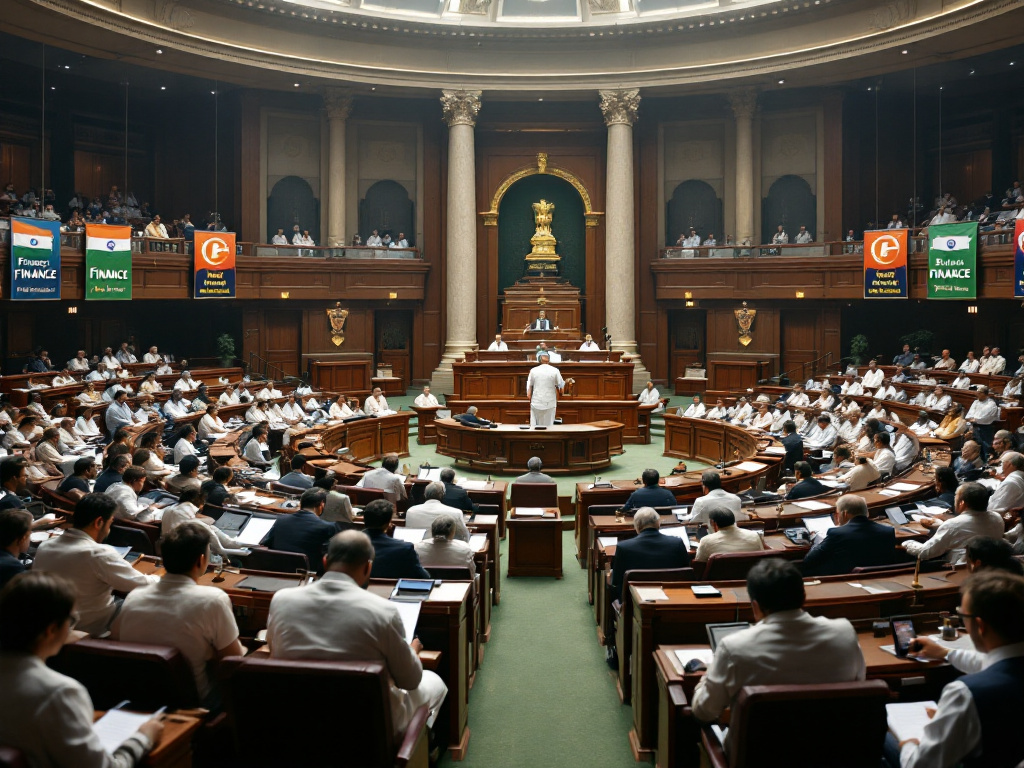
On 6 August 2026, the Lok Sabha passed the Taxation and Other Laws (Amendment) Bill, 2026, introduced by Finance Minister Nirmala Sitharaman. The Bill amends the Payment and Settlement Systems Act, 2007, the Income-tax Act, 2025, and the Finance Act, 2026. It extends income tax exemptions until 2040-41 for foreign companies that engage contract manufacturers in India for electronics goods and those storing components in customs warehouses for supply to Indian manufacturers. The Bill also provides legal backing for the Central government to modify the zero Merchant Discount Rate (MDR) framework relating to UPI and RuPay card transactions and allows the government to decide which electronic payment modes remain free. Furthermore, it exempts Foreign Institutional Investors and the Bank for International Settlements from income tax on interest and capital gains from investments in government securities effective from 1 April 2026.
On this page
Key Facts
- Date of Passage: 6 August 2026
- Introduced by: Finance Minister Nirmala Sitharaman
- Acts Amended: Payment and Settlement Systems Act, 2007; Income-tax Act, 2025; Finance Act, 2026
- Extends income tax exemptions until 2040-41 for foreign companies with contract manufacturing in electronics goods in India and those storing components in customs warehouses for supply to Indian manufacturers
- Gives legal backing to the Central government to modify the zero Merchant Discount Rate (MDR) framework for UPI and RuPay card transactions
- Allows the government to decide which electronic payment modes remain free
- Exempts Foreign Institutional Investors and the Bank for International Settlements from income tax on interest and capital gains from investments in government securities effective from 1 April 2026
Background & Context
The Taxation and Other Laws (Amendment) Bill, 2026, replaces the Income-tax (Amendment) Ordinance, 2026, which was promulgated on 5 June 2026. The Payment and Settlement Systems Act, 2007 regulates payment systems in India, including electronic fund transfer systems like Unified Payments Interface (UPI) and card-based payment systems like RuPay, an Indian domestic card network. The Merchant Discount Rate (MDR) is a fee that merchants pay to banks for processing digital payment transactions. This Bill provides the legal framework allowing the government to regulate the MDR structure, ensuring some electronic payment modes can remain free for consumers and merchants. The exemption for Foreign Institutional Investors and the Bank for International Settlements (BIS) on investment income from government securities supports foreign investment inflows and recognizes the BIS as an international financial institution based in Basel, Switzerland that facilitates cooperation among central banks.
Why This Matters for Exams / Exam Relevance
This Bill is significant for understanding government policy on taxation, foreign investment incentives, and digital payments regulation. It reflects legislative procedures in the Lok Sabha, especially concerning money bills under Article 110 of the Constitution of India, and amendments to fiscal laws that are frequently tested in competitive examinations. Understanding the role and amendments of the Payment and Settlement Systems Act, 2007, the concept of Merchant Discount Rate (MDR), UPI, RuPay, and exemptions granted to foreign investors and international institutions is essential for exam candidates in subjects like Indian Polity, Economy, and Current Affairs.
Points to Remember
- The Bill was passed in the Lok Sabha on 6 August 2026 without any debate.
- It extends the continuation of income tax exemption till 2040-41 for foreign companies engaged in contract manufacturing of electronic goods in India and maintaining customs warehousing of components for Indian manufacturers.
- Legal backing is given to the Central government for modifying the zero-MDR regime applicable to UPI and RuPay transactions, including deciding which digital payment modes will remain free to merchants and consumers.
- Foreign Institutional Investors and the Bank for International Settlements are exempted from income tax on interest and capital gains arising from investments in government securities, effective from 1 April 2026.
- The Payment and Settlement Systems Act, 2007 is a key legislation regulating various electronic payment systems in India.
Sources & Further Reading
| Document / Website | Link |
|---|---|
| Lok Sabha passes Taxation and Other Laws (Amendment) Bill, 2026 - GKToday | Open Lok Sabha passes Taxation and Other Laws (Amendment) Bill, 2026 - GKToday ↗www.gktoday.in |
| Payment and Settlement Systems Act, 2007 - India Code | Open Payment and Settlement Systems Act, 2007 - India Code ↗www.indiacode.nic.in |
| Unified Payments Interface (UPI) - NPCI | Open Unified Payments Interface (UPI) - NPCI ↗www.npci.org.in |
| Bank for International Settlements - Official Website | Open Bank for International Settlements - Official Website ↗www.bis.org |