
Tamil Nadu Assembly Resolution Seeking Freeze on Lok Sabha Strength at 543 Seats
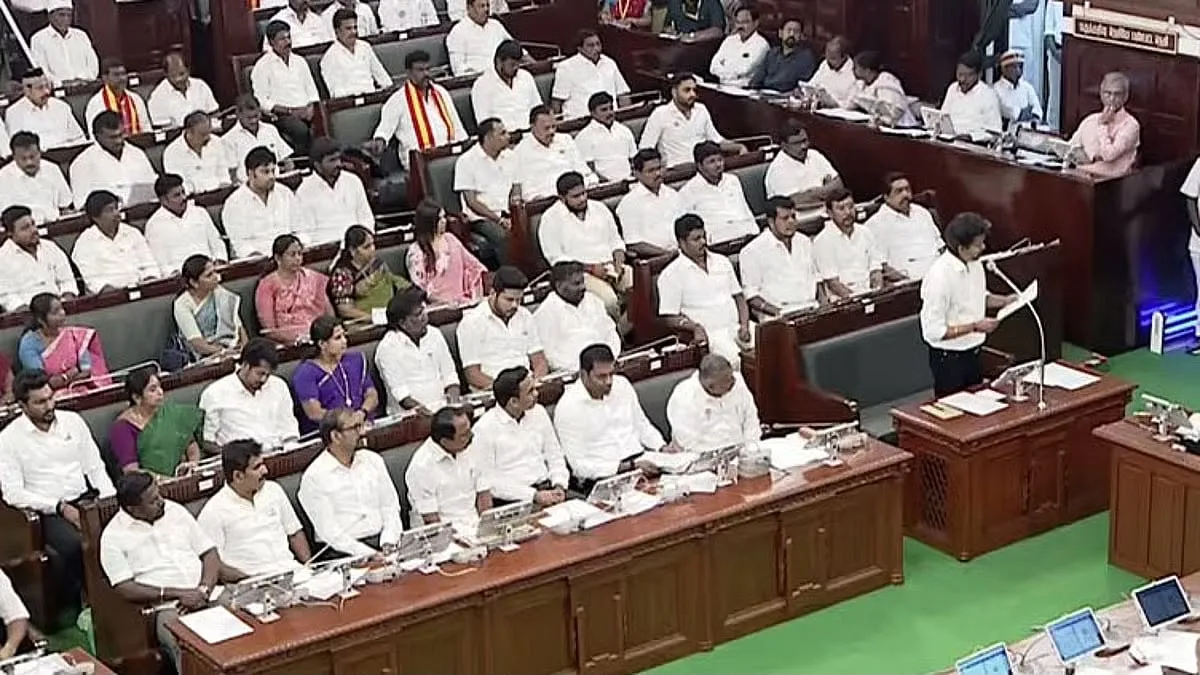
On 12 August 2026, Tamil Nadu moved a government-sponsored resolution in its State Legislative Assembly in Chennai seeking a permanent freeze on the Lok Sabha’s strength at 543 seats. The resolution urged the Union government to retain the existing proportional representation of seats and avoid reducing parliamentary weightage for states with successful population control measures. It called for immediate implementation of 33% reservation for women in the 2029 Lok Sabha elections based on the current 543 seats. It emphasized maintaining the Lok Sabha to Rajya Sabha representation ratio at 2.2:1 and linked delimitation to proportional representation to safeguard states with controlled population growth.
On this page
Key Facts
- The resolution was moved on 12 August 2026 in Tamil Nadu State Legislative Assembly in Chennai.
- It seeks a permanent freeze on Lok Sabha strength at 543 elected members, the number since the 1977 delimitation based on the 1971 Census.
- The resolution requests the Union government to maintain existing proportional representation of seats, ensuring states implementing population control are not penalized by reduced parliamentary representation.
- It demands immediate implementation of 33% reservation for women in the Lok Sabha elections starting 2029, with quotas calculated based on the existing 543 constituencies.
- The resolution asserts that the current Lok Sabha to Rajya Sabha ratio of approximately 2.2:1 should be maintained.
Background & Context
The Lok Sabha is the directly elected lower house of the Parliament of India, composed of up to 543 elected members, a figure that has remained unchanged since the 1977 delimitation exercise based on the 1971 Census. Delimitation involves redrawing territorial constituencies according to population data. India's Constitution (Article 81) guides the composition of the Lok Sabha. The number of seats was frozen to encourage states to implement family welfare and population stabilization programs without fear of losing parliamentary representation.
The resolution comes in the context of the Union government’s announcement to conduct the Census in 2027, which will be followed by fresh delimitation. Tamil Nadu and other southern states have expressed concerns about losing parliamentary representation due to population stabilization, hence the demand to continue the freeze at 543 seats and to respect proportional representation principles that factor in successful population control.
The demand also integrates women’s representation aspiration by pressing for 33% reservation in Lok Sabha and State Assembly elections, calculated on the basis of the current seat strength, rather than increased numbers.
Why This Matters for Exams / Exam Relevance
This issue is pivotal in understanding the complexities of Indian parliamentary representation, constitutional provisions regarding delimitation, and population control policies impacting federal political balance. Topics linked include Article 81 of the Constitution, delimitation commissions, population control and representation, women’s reservation legislations, and Centre-State relations. Questions may focus on the implications of delimitation, reservation policies in legislatures, and the political dynamics arising from quota and seat allocation changes.
Points to Remember
- Lok Sabha’s current strength is fixed at 543 elected members since 1977, with delimitation frozen to the 1971 Census population data.
- Tamil Nadu Assembly’s 2026 resolution seeks this freeze to be continued permanently to avoid penalizing states that have controlled population growth.
- The resolution calls for implementing 33% women’s reservation from the 2029 elections onwards, calculated on the current strength of 543 constituencies.
- Delimitation should respect proportional representation, ensuring equitable representation without penalizing population control achievements.
- The ratio of Lok Sabha to Rajya Sabha members should be maintained at about 2.2:1 as per the resolution.
- Delimitation based solely on population may alter federal balance, affecting states’ parliamentary influence.
Sources & Further Reading
| Document / Website | Link |
|---|---|
| Tamil Nadu moves resolution seeking freeze on Lok Sabha strength at 543 | Open Tamil Nadu moves resolution seeking freeze on Lok Sabha strength at 543 ↗www.gktoday.in |
| Census-2027 reignites delimitation row: ‘BJP plans to reduce Tamil Nadu’s Lok Sabha seats,’ alleges MK Stalin | Open Census-2027 reignites delimitation row: ‘BJP plans to reduce Tamil Nadu’s Lok Sabha seats,’ alleges MK Stalin ↗www.livemint.com |
| Delimitation: Tamil Nadu Assembly adopts Govt’s resolution to freeze Lok Sabha seats at 543 | Open Delimitation: Tamil Nadu Assembly adopts Govt’s resolution to freeze Lok Sabha seats at 543 ↗www.thehindu.com |