
US House Amendment Names India for Possible 100% Tariffs on Russian Oil Trade
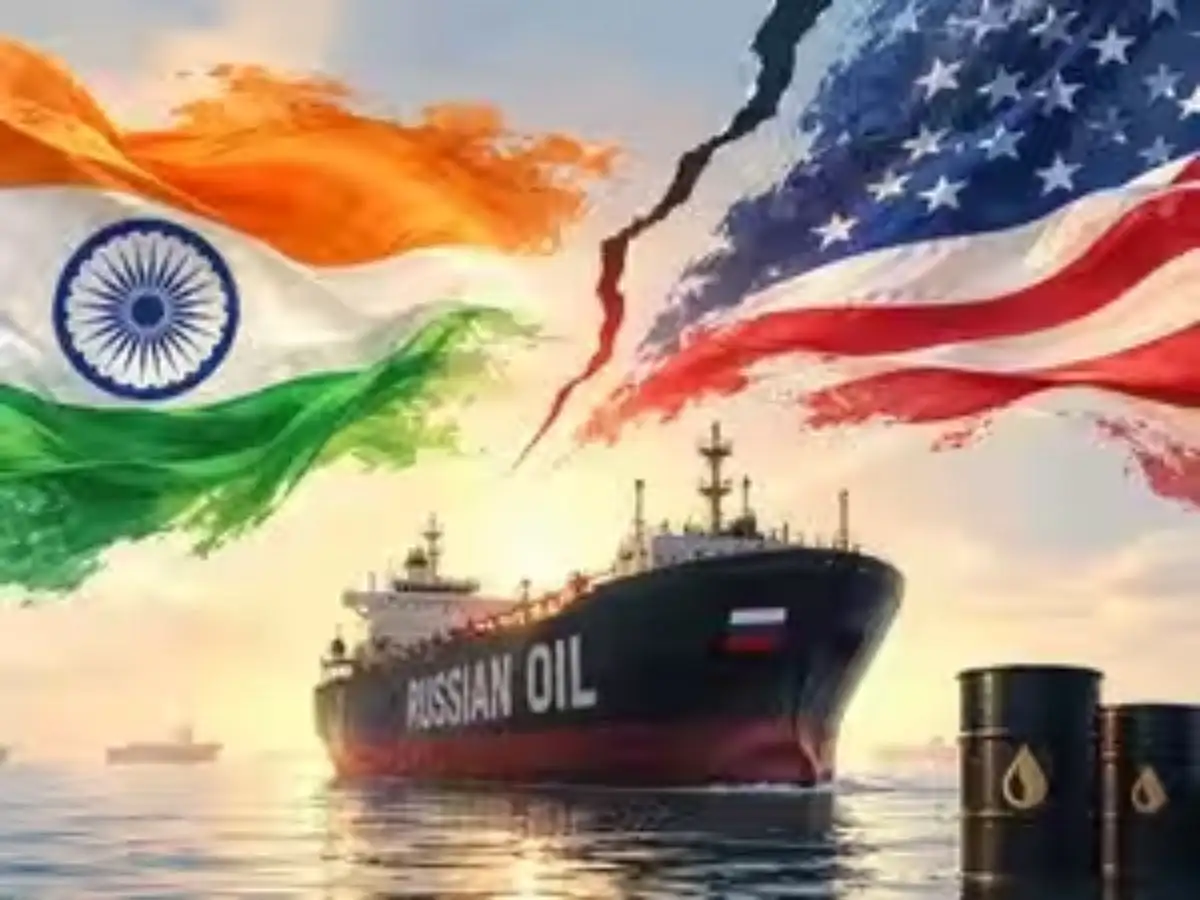
The United States House of Representatives is considering amendments to the Lindsey O. Graham Sanctioning Russia and Iran Act, aimed at imposing economic penalties on countries trading Russian oil. One key amendment by Democratic Congressman Steny Hoyer explicitly names India among several countries eligible for 100% duties on Russian oil imports. This move reflects US efforts to curb Russia's revenue funding its war against Ukraine by targeting its major trading partners. Another amendment proposes to remove the tariff provision altogether, highlighting divisions within the US Congress on the extent of sanctions. The bill has strong Senate support but must pass the House amidst deadlines related to the 2026 US midterm elections.
On this page
Key Facts
- The Lindsey O. Graham Sanctioning Russia and Iran Act is a US legislative proposal that authorizes sanctions against Russia and Iran, including secondary sanctions on countries trading Russian oil.
- An amendment introduced by Democratic Congressman Steny Hoyer explicitly named India, along with China, Turkey, Azerbaijan, Hungary, the Slovak Republic, United Arab Emirates, Singapore, Kazakhstan, and the Kyrgyz Republic, as subject to potential 100% duties on trade in Russian oil.
- The original Senate version of the bill passed on August 7, 2026, by a vote of 86-11 without naming specific countries, instead referring to the largest importers of Russian hydrocarbons by volume.
- Congressman Gregory Meeks has moved an amendment to delete the section granting the President broad authority to impose secondary tariffs on Russia's trading partners.
- The bill aims to reduce Russian revenues from crude oil sales that help finance Russia's war in Ukraine.
Background & Context
Russia is a major global exporter of crude oil and natural gas, with energy revenues playing a critical role in its economic and military capacity. To constrict Russia's ability to fund its military operations in Ukraine, several legislative and executive actions have sought to impose sanctions and trade restrictions. The Lindsey O. Graham Sanctioning Russia and Iran Act of 2026 is one such legislative measure, which empowers the US President to impose sanctions, including on third countries trading with Russia. While the Senate passed a version of the bill in August 2026, the House of Representatives is debating amendments, including those that specify which countries would face secondary sanctions such as 100% tariffs on imports linked to Russian oil. India is a significant importer of Russian crude oil, making the inclusion of India in such sanctions highly consequential for its foreign and trade relations.
Why This Matters for Exams
This legislative process is pivotal for understanding ongoing international diplomacy and economic sanctions amid the Russia-Ukraine conflict. It highlights the mechanics of US foreign policy tools like secondary sanctions and tariffs, the legislative roles of the US Senate and House, and their implications for global energy trade. Competitive exams focusing on international relations, global trade dynamics, and current affairs may include questions related to the US sanctions regime against Russia, India's involvement, and US legislative procedures.
Points to Remember
- The Lindsey O. Graham Sanctioning Russia and Iran Act authorizes sanctions targeting Russia's economic activities, especially oil exports.
- An amendment in the US House names India and other countries for potential 100% tariffs on trade involving Russian oil.
- Secondary sanctions penalize third-party nations that trade with a sanctioned country, effectively pressuring them to reduce such engagement.
- The original Senate bill passed overwhelmingly but did not specify countries by name.
- Opposition exists in Congress, including amendments proposing to limit presidential powers to impose tariffs under this bill.
- The House had limited time before the November 2026 midterms to pass the bill for it to become law.
Practice MCQs
Question 1
- Which US legislative act proposes sanctions on Russia and Iran, including secondary tariffs on third-country traders?
- Lindsey O. Graham Sanctioning Russia and Iran Act
- Foreign Corrupt Practices Act
- Patriot Act
- Magnitsky Act
Answer: Lindsey O. Graham Sanctioning Russia and Iran Act
Question 2
- Which country is explicitly named in the US House amendment as eligible for possible 100% tariffs on Russian oil imports?
- India
- Brazil
- Australia
- South Africa
Answer: India
Question 3
- What was the Senate vote count when the Lindsey O. Graham Sanctioning Russia and Iran Act passed in August 2026?
- 86-11
- 50-50
- 70-20
- 90-5
Answer: 86-11
Sources & Further Reading
| Document / Website | Link |
|---|---|
| US Lawmaker Moves India Amendment in Russia Sanctions Bill – GKToday | Open US Lawmaker Moves India Amendment in Russia Sanctions Bill – GKToday ↗www.gktoday.in |
| Text - S.5025 - 119th Congress (2025-2026): Lindsey O. Graham Sanctioning Russia Act of 2026 | Congress.gov | Library of Congress | Open Text - S.5025 - 119th Congress (2025-2026): Lindsey O. Graham Sanctioning Russia Act of 2026 | Congress.gov | Library of Congress ↗www.congress.gov |
| Treasury Intensifies Sanctions Against Russia by Targeting Russia’s Oil Production and Exports | U.S. Department of the Treasury | Open Treasury Intensifies Sanctions Against Russia by Targeting Russia’s Oil Production and Exports | U.S. Department of the Treasury ↗home.treasury.gov |
| US lawmaker submits amendment naming India in Russia sanctions act - The Economic Times | Open US lawmaker submits amendment naming India in Russia sanctions act - The Economic Times ↗economictimes.indiatimes.com |