
India Fast-Tracks ₹40,000 Crore Deep-Sea Natural Gas Pipeline Project from Oman to Gujarat
India is accelerating the construction of a subsea natural gas pipeline connecting Ras Al Jifan in Oman to Porbandar in Gujarat, spanning approximately 1,600 to 2,000 km under the Arabian Sea. Designed to transport 31 million metric standard cubic meters per day (mmscmd) of natural gas, this ₹40,000-43,000 crore ($4.7-6 billion) project aims to secure stable and cost-effective gas supply by bypassing maritime chokepoints like the Strait of Hormuz. It involves complex engineering challenges due to operating at depths of up to 3,450 meters and traversing geologically sensitive zones such as the Owen Fracture Zone and Indus Fan. Key Indian state-run firms like GAIL, Indian Oil Corporation, and Engineers India Ltd are preparing feasibility reports, evidencing India's push to meet growing domestic gas demand projected to reach 290-300 mmscmd by 2030.
On this page
Key Facts
- The subsea gas pipeline will connect Ras Al Jifan in Oman to Porbandar in Gujarat, over a route length of approximately 1,600 to 2,000 kilometers beneath the Arabian Sea.
- Designed capacity is 31 million metric standard cubic meters per day (mmscmd) of natural gas transport.
- Estimated capital expenditure is between ₹40,000 crore to ₹43,000 crore (approx. $4.7-6 billion).
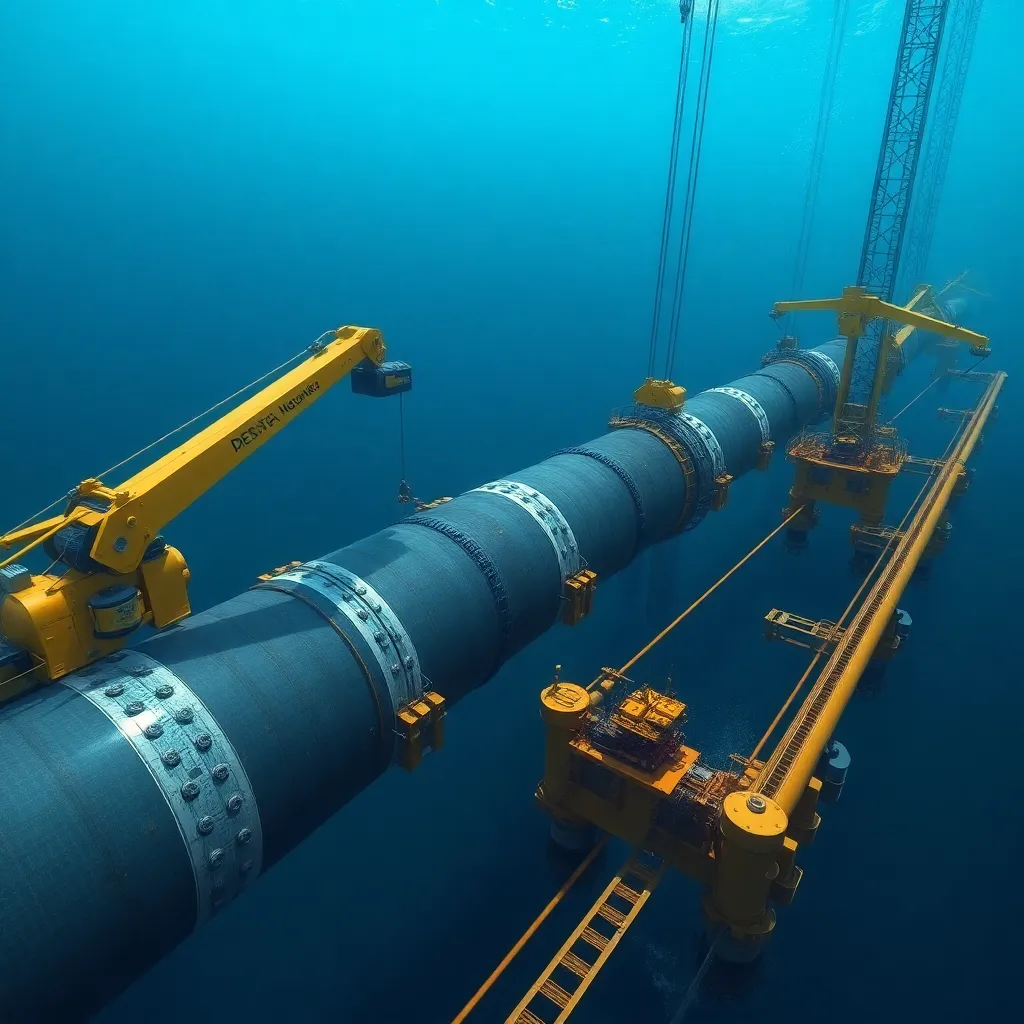
- The pipeline will be laid at depths up to 3,450 meters below sea level, passing through complex seabed features such as the Owen Fracture Zone (a submarine tectonic boundary) and the Indus Fan sediment system.
- Indian Public Sector Undertakings (PSUs) including GAIL (India) Ltd, Indian Oil Corporation, and Engineers India Ltd are mandated to prepare a Detailed Feasibility Report (DFR) for the project.
- A feasibility pre-study and partial physical test laying of about 3,000 meters of pipeline at high pressure have been conducted by the South Asia Gas Enterprise (SAGE), to assess seabed conditions and steel pipe-laying methods.
- India's current domestic natural gas consumption is around 190 to 195 mmscmd, with projected demand expected to rise to approximately 290 to 300 mmscmd by 2030.
- The project is strategically designed to reduce India’s dependence on volatile Liquefied Natural Gas (LNG) spot markets and bypass geopolitical vulnerabilities at maritime chokepoints such as the Strait of Hormuz.
- The pipeline also positions India to access natural gas not only from Oman but from regional suppliers including the United Arab Emirates, Saudi Arabia, Qatar, Iran, and Turkmenistan, unlocking access to a region estimated to possess approximately 2,500 trillion cubic feet of gas reserves.
- Construction timeline is expected to span five to seven years post feasibility and government approvals.
Background & Context
India's energy security has been challenged by disruptions and price volatility in LNG markets, as well as supply risks linked to geopolitical tensions in critical maritime chokepoints like the Strait of Hormuz. Previous pipeline projects intended to connect India to gas reserves in the region, such as the Iran-Pakistan-India (IPI) and Turkmenistan-Afghanistan-Pakistan-India (TAPI) pipelines, faced delays or cancellation due to political and security concerns. The subsea pipeline from Oman represents a technologically ambitious initiative, leveraging advances in deep-sea engineering and pipe-laying capable of operating at depths exceeding 3,400 meters, which was previously not feasible. This pipeline aligns with India's strategic goal to increase the share of natural gas in its primary energy mix, enhance energy diversification, and strengthen bilateral energy ties with Gulf countries under frameworks such as the Make in India initiative and more robust energy diplomacy. The inclusion of adjoining regional suppliers offers potential to link future gas supplies through India to meet growing domestic and industrial demand.
Why This Matters for Exams / Exam Relevance
This pipeline project is a critical case study reflecting India's energy security strategy, infrastructure development, and international diplomacy. The scale and complexity highlight contemporary challenges in energy transportation, geopolitical risk mitigation, and resource diversification. Key details like route specifics, capacity, cost, and involved PSUs are significant for understanding the nation's approach to energy resource management. The connection with regional geopolitics, especially concerning the Strait of Hormuz and Gulf gas reserves, provides important context for international relations and strategic studies sections in competitive exams. Awareness of India's projected gas demand growth and infrastructure initiatives is frequently tested in exams focused on economic development and energy sectors.
Points to Remember
- Route: Ras Al Jifan, Oman to Porbandar, Gujarat over 1,600-2,000 km under Arabian Sea.
- Pipeline Depth: Up to ~3,450 meters below sea level – one of the deepest subsea pipelines globally.
- Transport Capacity: Designed for 31 mmscmd of natural gas.
- Estimated Cost: ₹40,000-43,000 crore (approx. $4.7-6 billion).
- Involved Entities: GAIL (India) Ltd, Indian Oil Corporation, Engineers India Ltd, South Asia Gas Enterprise (SAGE).
- Strategic Purpose: To ensure stable, cost-competitive gas supply while avoiding reliance on LNG spot markets and vulnerabilities posed by maritime chokepoints like the Strait of Hormuz.
- Projected Timeline: 5-7 years after completing detailed feasibility and securing approvals.
- India's Current Gas Consumption: Around 190-195 mmscmd; Expected Demand by 2030: 290-300 mmscmd.
- Regional Gas Sources: Oman, UAE, Saudi Arabia, Qatar, Iran, Turkmenistan.
Sources & Further Reading
| Document / Website | Link |
|---|---|
| India fast-tracks Oman-Gujarat subsea gas pipeline | Open India fast-tracks Oman-Gujarat subsea gas pipeline ↗www.gktoday.in |
| India working on subsea gas pipeline project: Oman route plan to help mitigate risks brought to fore by Hormuz Strait block - The Economic Times | Open India working on subsea gas pipeline project: Oman route plan to help mitigate risks brought to fore by Hormuz Strait block - The Economic Times ↗economictimes.indiatimes.com |
| What is India’s Rs 40,000 Crore Oman-India Deep-Sea Gas Pipeline Plan to Mitigate Strait of Hormuz Risks? | Open What is India’s Rs 40,000 Crore Oman-India Deep-Sea Gas Pipeline Plan to Mitigate Strait of Hormuz Risks? ↗sundayguardianlive.com |