
India-US Interim Trade Agreement and Bilateral Trade Talks in 2026
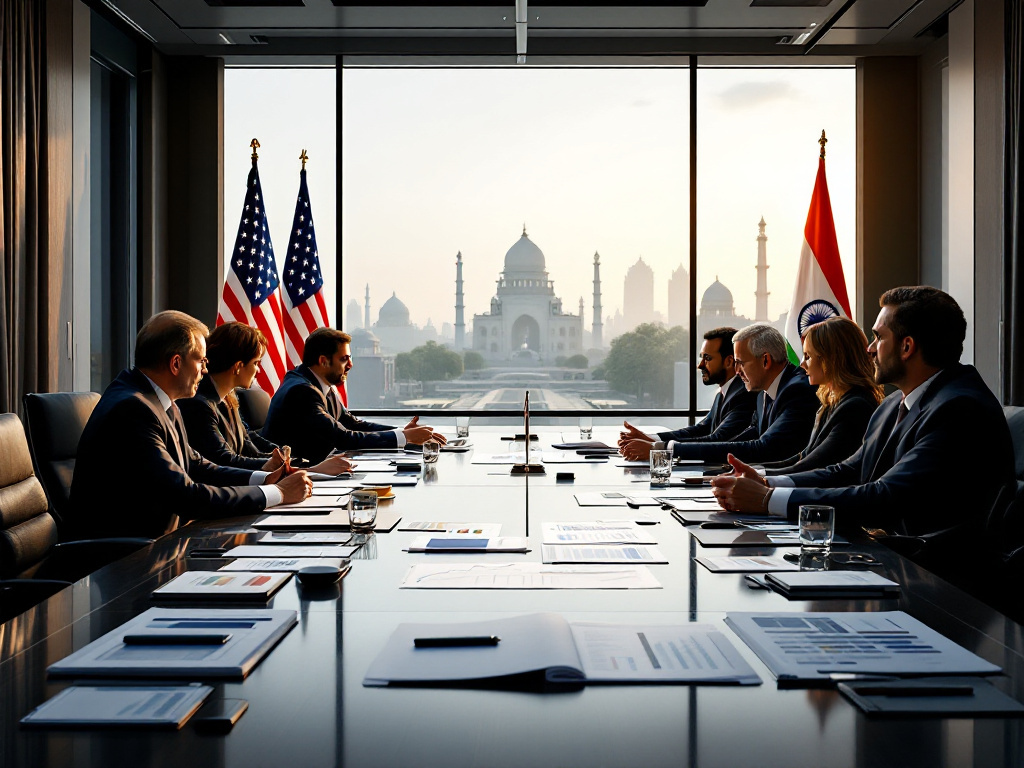
In June 2026, India and the United States engaged in critical discussions aimed at advancing an interim trade agreement and the broader Bilateral Trade Agreement (BTA) initiated in February 2025. The interim agreement serves as a temporary framework facilitating tariff concessions and market access ahead of a comprehensive trade pact. The talks encompassed issues such as tariff structures, non-tariff barriers, digital trade, and supply chain resilience. The United States Trade Representative Jamieson Greer led U.S. negotiations in New Delhi from 22 to 24 June 2026. While significant progress was reported, no final deadline for concluding the interim deal or the full BTA was announced. The trade engagement supports the strategic Mission 500 goal to elevate bilateral trade to $500 billion by 2030.
On this page
Key Facts
- The India-US Bilateral Trade Agreement (BTA) negotiations were launched in February 2025 during a meeting between Indian Prime Minister Narendra Modi and US President Donald Trump.
- U.S. Trade Representative Jamieson Greer visited New Delhi from June 22 to 24, 2026, to conduct high-level trade discussions with Indian officials.
- The interim trade agreement discussed is a temporary arrangement intended to reduce tariffs and expand market access until the full BTA is finalized.
- The United States had implemented a temporary 10% tariff on imports, including from India, set to expire on July 24, 2026.
- The Mission 500 initiative aims to increase bilateral trade between India and the US to $500 billion by 2030, nearly doubling the estimated $200 billion trade volume in 2024.
Background & Context
The India-US BTA negotiations address longstanding trade barriers, including India's average applied tariff of about 17%, considerably higher than the US average of roughly 3.3%. The agreement aims to foster reciprocal market access, diminish tariff and non-tariff barriers, and enhance cooperation in key sectors such as digital trade and supply chain resilience. The interim agreement, announced by both countries in early 2026, includes tariff reductions on selected industrial and agricultural goods, provision of preferential market access, and commitments to address regulatory obstacles. The US Supreme Court ruling in February 2026 invalidated certain sweeping tariffs under the International Emergency Economic Powers Act (IEEPA), leading to adjustments in tariff policies, including a uniform 15% duty in place of previously individualized reciprocal tariffs.
Why This Matters for Exams
The India-US trade relationship exemplifies key themes in international trade, economic diplomacy, and bilateral cooperation, frequently appearing in current affairs sections of competitive exams. Understanding the timeline of BTA negotiations, roles of key figures (such as Jamieson Greer, Narendra Modi, Donald Trump), and economic objectives (like Mission 500) helps students grasp India's evolving foreign trade policy and its strategic implications. The trade discussions' focus on tariff structures, non-tariff barriers, and digital trade rules are relevant to questions about trade agreements and economic integration.
Points to Remember
- The BTA negotiations between India and the US commenced in February 2025 and have progressed through interim agreements and talks as of mid-2026.
- Jamieson Greer serves as the US Trade Representative and led talks in New Delhi in June 2026.
- The interim trade pact includes tariff concessions on selected goods from both sides, with the US tariff on Indian imports adjusted to 18% following negotiations.
- India maintains a higher average tariff rate, especially on agricultural products averaging 39%, compared to the US's 5% on agriculture.
- Mission 500 is a strategic initiative targeting $500 billion bilateral trade between India and the US by 2030.
- The US Supreme Court ruling in February 2026 reshaped tariff policies, impacting the ongoing trade negotiations.
- The broader talks include reducing non-tariff barriers, promoting digital trade, and strengthening supply chain resilience.
Sources & Further Reading
| Document / Website | Link |
|---|---|
| India-US Advance Interim Trade Agreement Talks | GKToday | Open India-US Advance Interim Trade Agreement Talks | GKToday ↗www.gktoday.in |
| Fact Sheet: U.S.-India Establish Terms of Reference on Bilateral Trade Agreement | United States Trade Representative | Open Fact Sheet: U.S.-India Establish Terms of Reference on Bilateral Trade Agreement | United States Trade Representative ↗ustr.gov |
| United States-India Joint Statement – The White House | Open United States-India Joint Statement – The White House ↗www.whitehouse.gov |
| US-India Interim Trade Deal and Tariff Reductions | Open US-India Interim Trade Deal and Tariff Reductions ↗www.india-briefing.com |
| India–US Bilateral Trade Agreement and Implications for South Asia | ESCAP | Open India–US Bilateral Trade Agreement and Implications for South Asia | ESCAP ↗www.unescap.org |