
World Bank Approves $890 Million for India's National Rooftop Solar Programme
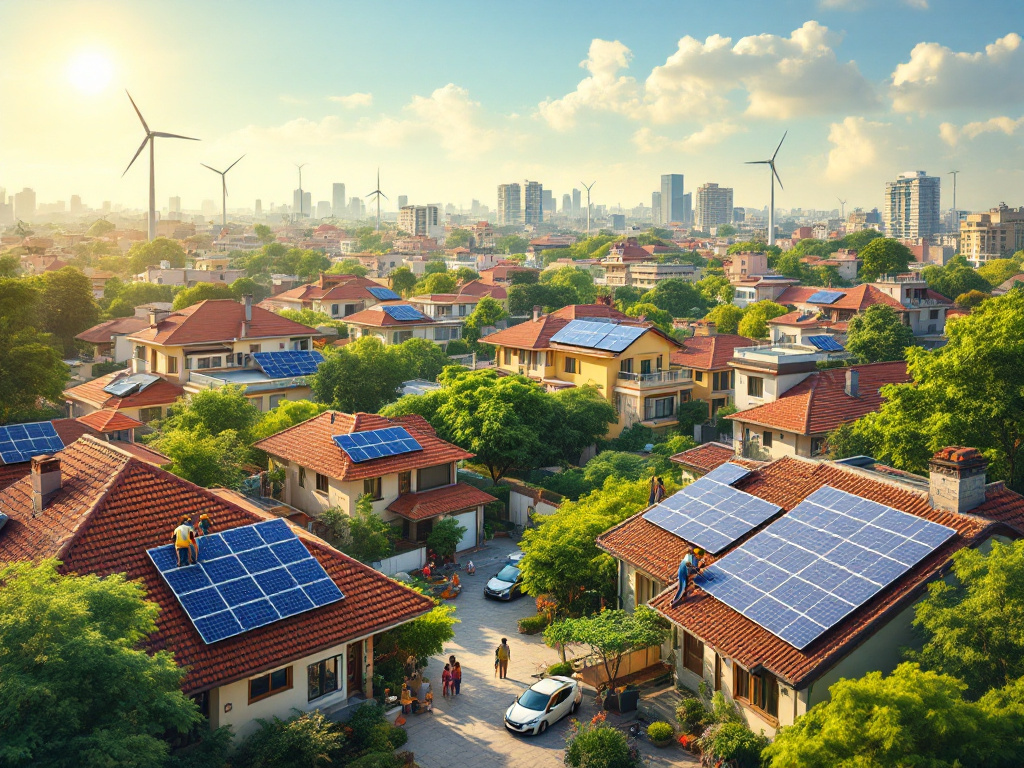
On 9 and 10 July 2026, the World Bank Board of Executive Directors approved an $890 million financing package to support India’s PM Surya Ghar: Muft Bijli Yojana, a flagship residential rooftop solar scheme targeting 10 million households across rural and urban India. The package comprises an $820 million loan from the International Bank for Reconstruction and Development (IBRD), a $60 million concessional loan from the Clean Technology Fund, and a $10 million grant from the Livable Planet Fund. This financing aims to enhance residential rooftop solar deployment, strengthen institutional capacity of distribution companies, banks, and vendors, and mobilize an additional $4.2 billion in private investment, thereby contributing to job creation and India’s broader energy and climate goals.
On this page
Key Facts
- On 9 and 10 July 2026, the World Bank Board approved $890 million for India’s national rooftop solar program, PM Surya Ghar: Muft Bijli Yojana.
- The financing package includes an $820 million loan from the International Bank for Reconstruction and Development (IBRD), a $60 million concessional loan from the Clean Technology Fund, and a $10 million grant from the Livable Planet Fund.
- The program targets installing rooftop solar systems for 10 million households in both rural and urban areas across India.
- It promotes household-level solar power generation and grid-connected electricity supply.
- The initiative aims to mobilize approximately $4.2 billion in private financing through commercial lending linked to residential solar installations.
- Projected job creation is about 1.7 million across manufacturing, installation, and related services in the renewable energy value chain.
- India’s climate targets include achieving net-zero emissions by 2070 and increasing non-fossil fuel-based electricity to 60% of the electricity mix by 2035.
- The financing package supports capacity building among distribution companies (discoms), banks, and vendors, key players in India’s electricity supply chain.
- The International Bank for Reconstruction and Development is one of the World Bank Group's five institutions.
- The Clean Technology Fund operates as a multilateral climate finance mechanism under the Climate Investment Funds framework.
Background & Context
India is pursuing an expansive renewable energy transition, emphasizing rooftop solar power to reduce dependency on fossil fuels and address climate change. Rooftop solar systems are installed on buildings close to energy consumption points, minimizing transmission losses and promoting energy decentralization.
The PM Surya Ghar: Muft Bijli Yojana is a flagship residential scheme designed to accelerate solar power adoption at the household level across rural and urban sectors, which underpins India’s commitment to sustainable development, energy access, and poverty alleviation.
The World Bank's financing package is meant to overcome financial barriers for households adopting rooftop solar and to build institutional capacity among essential stakeholders including discoms, banks, and vendors.
Why This Matters for Exams / Exam Relevance
This development is crucial for competitive exams as it involves an important international financial institution (World Bank), a key Indian government scheme (PM Surya Ghar: Muft Bijli Yojana), and significant climate and energy targets of India.
Questions can focus on specifics such as the funding amount and composition, the dates of approval, the targets of the rooftop solar program, involved financial institutions, and India’s timeline for net-zero emissions.
Understanding the relationship between international climate finance mechanisms (like the Clean Technology Fund) and national renewable energy policies is important for current affairs, environment, and energy-related exam sections.
Points to Remember
- The World Bank Board approved the financing on 9 and 10 July 2026.
- The total approved package is $890 million, comprising an $820 million loan from IBRD, a $60 million concessional loan from the Clean Technology Fund, and a $10 million grant from the Livable Planet Fund.
- The program targets 10 million household rooftop solar installations.
- It aims to mobilize an additional $4.2 billion in private financing.
- Estimated job creation is 1.7 million roles in the renewable energy sector.
- India’s climate goals include net-zero emissions by 2070 and achieving 60% non-fossil-based electricity in the electricity mix by 2035.
- Capacity building is targeted at distribution companies (discoms), banks, and vendors involved in the solar supply chain.
- IBRD is one of the five World Bank Group institutions; Clean Technology Fund is a multilateral climate finance mechanism under the Climate Investment Funds.
Sources & Further Reading
| Document / Website | Link |
|---|---|
| World Bank Approves $890 Million for Rooftop Solar Programme | Open World Bank Approves $890 Million for Rooftop Solar Programme ↗www.gktoday.in |
| India’s Renewable Energy Roadmap | Open India’s Renewable Energy Roadmap ↗mnre.gov.in |
| World Bank Climate Investment Funds | Open World Bank Climate Investment Funds ↗www.climateinvestmentfunds.org |