
Bihar's Munger Banyan Tree Identified as World's Oldest Accurately Dated Banyan
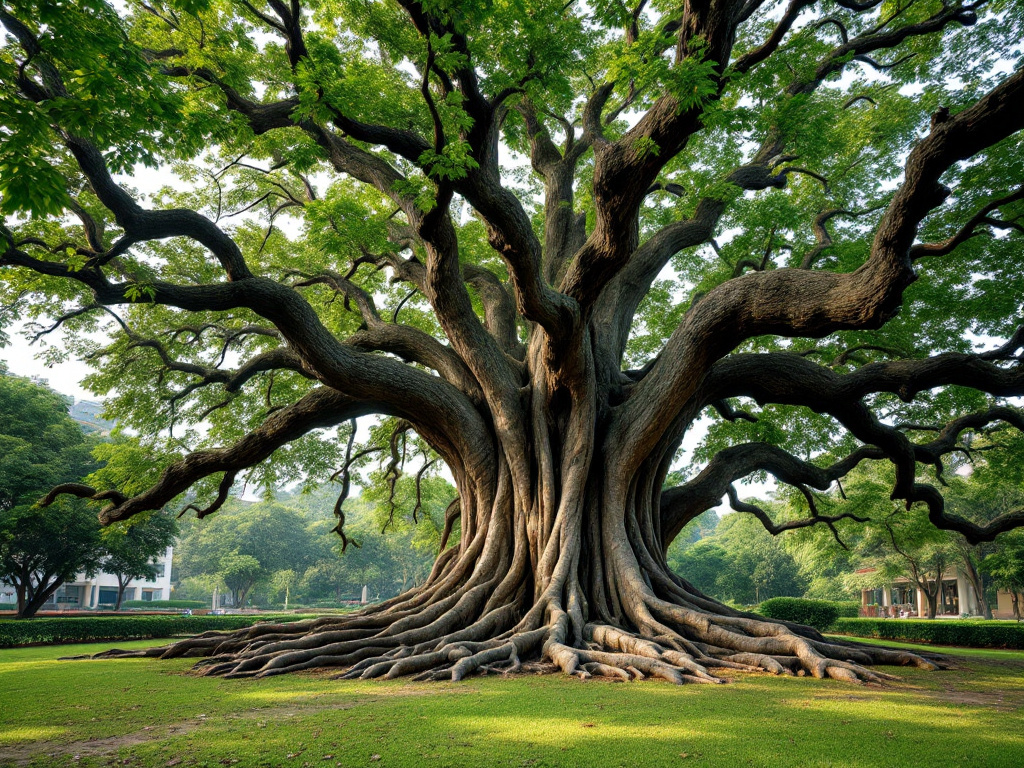
A banyan tree located on the Indian Tobacco Company campus in Munger, Bihar, has been scientifically dated to be approximately 700 years old, making it the world's oldest accurately dated banyan (Ficus benghalensis) tree. The age was determined through high-precision radiocarbon dating of alpha-cellulose extracted from wood samples. This breakthrough research led by Dr. Trina Bose and colleagues at the Birbal Sahni Institute of Palaeosciences, Lucknow, was published in the international journal Quaternary Research in April 2026. This study refines age estimates that were previously based largely on folklore or less precise methods, and provides reliable scientific evidence enhancing the historical and ecological understanding of ancient banyan trees in India, with implications for conservation and heritage appreciation.
On this page
Key Facts
- Location: Indian Tobacco Company campus, Munger, Bihar, India.
- Scientific name: Ficus benghalensis (banyan tree).
- Estimated age: Approximately 700 years old.
- Dating method: High-precision radiocarbon dating of alpha-cellulose extracted from wood samples.
- Research team led by: Dr. Trina Bose at Birbal Sahni Institute of Palaeosciences, Lucknow.
- Published in: Quaternary Research journal, April 2026.
- Tree older than nearby Burra Bunglow, which was previously linked historically.
Background & Context
Banyan trees are known for their extensive aerial roots that grow downwards to form prop roots, creating additional trunks and allowing the tree to spread laterally over large areas. Dating such trees is challenging due to lack of distinct annual growth rings commonly used in dendrochronology, especially in tropical broadleaf species like banyan. This necessitates the use of radiocarbon dating techniques that measure the decay of carbon-14 in organic materials. Extracting alpha-cellulose from wood samples improves the precision of radiocarbon dating for tropical hardwoods. The Munger banyan is located on a historic campus and was long believed to be younger based on association with the Burra Bunglow area. This study provides evidence the tree significantly predates the adjacent heritage buildings and is likely a surviving remnant of a once larger forest in the region. Ficus benghalensis is the national tree of India and holds ecological, cultural, and religious significance.
Why This Matters for Exams / Exam Relevance
This discovery is important for Indian competitive exams covering environment, biodiversity, science and technology, and cultural heritage. Relevant topics include botanical identification (Ficus benghalensis), scientific dating methods (radiocarbon dating using alpha-cellulose), notable contributions by research institutions (Birbal Sahni Institute), and heritage conservation. Understanding the integration of scientific techniques in confirming the age of ancient trees enhances appreciation of natural history and environmental protection efforts taught in exam syllabi.
Points to Remember
- Ficus benghalensis is the banyan tree’s scientific name.
- Radiocarbon dating measures the decay of carbon-14 to estimate the age of organic materials.
- Alpha-cellulose extraction from wood samples provides higher accuracy in dating tropical hardwoods.
- Birbal Sahni Institute of Palaeosciences, Lucknow, conducted the study under DST.
- The study was published in Quaternary Research in April 2026.
- The Munger banyan tree is at least 700 years old, older than previously thought and older than Burra Bunglow.
- Banyan trees propagate by aerial roots forming additional trunks, allowing vast canopy spread.
Sources & Further Reading
| Document / Website | Link |
|---|---|
| Bihar Banyan Tree Named World's Oldest Accurately Dated | Open Bihar Banyan Tree Named World's Oldest Accurately Dated ↗www.gktoday.in |
| Radiocarbon dating identifies the Indian Banyan tree in Munger as the oldest accurately dated Ficus benghalensis in the world | Quaternary Research | Open Radiocarbon dating identifies the Indian Banyan tree in Munger as the oldest accurately dated Ficus benghalensis in the world | Quaternary Research ↗www.cambridge.org |
| 700-year-old Munger banyan tree gains global scientific significance | The Times of India | Open 700-year-old Munger banyan tree gains global scientific significance | The Times of India ↗timesofindia.indiatimes.com |