
BRICS Summit 2026: PM Modi’s 10-point Roadmap to Reform Global Governance
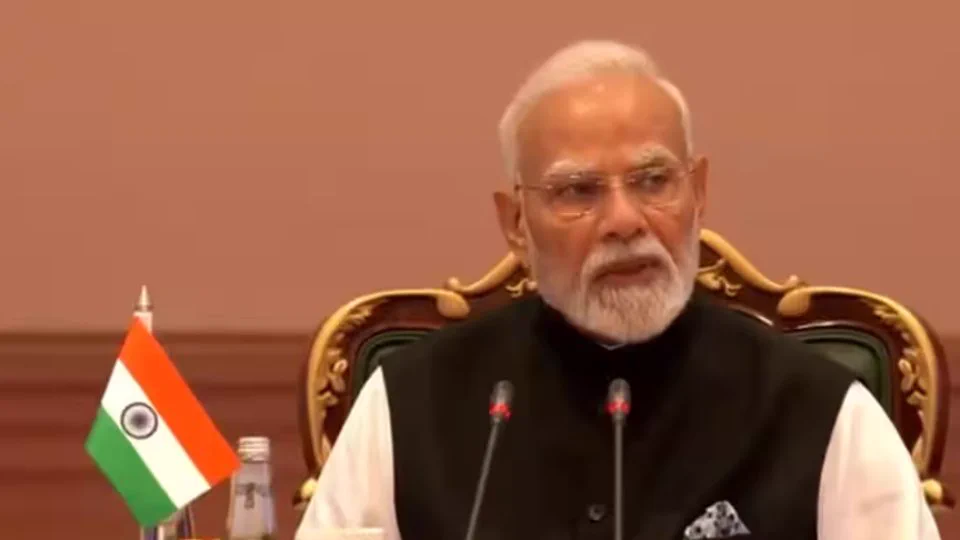
At the 18th BRICS Summit held in New Delhi on September 12, 2026, Prime Minister Narendra Modi presented a transformative 10-point roadmap for global governance reform. The proposal emphasized empowering the Global South to move from 'rule-takers' to 'rule-shapers' by reshaping international institutions, including the United Nations Security Council and global financial bodies like the IMF and World Bank. Modi advocated shifting from a 'pyramid of privilege' to a 'platform of partnership' to make global decision-making more representative and inclusive. This roadmap forms a crucial agenda for BRICS and the Global South to ensure fair representation and influence in defining global rules, especially in emerging technologies and multipolar world order.
On this page
Key Facts
- The 18th BRICS Summit was held from 12–13 September 2026 in New Delhi, India under India’s chairship.
- BRICS members include Brazil, Russia, India, China, and South Africa; the grouping has also expanded to include other partner nations.
- Prime Minister Narendra Modi proposed a 10-point roadmap aimed at reforming global governance systems to enhance representation and influence of the Global South.
- The roadmap calls for a time-bound restructuring of the United Nations Security Council to provide permanent representation for developing countries from the Global South.
- It advocates for reforms in voting power, quota allocation, and leadership roles of international financial institutions like the IMF and the World Bank to reflect current economic realities.
- The roadmap emphasizes equal participation of Global South countries in rule-making for critical areas such as artificial intelligence, cyberspace, outer space, and biotechnology.
Background & Context
BRICS, originally formed as BRIC in 2009 and expanded to include South Africa in 2010, is an intergovernmental group representing major emerging economies. The global governance architecture, including the United Nations Security Council and Bretton Woods financial institutions, predominantly reflects the geopolitics of the mid-20th century, limiting the decision-making power of many developing countries. PM Modi’s 10-point roadmap seeks to transform this system to a more inclusive framework where Global South nations transition from passive rule-takers to active rule-shapers, fostering a multipolar international order based on partnership rather than privilege. Discussions at the summit also addressed pressing global challenges including conflicts in West Asia and the need for cooperation in emerging technological fields.
Why This Matters for Exams
The 18th BRICS Summit, hosted by India, marks a significant moment in international diplomacy and global governance reform. PM Modi’s 10-point roadmap encapsulates India’s vision of empowering developing nations in global decision-making processes and shaping a more equitable world order. Understanding these reforms is essential for exams covering current affairs, international relations, global governance, and India's foreign policy priorities. The focus on UNSC reform, financial institution recalibration, and Global South empowerment are frequently relevant topics.
Points to Remember
- India hosted the 18th BRICS Summit in New Delhi on 12–13 September 2026.
- The New Delhi Declaration was unanimously adopted, reiterating solidarity among BRICS members and partners.
- PM Modi proposed a 10-point BRICS roadmap focusing on representation, responsiveness, and rule-making reforms.
- The roadmap emphasizes urgent United Nations Security Council reform to grant permanent seats to Global South countries.
- Calls for reform of voting shares and leadership structures at the IMF and World Bank to align with 21st-century economic realities.
- Global South countries to be ensured equal participation in formulating rules for AI, cyberspace, biotechnology, and outer space governance.
- The vision is to replace the current 'pyramid of privilege' with a 'platform of partnership' in global institutions.
- Key leaders present included Xi Jinping (China), Vladimir Putin (Russia), Cyril Ramaphosa (South Africa), with notable attention to India's role as chair.
Practice MCQs
Question 1
- Where was the 18th BRICS Summit held in 2026?
- A) Johannesburg
- B) Beijing
- C) New Delhi
- D) Brasilia
Answer: C) New Delhi
Question 2
- What is a primary objective of PM Modi's 10-point roadmap proposed at the 18th BRICS Summit?
- A) To maintain the status quo of the United Nations Security Council
- B) To diminish the influence of the Global South in international institutions
- C) To reform global governance and empower the Global South as 'rule-shapers'
- D) To disband the BRICS grouping
Answer: C) To reform global governance and empower the Global South as 'rule-shapers'
Question 3
- Which international financial institutions did the BRICS roadmap call to reform in terms of voting power and quota allocation?
- A) Asian Development Bank and European Investment Bank
- B) International Monetary Fund (IMF) and World Bank
- C) World Trade Organization and World Health Organization
- D) United Nations Development Programme and UNICEF
Answer: B) International Monetary Fund (IMF) and World Bank
Sources & Further Reading
| Document / Website | Link |
|---|---|
| BRICS Adopts 10-Point Global Governance Reform Roadmap – GKToday | Open BRICS Adopts 10-Point Global Governance Reform Roadmap – GKToday ↗www.gktoday.in |
| Charting A New Global South Consensus: Key Takeaways From The 18th BRICS Summit In New Delhi | Open Charting A New Global South Consensus: Key Takeaways From The 18th BRICS Summit In New Delhi ↗www.realshepower.in |
| Modi at BRICS Summit: ‘UNSC reforms can no longer wait’, PM calls for global governance overhaul - BusinessToday | Open Modi at BRICS Summit: ‘UNSC reforms can no longer wait’, PM calls for global governance overhaul - BusinessToday ↗www.businesstoday.in |
| Global South must be 'rule-shaper' not 'rule-follower': Modi - Rediff.com India News | Open Global South must be 'rule-shaper' not 'rule-follower': Modi - Rediff.com India News ↗www.rediff.com |