
Cyclone Narelle Triggers Unusual Red Skies in Western Australia Due to Dust Storm
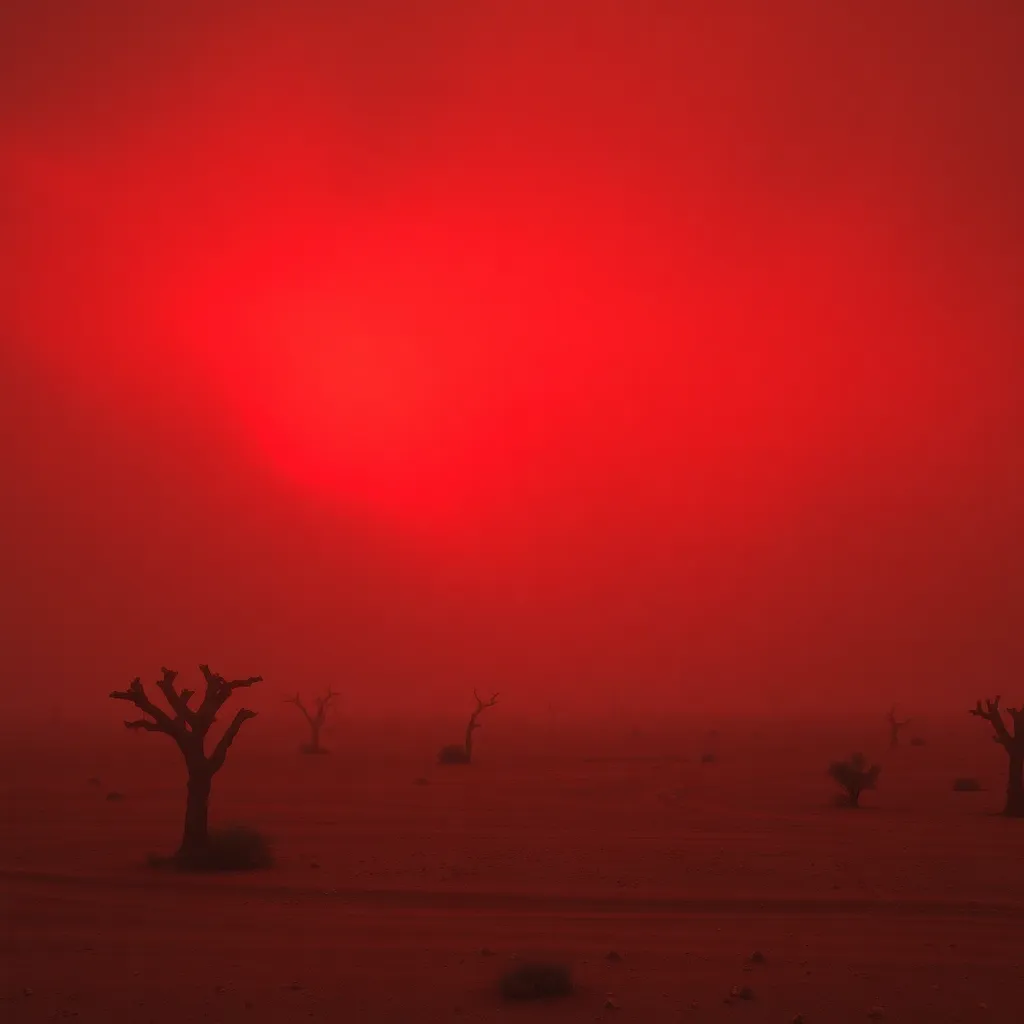
In late March 2026, Tropical Cyclone Narelle caused a rare dust storm across parts of Western Australia, particularly the Gascoyne region including Shark Bay and Denham, turning the skies an eerie deep red. Strong cyclone winds lifted iron-rich red soil high into the atmosphere, scattering sunlight to create an apocalyptic crimson glow and drastically reducing visibility. Narelle, a Category 4 cyclone with winds over 200 km/h, affected multiple regions across Australia, causing disruption and safety concerns. This rare meteorological event highlights the interaction between tropical cyclones and regional geographic features, relevant for understanding cyclone impacts and atmospheric light scattering phenomena.
On this page
Key Facts
Cyclone Narelle was a Category 4 tropical cyclone with wind speeds exceeding 200 km/h.
The cyclone traversed multiple regions in Australia, including initial landfall in Queensland, passing through the Northern Territory, intensifying over the Indian Ocean, and making impact on Western Australia.
The Gascoyne region, especially Shark Bay and Denham in Western Australia, experienced dramatic red skies caused by a severe dust storm triggered by the cyclone.
The red coloration of the sky was caused by iron-rich red soil particles lifted into the atmosphere by strong cyclone winds, scattering sunlight through Rayleigh and Mie scattering principles; shorter blue wavelengths were scattered out, allowing longer red wavelengths to dominate the sky color.
Visibility dropped sharply during the dust storm, creating hazardous conditions and an eerie “apocalyptic” daytime appearance.
Background & Context
Tropical cyclones are classified based on sustained wind wind speeds; Category 4 cyclones have winds between 209 and 251 km/h. Cyclone Narelle’s passage closely followed this classification, bringing extreme weather conditions to Australia’s western coast.
Western Australia's Gascoyne region, known for its arid climate and iron oxide–rich soils, provided the dust source that the cyclone’s strong winds lifted into the atmosphere. The suspension of these fine dust particles created unusual optical effects, making the sky appear blood red during daytime.
Such dust storms are rare in intensity but not unprecedented; similar phenomena have occurred in desert regions worldwide under strong winds lifting soil particles into the air.
Why This Matters for Exams / Exam Relevance
This event is significant for competitive exams covering geography, environment, meteorology, disaster management, and general studies. Understanding tropical cyclone behavior, regional geography (especially Australia's Gascoyne region), atmospheric optics (light scattering), and dust storm impacts is important.
The incident illustrates real-world consequences of cyclone-induced weather, interactions between land surface characteristics and atmospheric phenomena, and disaster preparedness considerations.
Points to Remember
Cyclone Narelle was a Category 4 tropical cyclone with winds exceeding 200 km/h.
The cyclone’s trajectory included Queensland, Northern Territory, Indian Ocean intensification, and Western Australia impact.
Strong winds lifted iron-rich red dust from the Gascoyne region, particularly Shark Bay and Denham, creating red skies during daylight.
Optical phenomena are due to scattering of sunlight by dust particles, with red wavelengths dominating due to atmospheric conditions and particle properties.
Dust storms reduce visibility and create hazardous conditions.
Gascoyne region lies in Western Australia and is characterized by arid climate and iron oxide-rich soils.
Sources & Further Reading
| Document / Website | Link |
|---|---|
| Red Skies in Australia as Cyclone Narelle Triggers Dust Storm - GKToday | Open Red Skies in Australia as Cyclone Narelle Triggers Dust Storm - GKToday ↗www.gktoday.in |
| Cyclone Narelle turns skies blood-red over Western Australia in rare dust storm event - Times of India | Open Cyclone Narelle turns skies blood-red over Western Australia in rare dust storm event - Times of India ↗timesofindia.indiatimes.com |
| Watch: Skies in Australia eerily turn blood-red. Here's what happened - India Today | Open Watch: Skies in Australia eerily turn blood-red. Here's what happened - India Today ↗www.indiatoday.in |