
Digital Panels Add 33,000 Missing Indian WWI Soldiers to Basra Memorial in Iraq
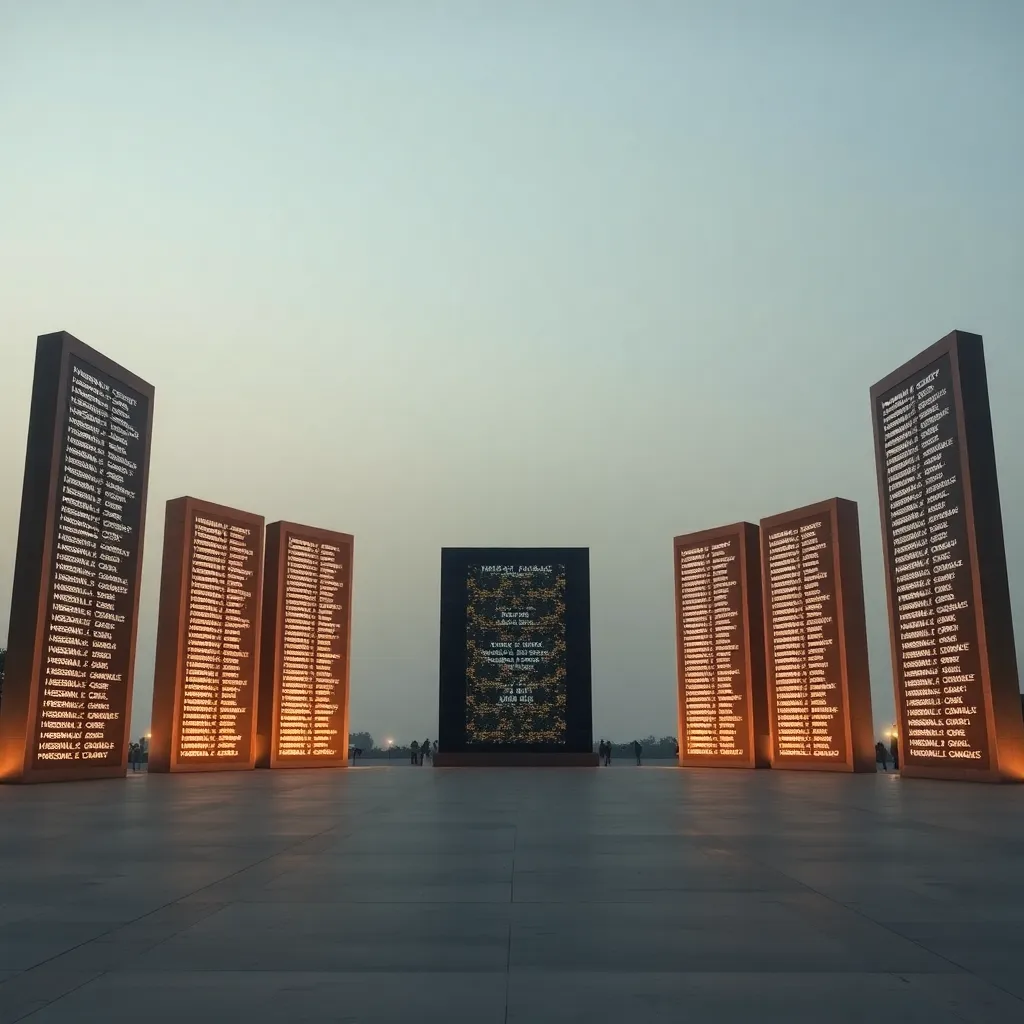
The Commonwealth War Graves Commission (CWGC) has digitally added the names of approximately 33,000 Indian Army soldiers who died during World War I but were previously missing from the Basra Memorial in Iraq. These soldiers served in the Mesopotamia Campaign (1914-1918), a significant theatre of World War I. Historically, their individual names were omitted and only recorded numerically or in registers, reflecting a colonial-era omission. The new digital panels display their names, ranks, and regiments, thereby correcting this long-standing historical inequality and restoring rightful recognition.
On this page
Key Facts
- The Basra Memorial is located in Iraq and honors Commonwealth personnel who died during the Mesopotamia Campaign in World War I.
- Approximately 33,000 Indian soldiers who died in the campaign had not been individually named on the memorial until the recent digital inclusion.
- In 2024, the Commonwealth War Graves Commission (CWGC) launched digital name panels to recognize these missing Indian soldiers.
- Indian troops constituted a significant part of the British military forces in the Mesopotamia Campaign, which was one of the largest military operations outside Europe during WWI.
- The campaign lasted from 1914 to 1918, fought mainly in present-day Iraq, then part of Ottoman Empire territory.
- Physical renovation of the Basra Memorial was not feasible due to ongoing security concerns and restricted access in Iraq, making digital commemoration the practical solution.
Background & Context
The Mesopotamia Campaign was a major theatre of World War I, fought largely between British Empire forces—including a strong contingent from the Indian Army—and the Ottoman Empire in the region now known as Iraq. Indian soldiers made substantial sacrifices, but their identities were often only recorded in numerical form or in regimental registers rather than being named individually on official memorials, reflecting the colonial attitudes of the era.
The Basra Memorial commemorates Commonwealth personnel who died in the campaign but had no known graves. However, until 2024, the names of approximately 33,000 Indian soldiers who died or went missing were not displayed individually, creating a significant omission in public remembrance.
To redress this, the CWGC introduced new digital panels at the Basra Memorial site, listing the names, ranks, and regiments of these Indian soldiers alongside over 46,000 other Commonwealth service members commemorated there. This digital addition aims to provide deserved recognition and to educate visitors on the critical role Indian forces played in the campaign.
Why This Matters for Exams / Exam Relevance
This development is important in the study of colonial history, military history, and remembrance practices. Exam questions on World War I commonly address the global scope of the conflict, including the contributions and sacrifices of colonial troops. Understanding the Mesopotamia Campaign's strategic significance, the role of Indian soldiers, and the ongoing efforts to acknowledge their sacrifices helps contextualize India's role in WWI.
Key factual elements for exams include the dates and location of the Mesopotamia Campaign, the function of the Basra Memorial, India's military contribution (over 1.3 million soldiers in WWI), and institutions like the CWGC involved in war commemoration. The 2024 digital inclusion marks a critical correction in the historical record.
Points to Remember
- The Mesopotamia Campaign took place from 1914 to 1918, mainly in modern-day Iraq.
- The Basra Memorial commemorates those who died in the campaign with no known grave.
- About 33,000 Indian WWI soldiers' names were missing from the memorial until digital panels were added in 2024.
- The Commonwealth War Graves Commission is responsible for war graves and memorials for Commonwealth service members.
- India contributed over 1.3 million soldiers to WWI efforts on various fronts.
- Due to security and access issues in Iraq, digital panels provided a feasible way to include Indian soldiers' names.
- The initiative aims to rectify colonial-era omissions and recognize the sacrifices of Indian soldiers properly.
Sources & Further Reading
| Document / Website | Link |
|---|---|
| Indian WWI Soldiers added to Basra Memorial | Open Indian WWI Soldiers added to Basra Memorial ↗www.gktoday.in |
| Mesopotamian Campaign - Wikipedia | Open Mesopotamian Campaign - Wikipedia ↗en.wikipedia.org |
| Commonwealth War Graves Commission Website | Open Commonwealth War Graves Commission Website ↗www.cwgc.org |