
Ethanol ATMs: India's Move Towards Ethanol-Based Cooking Fuel
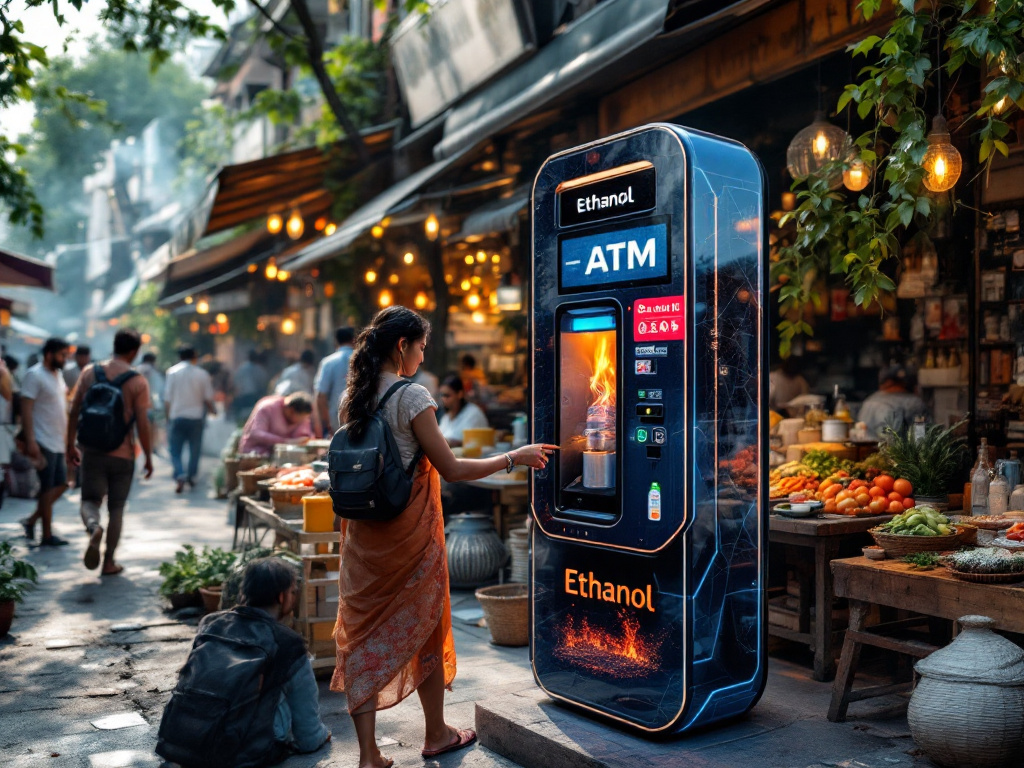
India is planning to introduce Ethanol ATMs—dispensing kiosks selling ethanol in sealed canisters for cooking fuel use—targeted for rollout around September 2026. The Ministry of Petroleum and Natural Gas aims to promote ethanol, a renewable biofuel produced from sugarcane and maize, as a supplementary cooking fuel to reduce reliance on imported Liquefied Petroleum Gas (LPG). Pilot kiosks at selected fuel retail outlets will test consumer acceptance, focusing initially on commercial kitchens, restaurants, and street food vendors. India's ethanol production capacity has surpassed 20 billion litres annually and is expected to reach 24 billion litres by March 2027. This policy supports energy security and fuel diversification objectives.
On this page
Key Facts
- Ethanol ATMs are proposed dispensing kiosks planned in India to sell ethanol in sealed canisters for cooking fuel, with an expected rollout around September 2026.
- Ethanol is an alcohol-based renewable biofuel produced primarily from sugarcane, maize, and other biomass feedstocks.
- It is currently used in India mainly as a blending component in petrol under the ethanol blending programme.
- India’s ethanol production capacity has exceeded 20 billion litres per annum and is projected to reach 24 billion litres by March 2027.
- State-run oil marketing companies are developing ethanol-powered stoves and setting up pilot ethanol dispensing kiosks at fuel retail outlets.
- The sealed canisters used at Ethanol ATMs have metal or thick plastic bodies with sealed lids to connect with specially designed ethanol stoves for safe usage.
- The initial focus of deployment will be on commercial kitchens, restaurants, and street food vendors who consume cooking fuel in bulk.
- The policy aims to utilize surplus ethanol production and reduce India's dependence on imported Liquefied Petroleum Gas (LPG), which is composed mainly of propane and butane.
Background & Context
India currently depends heavily on LPG cylinders, containing propane and butane, for domestic cooking fuel. To diversify cooking energy sources and improve energy security, the Ministry of Petroleum and Natural Gas is formulating a policy to increase the use of ethanol as a mainstream cooking fuel. Ethanol, produced from agricultural biomass such as sugarcane and maize, is abundant in India and already contributes to fuel blending efforts in petrol. The proposed ethanol dispensing kiosks, known as Ethanol ATMs, will operate at fuel retail outlets managed by government-owned oil marketing companies. These pilot installations will assess consumer acceptance before wider implementation, with specially designed stoves ensuring the safe and efficient use of ethanol fuel.
Why This Matters for Exams / Exam Relevance
Competitive exams often test knowledge on energy policies, renewable fuels, and government initiatives aimed at sustainability and energy security. Understanding India's ethanol policy, the upcoming introduction of Ethanol ATMs, and their expected impact on cooking fuel diversification is important. These topics exemplify India's approach to reducing fossil fuel dependence and promoting renewable energy sources. Facts about ethanol production capacity, policy timelines, participating agencies, and implications for LPG usage are therefore highly relevant for current affairs and general studies preparations.
Points to Remember
- The rollout of Ethanol ATMs is targeted around September 2026.
- The Ministry of Petroleum and Natural Gas is the nodal ministry preparing the policy.
- Ethanol feedstocks mainly include sugarcane and maize, among other biomass.
- Initial users targeted for ethanol cooking fuel are commercial kitchens, restaurants, and street food vendors.
- India’s ethanol production capacity is over 20 billion litres per year, expected to grow to 24 billion litres by March 2027.
- LPG, consisting of propane and butane, remains the main cooking fuel currently used in Indian households.
- State-run oil marketing companies will manage fuel retail outlets housing Ethanol ATM pilot kiosks.
Sources & Further Reading
| Document / Website | Link |
|---|---|
| GKToday: What Are Ethanol ATMs? | Open GKToday: What Are Ethanol ATMs? ↗www.gktoday.in |
| Ethanol Blending Programme in India | Open Ethanol Blending Programme in India ↗pib.gov.in |
| Ministry of Petroleum and Natural Gas - Biofuels | Open Ministry of Petroleum and Natural Gas - Biofuels ↗petroleum.nic.in |
| India's National Policy on Biofuels | Open India's National Policy on Biofuels ↗mnre.gov.in |