
Ground-Level Ozone Pollution in Delhi: Causes and Impacts
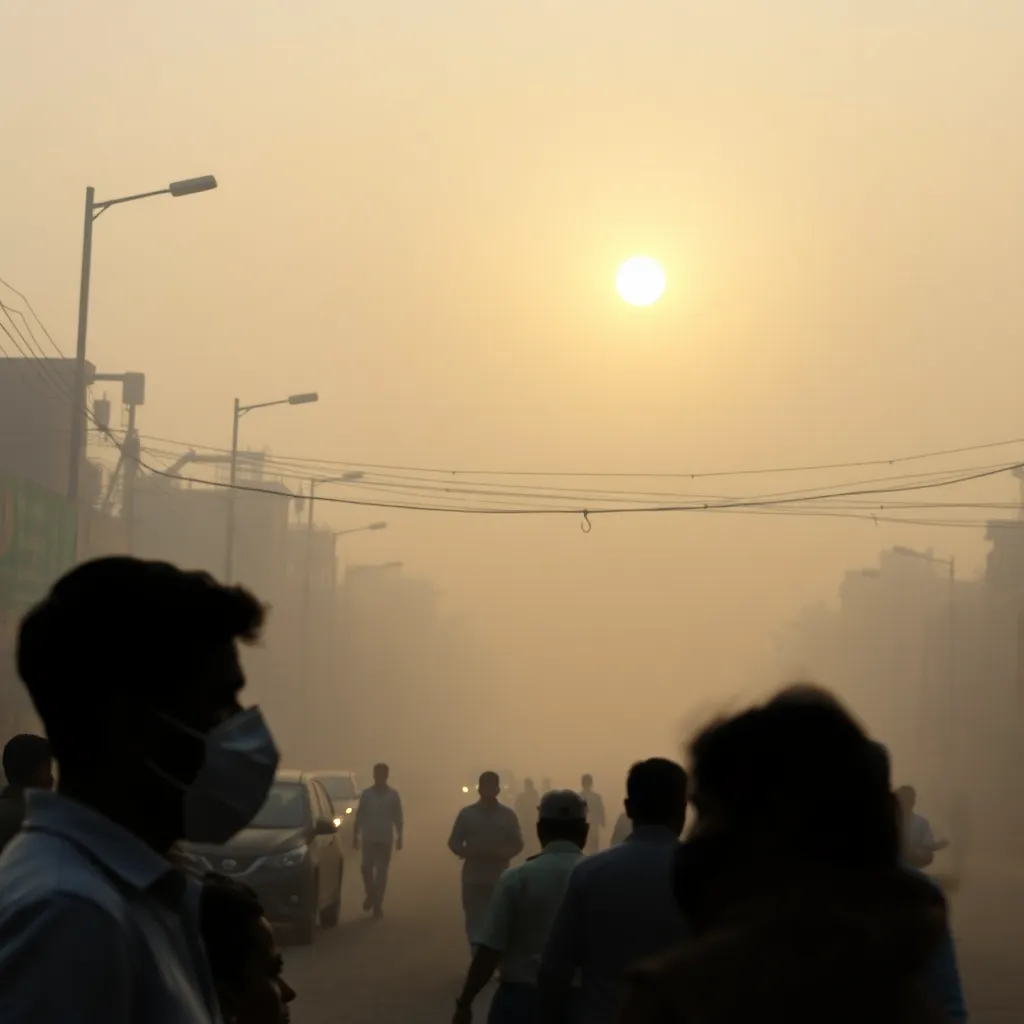
Delhi faces significant challenges from ground-level ozone pollution, a secondary pollutant formed by chemical reactions involving nitrogen oxides (NOx) and volatile organic compounds (VOCs) under sunlight. The main precursors originate from vehicles, industries, and power plants. Ozone levels often rise during hot sunny summer afternoons, frequently exceeding the National Ambient Air Quality Standards (NAAQS) eight-hour average limit of 100 µg/m³, with concentrations sometimes surpassing 200 µg/m³ in many parts of the city. Ground-level ozone is a major component of photochemical smog and adversely affects respiratory health, especially in children, the elderly, and people with asthma. It differs from stratospheric ozone, which forms the protective ozone layer in the upper atmosphere.
On this page
Key Facts
- Ozone (O₃) is a molecule consisting of three oxygen atoms.
- Ground-level ozone is a secondary pollutant formed by photochemical reactions involving nitrogen oxides (NOx) and volatile organic compounds (VOCs) in the presence of sunlight, particularly on hot, sunny days.
- It differs from stratospheric ozone, which occurs high in the atmosphere and protects against ultraviolet radiation.
- In Delhi, ozone concentrations often exceed 200 µg/m³ during summer afternoons, surpassing the National Ambient Air Quality Standards (NAAQS) eight-hour average limit of 100 µg/m³.
- Main precursor pollutants include emissions from vehicles, industrial activities, and power plants.
- Ground-level ozone is a principal component of photochemical smog, alongside nitrogen oxides and other oxidants.
- Exposure to ground-level ozone causes eye, nose, and throat irritation, and adversely affects lung function—particularly harmful to children, elderly, and asthma patients.
Background & Context
Ground-level ozone is not directly emitted but forms through complex atmospheric chemical reactions between nitrogen oxides (NOx) and volatile organic compounds (VOCs) under strong sunlight and warm temperatures. Delhi’s dense vehicular traffic, industrial emissions, and prevailing climatic conditions such as high temperature and limited atmospheric mixing facilitate the formation and buildup of ozone. Photochemical smog episodes in Delhi are linked with high ozone levels, which significantly degrade air quality. Research indicates ozone levels sometimes double the NAAQS thresholds during summer, further exacerbating public health risks and environmental stress. The distinct difference from beneficial stratospheric ozone underlines the dual role of ozone in the atmosphere—protective at high altitudes but harmful near the Earth's surface.
Why This Matters for Exams / Exam Relevance
The issue of ground-level ozone pollution in Delhi integrates key concepts related to environmental chemistry, public health, atmospheric science, and urban pollution management. Competitive exams often assess understanding of pollution types, sources, chemical processes involved in secondary pollutant formation, health impacts, and environmental standards such as NAAQS. Familiarity with specific challenges faced by major urban centers like Delhi, including ozone pollution and photochemical smog dynamics, is critical for current affairs, environment, and ecology sections. Moreover, distinguishing ground-level ozone from stratospheric ozone is frequently tested in environmental science topics in exams.
Points to Remember
- Ozone formula: O₃.
- Primary precursors: Nitrogen oxides (NO and NO₂) and volatile organic compounds (VOCs).
- Ozone is formed via photochemical reactions accelerated by sunlight and heat.
- In Delhi, ozone concentrations can exceed 200 µg/m³, against the NAAQS eight-hour average limit of 100 µg/m³.
- Ground-level ozone causes respiratory irritation and reduces lung function, with vulnerable groups including children, elderly, and asthma sufferers.
- Ground-level ozone is a key part of photochemical smog, which also contains NOx and other oxidizing agents.
- Beneficial stratospheric ozone forms the ozone layer that protects the Earth from ultraviolet radiation.
Sources & Further Reading
| Document / Website | Link |
|---|---|
| Delhi faces ground-level ozone pollution | Open Delhi faces ground-level ozone pollution ↗www.gktoday.in |
| Behavioural Chemistry of ground level ozone formation in heavily polluted environment of Delhi city - AGU | Open Behavioural Chemistry of ground level ozone formation in heavily polluted environment of Delhi city - AGU ↗ui.adsabs.harvard.edu |
| Ground Level Ozone Pollution in Delhi - CSE | Open Ground Level Ozone Pollution in Delhi - CSE ↗www.drishtiias.com |