
Gujarat Builds First Air-Filled Rubber Dams Using South Korean Technology
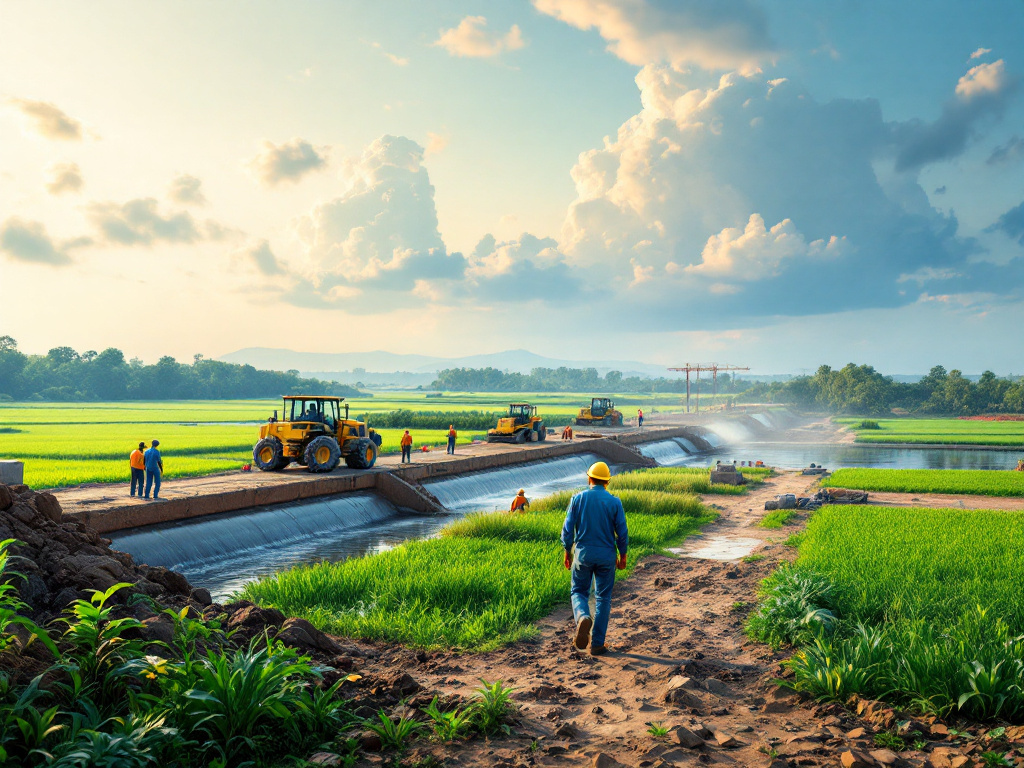
Gujarat is constructing two air-filled rubber dams—the Rajvasana dam in Chhota Udepur district and the Pathakwadi dam in Tapi district—using South Korean rubber bladder technology and SCADA automation. The combined projects cost over ₹162 crore and aim to improve water storage, irrigation, and flood management under the Centre’s Catch the Rain campaign. Rajvasana is 75% complete as of July 2026 and designed to irrigate 3,420 hectares; Pathakwadi is 90% complete and provides irrigation to 650 hectares.
On this page
Key Facts
- Two air-filled rubber dams are under construction in Gujarat: Rajvasana in Rajvasana village, Chhota Udepur district (across Heran River), and Pathakwadi in Pathakwadi village, Tapi district (across Ambika River).
- The total combined cost is over ₹162 crore; Rajvasana cost is over ₹82.97 crore, and Pathakwadi cost is over ₹79.13 crore.
- As of July 6, 2026, Rajvasana Rubber Dam is 75% complete and expected to be commissioned by September 2027. It will irrigate approximately 3,420 hectares across 25 villages.
- Pathakwadi Rubber Dam is about 90% complete and will provide assured irrigation to around 650 hectares of agricultural land in Pathakwadi and nearby villages.
- Both dams incorporate air-filled rubber bladder technology imported from South Korea, featuring bladder thickness between 18 mm and 32 mm, capable of withstanding temperatures above 50 degrees Celsius, and with an estimated service life of 30 years.
- The dams use SCADA (Supervisory Control and Data Acquisition) systems to automate inflation and deflation of the rubber bladders based on operational requirements.
- During heavy monsoon flows, the bladders are deflated to allow floodwaters and silt to pass freely, aiding flood management.
- These projects support water conservation and irrigation infrastructure development under the Centre's Catch the Rain campaign.
Background & Context
Air-filled rubber dams are flexible hydraulic structures that raise water levels by inflating a rubber bladder installed across a river or canal. Inflating the bladder increases upstream water levels for irrigation and storage, while deflating it during floods enables unimpeded flow of floodwaters and sediment. This technology is innovative in the Indian context and signals Gujarat's adoption of modern infrastructure for efficient water resource management. South Korea is a key technology provider, supplying specialized industrial rubber bladders used in numerous global water management applications.
Why This Matters for Exams
This development is significant for understanding modern irrigation and flood management methods in India, international technology cooperation (India–South Korea), and water conservation initiatives such as the Catch the Rain campaign. Exam questions may focus on dam types, features of inflatable dams, SCADA automation in water infrastructure, and the geographic and economic specifics of these Gujarat projects.
Points to Remember
- Rajvasana Rubber Dam location: Rajvasana village, Chhota Udepur district; cost: ₹82.97 crore; irrigates 3,420 hectares.
- Pathakwadi Rubber Dam location: Pathakwadi village, Tapi district; cost: ₹79.13 crore; irrigates 650 hectares.
- Rubber bladder thickness varies between 18 mm and 32 mm; withstands temperatures above 50°C; designed for 30 years of service.
- SCADA = Supervisory Control and Data Acquisition, facilitates automated dam bladder control.
- Inflatable rubber dams enable flexible water storage and flood management by inflation and deflation of rubber bladders.
- Projects form part of the Centre's Catch the Rain campaign for rainwater harvesting and water conservation.
- South Korea provides the crucial rubber bladder technology.
Sources & Further Reading
| Document / Website | Link |
|---|---|
| Gujarat Builds First Air-Filled Rubber Dams | Open Gujarat Builds First Air-Filled Rubber Dams ↗www.gktoday.in |
| SCADA in Water Management | Open SCADA in Water Management ↗en.wikipedia.org |
| Catch the Rain Campaign Details | Open Catch the Rain Campaign Details ↗pib.gov.in |