
India's First AI-Powered Bird Sanctuary Announced at Thane Creek Flamingo Sanctuary
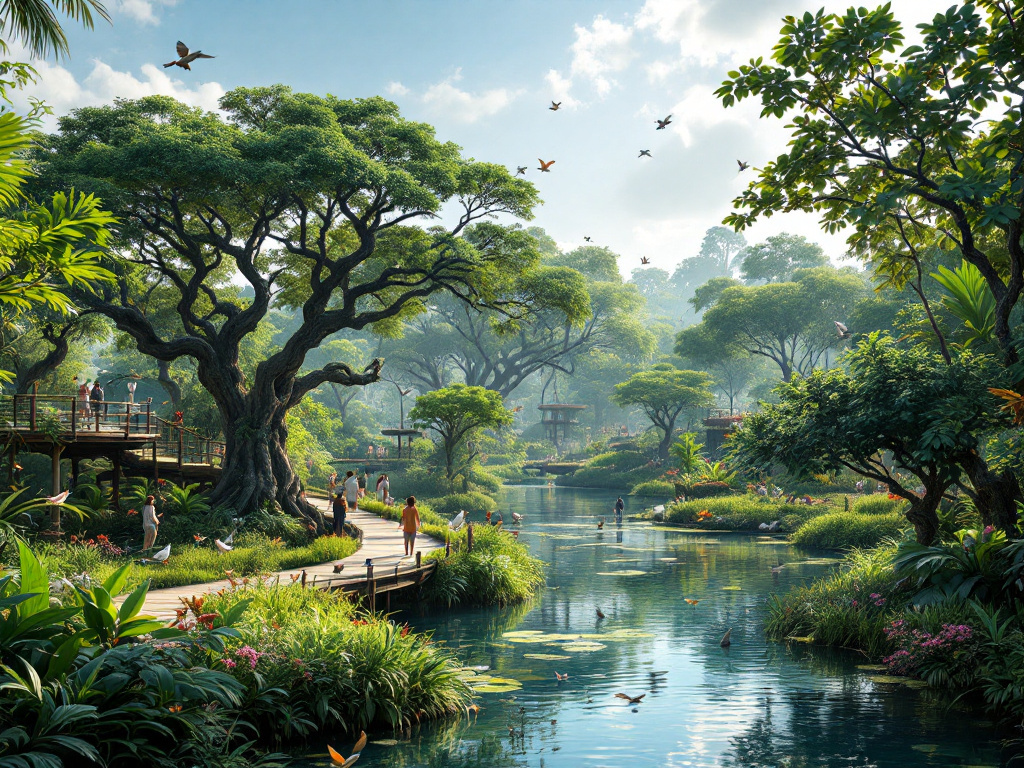
India has announced the development of its first AI-powered bird sanctuary named Bhandup Bird Park, adjacent to the Thane Creek Flamingo Sanctuary in Mumbai, Maharashtra. With administrative approval and a ₹45 crore budget from the District Planning Committee’s special fund, the sanctuary will cover about 20.09 hectares primarily devoted to ecological preservation. It will incorporate an AI-based system for real-time bird tracking and species identification within a 1.5 km radius, alongside facilities like a 2.16 km mangrove nature trail, observation towers, and viewing decks to promote eco-tourism. The location is at a Ramsar wetland site, highlighting its international environmental importance.
On this page
Key Facts
- Location: Thane Creek Flamingo Sanctuary, Mumbai, Maharashtra
- Project Name: Bhandup Bird Park
- Area: Approximately 20.09 hectares
- Budget: ₹45 crore allocated by District Planning Committee’s special fund
- Technology: AI-based bird tracking and identification within a 1.5-kilometre radius
- Physical Infrastructure: Only 0.35 hectares allotted for physical infrastructure; majority preserved for ecological and habitat features
- Key Features: 2.16-kilometre mangrove nature trail, observation towers, and viewing decks
- Significance: Located within a Ramsar-designated wetland of international importance
Background & Context
The Thane Creek Flamingo Sanctuary is recognized as a Ramsar site, linked to the Ramsar Convention adopted in 1971 in Ramsar, Iran, which emphasizes the conservation and sustainable use of wetlands of international importance. This sanctuary is known for its significant flamingo populations and diverse wetland biodiversity. Mangrove ecosystems in the sanctuary serve critical ecological roles as coastal buffers and breeding grounds for various bird, fish, and wetland species.
The integration of artificial intelligence technology in the sanctuary introduces an advanced approach to wildlife monitoring, facilitating automated bird tracking, species identification, centralized data management, and digital analytics using machine learning and pattern recognition. Such technology aids in efficient biodiversity surveys and conservation planning. Similar AI-based bird conservation initiatives have been undertaken in other Indian states, including Uttarakhand's Haldwani forest division and Haryana's Sultanpur National Park.
Why This Matters for Exams / Exam Relevance
This project exemplifies India’s innovative efforts to merge technology with environmental conservation. It highlights governmental focus on preserving biodiversity, promoting eco-tourism, and adhering to international environmental agreements such as the Ramsar Convention. Exam questions may cover topics like the significance and location of Ramsar sites in India, applications of AI in wildlife conservation, and contemporary government-backed environmental projects.
Points to Remember
- Bhandup Bird Park is India's first AI-powered bird sanctuary.
- Situated within the Thane Creek Flamingo Sanctuary in Maharashtra.
- Project funding of ₹45 crore has been approved by the District Planning Committee.
- Thane Creek Flamingo Sanctuary holds a Ramsar site designation.
- The sanctuary will employ AI to track and identify birds within a 1.5-kilometre radius in real time.
- Facilities include a 2.16-kilometre mangrove nature trail, observation towers, and viewing decks enhancing eco-tourism.
- The Ramsar Convention was adopted in 1971 in Ramsar, Iran, emphasizing wetland conservation.
- Parallel AI-based bird conservation projects are underway in Uttarakhand and Haryana.
Sources & Further Reading
| Document / Website | Link |
|---|---|
| India's first AI-powered bird sanctuary announced | Open India's first AI-powered bird sanctuary announced ↗www.gktoday.in |
| Ramsar Convention on Wetlands | Open Ramsar Convention on Wetlands ↗www.ramsar.org |
| AI applications in wildlife conservation | Open AI applications in wildlife conservation ↗www.nature.com |