
India Successfully Test-Fires Nuclear-Capable Agni-4 Missile from Odisha
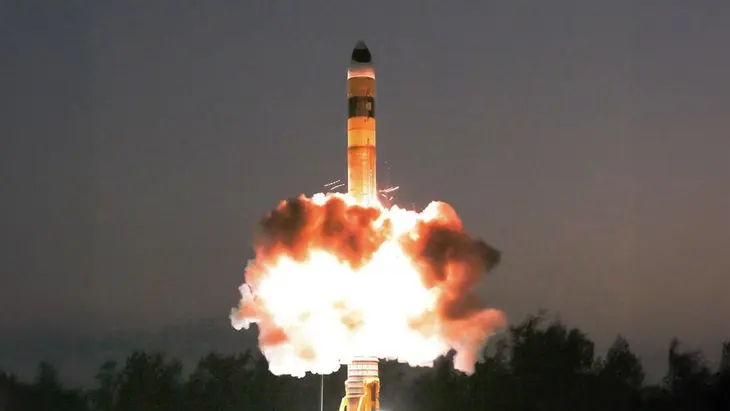
On 6 August 2026, India conducted a successful test launch of the Agni-4 medium-range ballistic missile from the Integrated Test Range at Chandipur, Odisha. The launch, overseen by the Strategic Forces Command and developed by the Defence Research and Development Organisation (DRDO), validated all operational and technical parameters. Agni-4 is a two-stage, solid-fuel missile with a strike range of about 4,000 kilometers, capable of delivering both nuclear and conventional warheads. The missile’s road-mobile, canisterized design enhances mobility and survivability, while its advanced re-entry heat shield withstands temperatures above 3,000°C, protecting internal systems during atmospheric re-entry. This successful test strengthens India's strategic deterrence posture under its credible minimum deterrence doctrine.
On this page
Key Facts
- Test date: 6 August 2026
- Test location: Integrated Test Range, Chandipur, Odisha
- Missile type: Agni-4 Medium-Range Ballistic Missile (MRBM)
- Range: Approximately 4,000 kilometers
- Payload capacity: About 1,000 kilograms (nuclear or conventional warheads)
- Propulsion: Two-stage solid-fuel rocket motor
- Launch platform: Road-mobile, canisterized launcher
- Guidance: Advanced inertial navigation system with ring laser gyro and satellite navigation
- Heat shield: Advanced re-entry vehicle shield capable of withstanding temperatures over 3,000°C
- Conducted by: Strategic Forces Command under Ministry of Defence
- Developed by: Defence Research and Development Organisation (DRDO)
Background & Context
The Agni missile series is a family of indigenously developed ballistic missiles forming the backbone of India's land-based nuclear deterrent. Agni-4 bridges the capability gap between earlier Agni-II and Agni-III variants, offering enhanced range and precision. Equipped with canister launch technology, it allows quick deployment from diverse locations, improving survivability and operational flexibility. The missile contributes to India's credible minimum deterrence and second-strike capability, key elements of its nuclear doctrine. The Strategic Forces Command manages India's nuclear weapons and strategic missile assets.
Why This Matters for Exams / Exam Relevance
The Agni-4 missile test is significant current affairs material commonly asked in defense and strategic studies sections of competitive exams. Questions may focus on the missile's specifications like range, payload, fuel type, launch platform, and the agencies involved. Understanding India's nuclear doctrine and missile program advancements helps in explaining the strategic implications of such tests. Awareness of details such as test date, site, and technical innovations like re-entry heat shields adds depth to answers.
Points to Remember
- Agni-4 was successfully test-fired on 6 August 2026 from Chandipur, Odisha.
- The missile is a two-stage, solid-fueled MRBM with a range around 4,000 km and approximately 1,000 kg payload capacity.
- It features a road-mobile, canisterized launch platform for increased mobility and survivability.
- Advanced re-entry heat shield technology protects missile systems during atmospheric re-entry temperatures exceeding 3,000°C.
- The missile can deliver both nuclear and conventional warheads as per mission requirements.
- The Defence Research and Development Organisation (DRDO) is the developer, while the Strategic Forces Command operates the missile system.
- The test validates India's credible minimum deterrence doctrine, reinforcing strategic stability.
Sources & Further Reading
| Document / Website | Link |
|---|---|
| India Test Fires Nuclear-Capable Agni-4 Missile | Open India Test Fires Nuclear-Capable Agni-4 Missile ↗www.gktoday.in |
| Agni-4 medium-range ballistic missile test-fired from Odisha - The Hindu | Open Agni-4 medium-range ballistic missile test-fired from Odisha - The Hindu ↗www.thehindu.com |
| India Test Fires Nuclear Capable Agni-4 Missile With 4000 Km Range From Odisha After Agni-3 And Agni-Prime Success | Open India Test Fires Nuclear Capable Agni-4 Missile With 4000 Km Range From Odisha After Agni-3 And Agni-Prime Success ↗www.republicworld.com |
| Ballistic Missiles: Sheet Anchors of India’s Nuclear Deterrence | Open Ballistic Missiles: Sheet Anchors of India’s Nuclear Deterrence ↗www.vifindia.org |
| Strategic Forces Command (SFC) - GlobalSecurity.org | Open Strategic Forces Command (SFC) - GlobalSecurity.org ↗www.globalsecurity.org |
| Agni (missile) - Wikipedia | Open Agni (missile) - Wikipedia ↗en.wikipedia.org |
| The Agni missile family and India’s strategic deterrence capabilities | Open The Agni missile family and India’s strategic deterrence capabilities ↗thedefensewatch.com |