
Indian Army Tests Indigenous Divyastra Mk-1 Tactical Loitering Munition
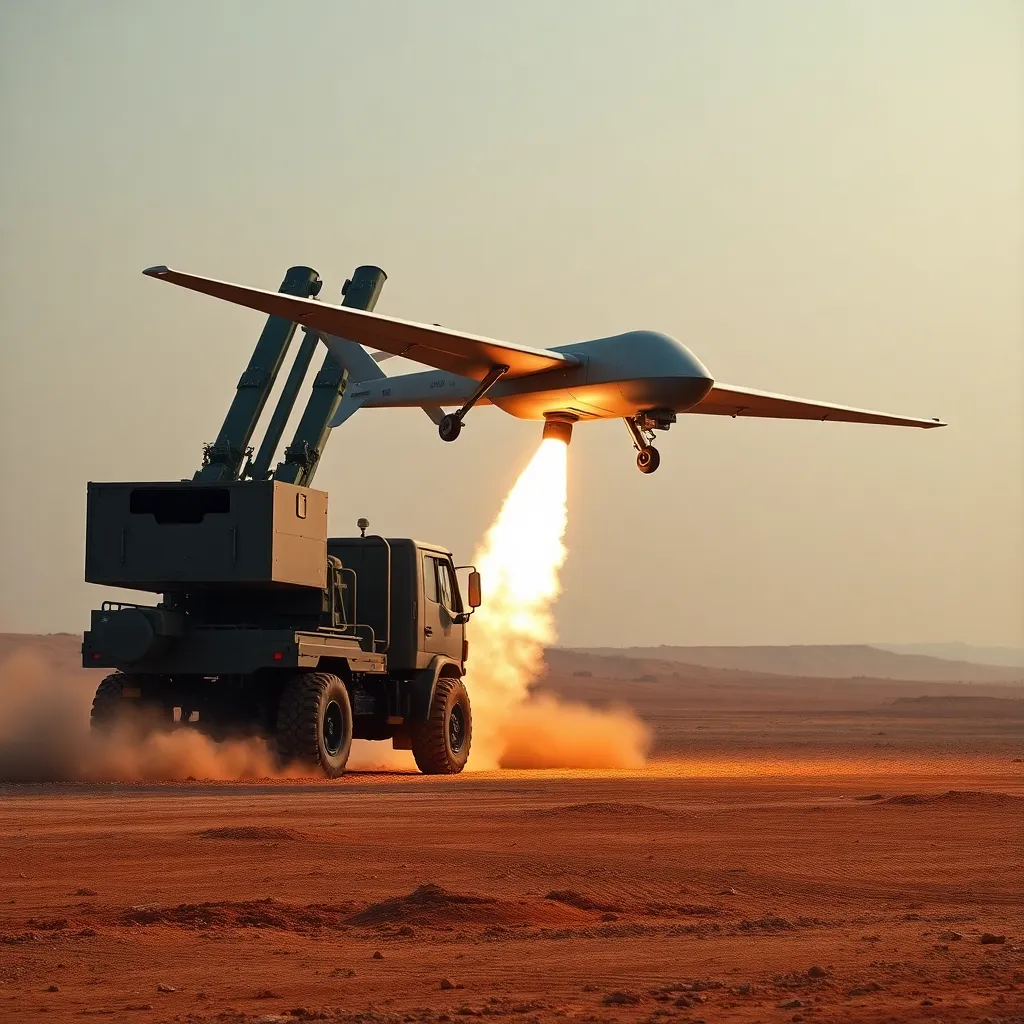
On 1 June 2026, the Indian Army operationally demonstrated the Divyastra Mk-1, an indigenous tactical loitering munition developed by Lucknow-based startup Hoverit, featuring 95% indigenous components. The AI-powered drone has a range of 500 km, endurance up to 5 hours, and can carry a 15 kg payload for intelligence, surveillance, reconnaissance, and precision strikes. Successfully tested under harsh desert conditions in Jodhpur, it was launched multiple times from a vehicle-mounted mobile launcher. Divyastra Mk-1 significantly enhances India's tactical strike and surveillance capabilities with cost-effectiveness aligned with the Make in India initiative.
On this page
Key Facts
- Test Date: 1 June 2026
- Location: Jodhpur, India
- Developer: Hoverit, a Lucknow-based defence startup
- Indigenization Rate: 95% indigenous components
- Operational Range: Up to 500 kilometers
- Endurance: Up to 5 hours
- Attack Speed: 300–400 km/h
- Payload Capacity: 15 kg
- Launch Method: Vehicle-mounted mobile launcher
Background & Context
The Divyastra Mk-1 is an AI-powered tactical unmanned aerial vehicle designed for intelligence, surveillance, reconnaissance (ISR), and precision strike missions. As a loitering munition, it can loiter over a target area for an extended period and strike with precision, blending surveillance and attack capabilities. The system integrates AI for autonomous navigation, target recognition, and swarm strike operations, reflecting modern unmanned warfare trends. The development by Hoverit, a defence startup from Lucknow, showcases India's expanding indigenous defence technology capabilities and aligns with the 'Make in India' initiative to reduce reliance on foreign imports.
The successful operational demonstration included multiple launches from a vehicle-mounted mobile launcher and validated the munition’s performance under harsh desert conditions with temperatures exceeding 50°C. Hoverit is concurrently developing the Divyastra Mk-2, a more advanced loitering munition with a striking range of 1,500–2,000 km and a payload capacity up to 80 kg, indicating a strategic leap in India's unmanned combat systems.
Why This Matters for Exams
This event is significant for competitive exams focusing on contemporary defense developments, indigenous Indian military technology, and national initiatives like Make in India. It highlights key facts relevant for questions on Indian defence R&D, the increasing use of AI in warfare, indigenous unmanned systems, and India's tactical modernization efforts.
Points to Remember
- Divyastra Mk-1 tested by Indian Army on 1 June 2026 in Jodhpur.
- Developed by Hoverit, a Lucknow-based start-up specializing in defence technology.
- Features a high indigenous content of approximately 95%, underlining Make in India efforts.
- Capabilities include a 500 km operational range, 5-hour endurance, and 15 kg payload for precision strikes.
- The system uses AI for autonomous navigation, target recognition, and coordinated swarm attacks.
- It was successfully launched multiple times via a vehicle-mounted mobile launcher, functioning in extreme desert heat.
- Divyastra Mk-2 is under development, targeting extended range (1,500–2,000 km) and heavier payloads (up to 80 kg).
- The Mk-1 offers a cost advantage of about one-third compared to similar foreign loitering munitions.
Sources & Further Reading
| Document / Website | Link |
|---|---|
| Indian Army Tests Divyastra Mk-1 Loitering Munition | Open Indian Army Tests Divyastra Mk-1 Loitering Munition ↗www.gktoday.in |
| Divyastra Mk-1: India's New Tactical Loitering Munition Revolutionizes Defense Capabilities | Open Divyastra Mk-1: India's New Tactical Loitering Munition Revolutionizes Defense Capabilities ↗timesofindia.indiatimes.com |
| HoverIt Advances Divyastra Mk2 Loitering Munition Program | Open HoverIt Advances Divyastra Mk2 Loitering Munition Program ↗idrw.org |