
Indian Coast Guard Holds Girder Laying Ceremony for Three Air Cushion Vehicles in Goa
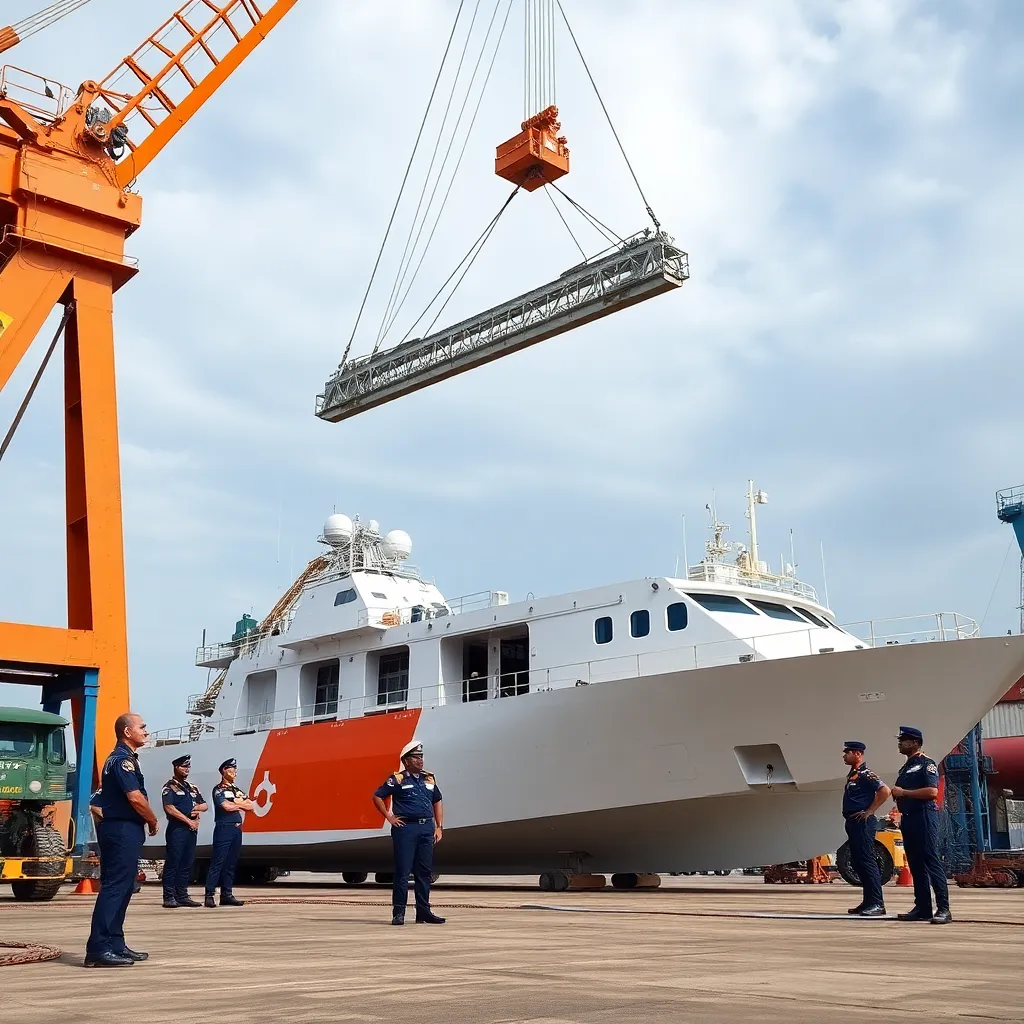
On 11 May 2026, the Indian Coast Guard conducted the girder-laying ceremony for the 4th, 5th, and 6th Air Cushion Vehicles (ACVs) at the Rassaim Yard of Chowgule Shipyard in Goa. These ACVs are part of a project involving six indigenously fabricated hovercrafts under a contract signed on 24 October 2024 with Chowgule & Company Pvt. Ltd., Goa. Based on designs from Griffon Hoverwork, UK, and built using about 50% indigenous materials, these hovercrafts are intended for high-speed coastal patrolling, reconnaissance in shallow waters, operations in marshy terrains and deep-sea tasks, as well as search and rescue missions. The project supports India's push for defense self-reliance under Aatmanirbhar Bharat and enhances the Indian Coast Guard's operational capabilities.
On this page
Key Facts
- Date of ceremony: 11 May 2026
- Location: Rassaim Yard, Chowgule Shipyard, Goa
- Vessels involved: 4th, 5th, and 6th Air Cushion Vehicles (ACVs)
- Contract signing date: 24 October 2024
- Contracted company: Chowgule & Company Pvt. Ltd., Goa
- Total number of ACVs to be built: 6
- Indigenous content: Approximately 50%
- Design origin: Griffon Hoverwork, United Kingdom
- Primary uses: High-speed coastal patrolling, reconnaissance in shallow waters, marshy terrain operations, deep-sea tasks, search and rescue missions
Background & Context
The Indian Coast Guard is a maritime armed force operating under India's Ministry of Defence, tasked with coastal security, patrolling, surveillance, and search and rescue operations. Air Cushion Vehicles (hovercraft) operate by riding on a cushion of air generated through lift fans and skirt systems, allowing them to traverse diverse terrains such as water, mudflats, and marshy areas where conventional vessels face limitations.
This project to build six ACVs indigenously at Chowgule Shipyard in Goa aims to enhance the Indian Coast Guard's operational capabilities across varied maritime environments. The hovercraft design is based on established Griffon Hoverwork technology from the UK, with construction integrating significant indigenous content in line with India's "Aatmanirbhar Bharat" (self-reliant India) initiative to boost domestic defense manufacturing.
Why This Matters for Exams / Exam Relevance
The event underscores India's strategic focus on enhancing maritime security through indigenous defense production. Exam questions related to India's maritime security infrastructure, indigenization drives in defense, and naval or coast guard modernization may probe details of this project, including dates, locations, technologies involved, and their operational significance.
Points to Remember
- The girder laying ceremony for the 4th, 5th, and 6th ACVs was held on 11 May 2026 at Chowgule Shipyard, Goa.
- The contract for six indigenously fabricated ACVs was signed on 24 October 2024 with Chowgule & Company Pvt. Ltd.
- The hovercrafts are designed based on the UK’s Griffon Hoverwork designs but built with approximately 50% indigenous content.
- These vehicles enable high-speed coastal patrolling, reconnaissance in shallow and marshy waters, deep-sea tasks, and search & rescue operations.
- The project supports India's defense self-reliance and maritime security modernization under the Aatmanirbhar Bharat initiative.
Sources & Further Reading
| Document / Website | Link |
|---|---|
| Indian Coast Guard holds ACV Girder Laying Ceremony in Goa | Open Indian Coast Guard holds ACV Girder Laying Ceremony in Goa ↗www.gktoday.in |
| Construction of India’s first indigenous hovercraft for Coast Guard begins at Goa Shipyard | Open Construction of India’s first indigenous hovercraft for Coast Guard begins at Goa Shipyard ↗ddnews.gov.in |
| Indigenous Hovercraft Construction for ICG Begins at Chowgule Shipyard | Open Indigenous Hovercraft Construction for ICG Begins at Chowgule Shipyard ↗www.pib.gov.in |