
ISRO Develops Advanced Lunar Lander for Missions Lasting up to 200 Days
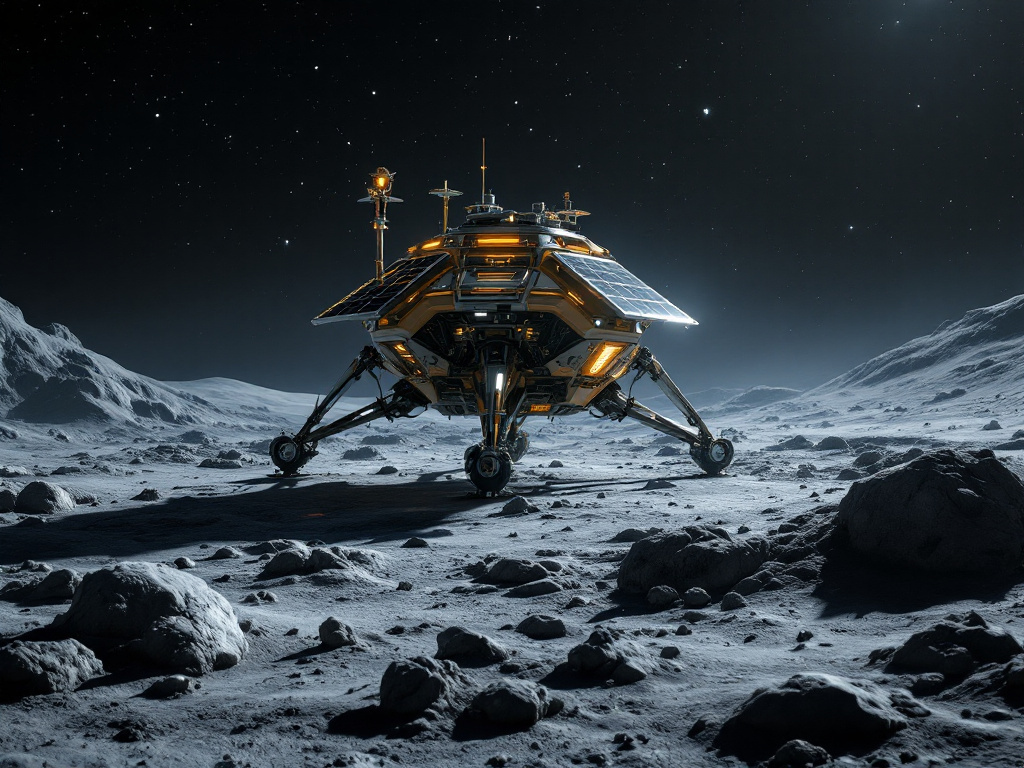
The Indian Space Research Organisation (ISRO), collaborating with the Department of Atomic Energy (DAE), is developing a lunar lander with artificial heating systems to enable continuous operation on the Moon for 100 to 200 days. This is a significant extension over the 14-day lifespan observed in Chandrayaan-3’s Vikram lander, which lacked heating and operated only during the lunar day. The new technology addresses the challenge of extreme temperature drops below -100°C during the two-week lunar night, which inhibits current landers from surviving beyond one lunar day. This development aligns with India’s broader Space Vision 2047 goals, including a national space station by 2035 and human Moon missions by 2040.
On this page
Key Facts
- ISRO and DAE are jointly developing a lunar lander technology with artificial heating to survive the Moon’s extreme temperature during the two-week-long lunar night.
- The lunar day and night last approximately 14 Earth days each, and the lunar night temperatures can drop below -100°C.
- Chandrayaan-3's Vikram lander, which soft-landed near the Moon’s south pole on 23 August 2023, operated only during the lunar day using solar power and ceased operation after about 14 Earth days.
- The new lander aims to extend operational lifespan to 100–200 days by protecting its electronics and scientific instruments during the cold lunar night using artificial heaters.
- India’s Space Vision 2047 includes objectives for a national space station by 2035 and manned lunar missions by 2040, for which such long-duration technology is foundational.
Background & Context
The Moon lacks a substantial atmosphere, resulting in drastic temperature fluctuations between its day and night. Lunar night, lasting about 14 Earth days, presents extreme cold that poses significant engineering challenges for powered landers relying on solar energy. Historically, lunar landers have only operated during the lunar day. ISRO’s Chandrayaan-3 Vikram lander successfully soft-landed near the lunar south pole in August 2023 but survived only through one lunar day due to lack of heating and solar power dependency.
In collaboration with the Department of Atomic Energy, ISRO is developing artificial heating systems designed to maintain the internal environment of the lander, preserving electronic components and instruments to function continuously through the long lunar night. This is critical for enabling longer-term scientific missions and exploration sustainability.
Why This Matters for Exams / Exam Relevance
Competitive exams covering current affairs, science and technology, and space exploration may include questions on ISRO’s recent advancements, lunar environment challenges, and India’s long-term space exploration strategy. Understanding the lunar day-night cycle, temperature challenges, ISRO’s collaboration with DAE, and the vision outlined in Space Vision 2047 is essential for detailed knowledge and exam readiness.
Points to Remember
- ISRO and Department of Atomic Energy are developing a lunar lander with artificial heating for 100–200 day operational capability as of 2026.
- Lunar days and nights are each roughly 14 Earth days; lunar nights are extremely cold, falling below -100°C.
- Chandrayaan-3’s Vikram lander landed successfully near the lunar south pole on 23 August 2023 but operated only during the lunar day (~14 days).
- Artificial heaters are critical to extend future lunar landers’ operational life by protecting sensitive electronics during the cold lunar night.
- India’s Space Vision 2047 includes a national space station by 2035 and manned lunar missions by 2040, with long-duration lunar landers playing a vital enabling role.
Sources & Further Reading
| Document / Website | Link |
|---|---|
| ISRO Aims to Extend Lunar Landers' Life to 200 Days - NewKerala.com | Open ISRO Aims to Extend Lunar Landers' Life to 200 Days - NewKerala.com ↗www.newkerala.com |
| ISRO Develops Lunar Lander for 200-Day Moon Missions - GKToday | Open ISRO Develops Lunar Lander for 200-Day Moon Missions - GKToday ↗www.gktoday.in |
| ISRO Vision 2047 and Lunar Missions - IndianMasterMinds.com | Open ISRO Vision 2047 and Lunar Missions - IndianMasterMinds.com ↗indianmasterminds.com |