
Italy Proposes Burqa and Niqab Ban in Schools Alongside Foreign Student Caps
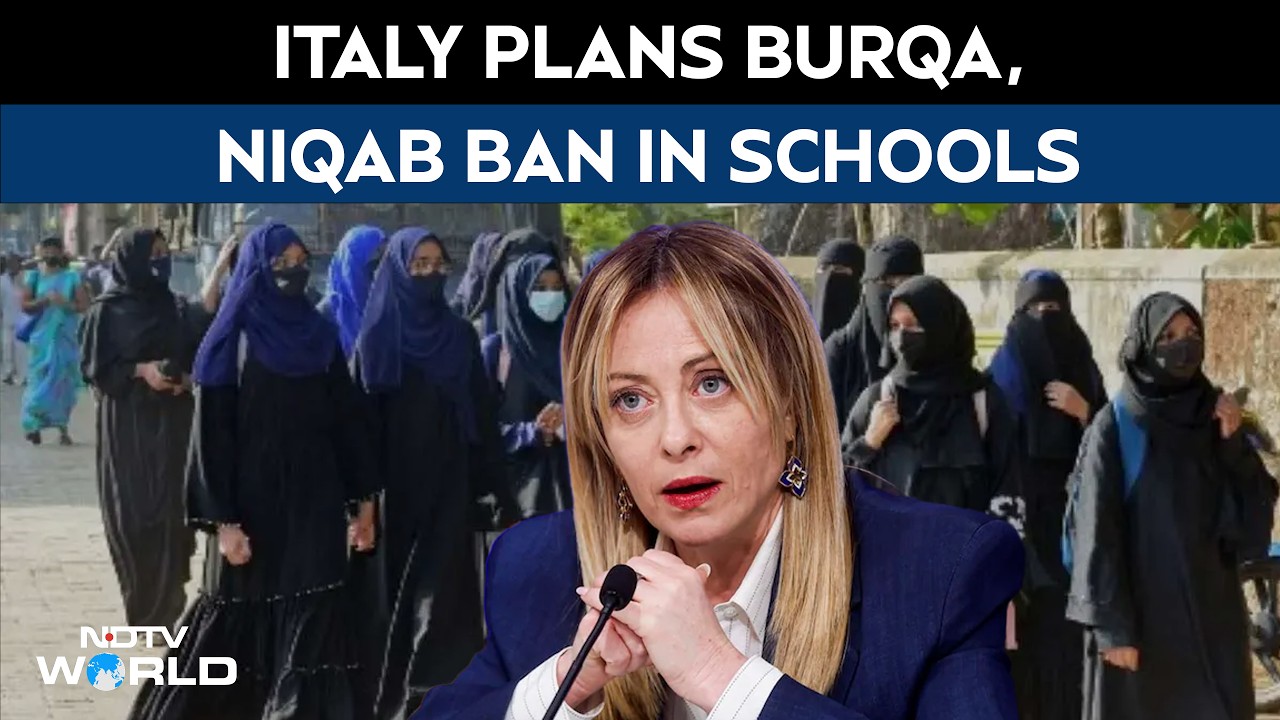
On 20 September 2026, Italian Prime Minister Giorgia Meloni announced a proposal to ban burqas and niqabs in Italian schools. The measure also aims to limit the number of foreign students per classroom and requires some parents of foreign students to learn Italian. The proposed law is subject to approval by the Council of Ministers and then Parliament within 60 days. Currently, Italy lacks a specific national law banning these face veils, though a 1975 law prohibits garments that hinder identification without valid reason. Foreign students constitute nearly 12% of pupils in Italian schools during 2023-24, according to ISTAT data. These changes reflect Italy's focus on integration and school environment uniformity ahead of elections.
On this page
Key Facts
- On 20 September 2026, Italian Prime Minister Giorgia Meloni announced a proposal to ban the burqa and niqab in Italian schools.
- The ban targets the burqa, which covers the entire body including a mesh screen over the face, and the niqab, which covers the face leaving only the eyes visible. The hijab, which covers hair and neck but not the face, was not explicitly included in the ban.
- The proposal also includes limiting the number of foreign students in each classroom and mandates Italian language lessons for some parents of foreign students who face serious integration difficulties.
- Italy currently has no specific national law banning burqas or niqabs in schools or public places. However, a 1975 law forbids garments that prevent identification without a valid justification.
- The proposal requires approval by the Council of Ministers followed by parliamentary approval within 60 days to become law.
- Foreign students made up just under 12% of pupils in Italian schools in the 2023-24 academic year according to ISTAT data.
- The announcement was made at the Fenix youth festival in Rome, organized by Meloni's nationalist conservative Brothers of Italy party.
Background & Context
Giorgia Meloni leads Italy’s longest-serving post-WWII government formed by the Brothers of Italy party, a nationalist conservative coalition. The announcement comes amid ongoing debates on immigration, national identity, and integration policies in Italy, with a general election expected in 2027. The ban reflects a trend in some European countries towards restricting conservative Islamic face coverings in public institutions.
The 1975 Italian law regulates clothing that hinders identification, but allows face coverings for religious or cultural reasons as long as individuals reveal their face for identity verification. This new legislation aims to clarify and extend restrictions specifically within school environments. It also introduces integration measures by requiring some foreign parents to learn Italian to support student integration.
Why This Matters for Exams
This topic is significant for exams focusing on current affairs, European politics, immigration, integration policies, and lawmaking processes. Students of competitive exams should understand the distinctions among Islamic veils and their sociopolitical implications, Italy's legislative mechanism, and ongoing debates about cultural integration and national identity in Europe.
Relevant questions might include:
- The significance of the burqa and niqab versus the hijab.
- Italy’s legal framework regarding face coverings.
- The political context of Giorgia Meloni’s government and immigration debate.
- Demographic data on foreign pupils in Italy's education system.
Points to Remember
- Burqa: Full-body veil with face fully covered by a mesh screen.
- Niqab: Face veil that leaves only the eyes visible.
- Hijab: Headscarf covering hair and neck but not the face; not part of this ban.
- Italian 1975 law prohibits garments that obscure identification, but with exceptions for cultural/religious reasons if identity can be verified.
- The proposed ban requires approval first by the Council of Ministers then by Parliament within 60 days.
- Foreign students constitute roughly 12% of the pupil population in Italian schools as of 2023-24.
- Giorgia Meloni is Prime Minister and leader of Brothers of Italy party, which is part of the governing coalition.
Practice MCQs
Question 1
- Which Islamic garments did Italy's 2026 proposed school ban specifically target?
- Burqa and niqab
- Hijab and turban
- Only hijab
- Beret and kufi
Answer: Burqa and niqab
Question 2
- Who are mandated to learn Italian according to the 2026 proposal?
- All foreign students
- Parents of foreign students with serious integration difficulties
- Only Italian citizens
- Government officials
Answer: Parents of foreign students with serious integration difficulties
Question 3
- Approximately what percentage of pupils in Italy’s schools were foreign students in the 2023–24 academic year?
- 5%
- 12%
- 25%
- 40%
Answer: 12%
Sources & Further Reading
| Document / Website | Link |
|---|---|
| Italy Plans Burqa and Niqab Ban in Schools – GKToday | Open Italy Plans Burqa and Niqab Ban in Schools – GKToday ↗www.gktoday.in |
| Meloni promises to ban burqas, niqabs in Italy’s schools | Open Meloni promises to ban burqas, niqabs in Italy’s schools ↗www.aljazeera.com |
| Meloni Advances New Rules for Foreign Students in Italian ... | Open Meloni Advances New Rules for Foreign Students in Italian ... ↗www.efinstitute.org |
| School Uniforms in Italy: Mandatory, Dress Code, or Free Choice? | Vivere in Italien | Open School Uniforms in Italy: Mandatory, Dress Code, or Free Choice? | Vivere in Italien ↗vivereinitalien.de |