
NASA Declares End of MAVEN Mars Mission After 11 Years of Atmospheric Research
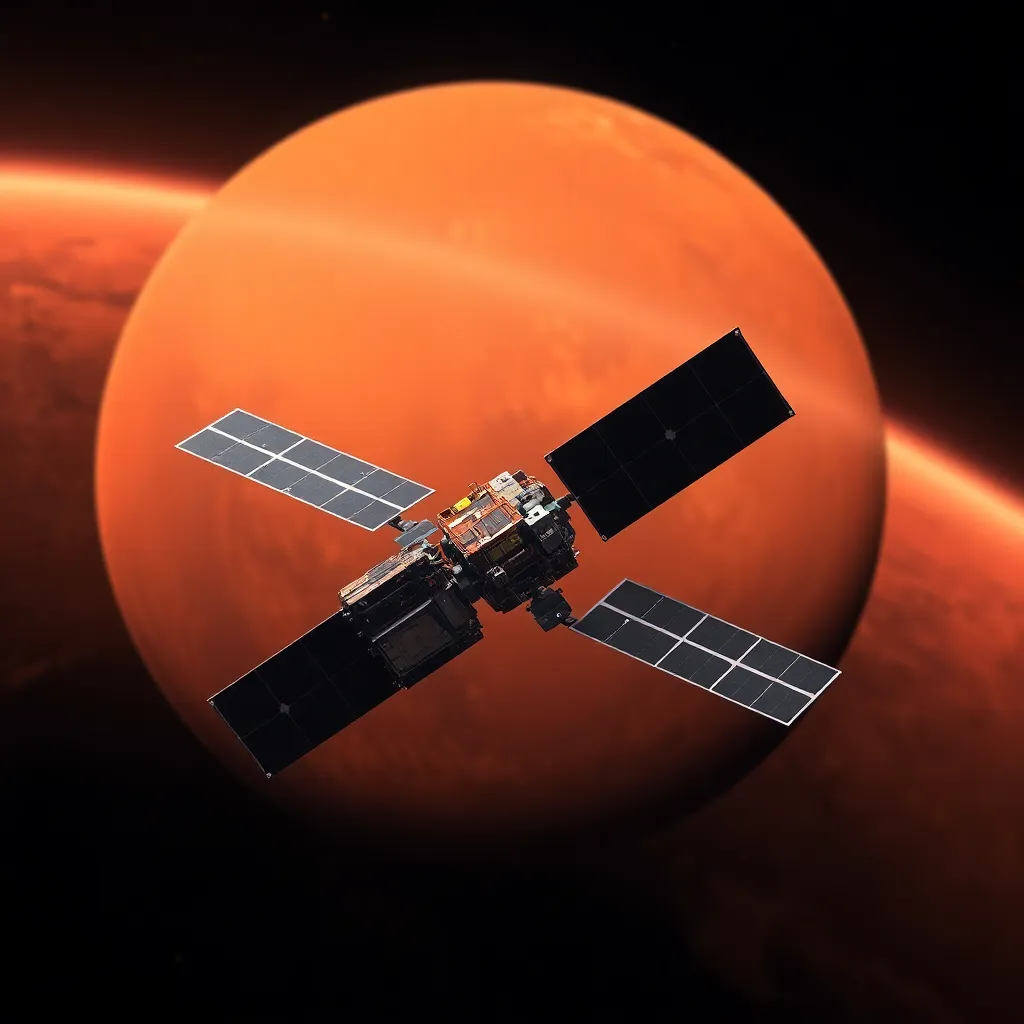
NASA officially concluded its Mars Atmosphere and Volatile Evolution (MAVEN) mission on June 3, 2026, after losing contact with the spacecraft in December 2025. Launched in November 2013, MAVEN orbited Mars for over 11 years, surpassing its primary one-year mission. It studied Mars' upper atmosphere and atmospheric escape processes, providing key insights into how Mars transitioned from a wetter, warmer planet to its current cold, dry state. MAVEN also supported surface missions by relaying data from Curiosity and Perseverance rovers. The spacecraft's loss of communication was attributed to an unexpected spin that drained its batteries, making recovery impossible.
On this page
Key Facts
- MAVEN stands for Mars Atmosphere and Volatile Evolution.
- Launch Date: November 18, 2013; Mars Orbit Insertion: September 21, 2014.
- MAVEN studied Mars' upper atmosphere and processes driving atmospheric escape to space, primarily caused by solar wind interactions.
- Lost contact on December 6, 2025, after an occultation behind Mars; last telemetry showed spacecraft in an unexpected, rapid spin.
- Officially declared mission end on June 3, 2026, after mission review concluded recovery efforts were unsuccessful due to drained batteries and unrecoverable spacecraft state.
- Served as an essential communication relay for NASA’s Curiosity and Perseverance rovers on Mars, aiding rover operations.
Background & Context
Launched in November 2013 and entering Martian orbit in September 2014, MAVEN was NASA’s first mission dedicated to studying Mars’ upper atmosphere and ionosphere. Its primary scientific objectives included determining the structure, composition, and behavior of Mars' upper atmosphere, measuring current atmospheric escape rates to space, and understanding the mechanisms driving atmospheric loss over geological time.
MAVEN's data have been instrumental in proving that solar wind and solar activity significantly contributed to the gradual loss of Mars's atmosphere, transforming it from a warm, wet planet capable of sustaining liquid water to the cold, arid world observed today. The mission formed a key part of NASA’s Mars exploration program and complemented surface missions by acting as a communications relay orbiting platform.
Why This Matters for Exams / Exam Relevance
MAVEN’s mission is a significant scientific achievement in planetary science and space exploration, often featured in current affairs and science sections of competitive exams. Understanding its objectives, timeline, and scientific contributions provides important context into Mars exploration and planetary atmospheric science. Key details such as mission launch year (2013), loss of contact date (December 2025), scientific objectives, and mission end date (June 2026) are commonly asked.
Points to Remember
- MAVEN stands for Mars Atmosphere and Volatile Evolution.
- Launched on November 18, 2013, and began science operations around Mars in September 2014.
- Primary goals included studying the upper atmosphere, ionosphere, and atmospheric loss mechanisms driven by solar wind.
- Loss of contact occurred on December 6, 2025, when the spacecraft failed to communicate after emerging from behind Mars during an occultation.
- Telemetry showed the spacecraft had entered safe mode and was rotating rapidly, resulting in battery drain and communication failure.
- NASA’s anomaly review board declared the spacecraft unrecoverable in June 2026.
- MAVEN provided key insights into Mars’ atmospheric evolution and played a critical role as a communications relay for Mars surface rovers like Curiosity and Perseverance.
Sources & Further Reading
| Document / Website | Link |
|---|---|
| NASA Ends MAVEN Mars Mission | Open NASA Ends MAVEN Mars Mission ↗www.gktoday.in |
| MAVEN - NASA Science | Open MAVEN - NASA Science ↗science.nasa.gov |
| NASA Says Farewell to MAVEN Mars Mission | Open NASA Says Farewell to MAVEN Mars Mission ↗www.nasa.gov |
| NASA's MAVEN Mars Probe: 10 Surprising Facts | Open NASA's MAVEN Mars Probe: 10 Surprising Facts ↗www.space.com |