
Nepal Objects to Kailash Mansarovar Yatra Route via Lipulekh Pass
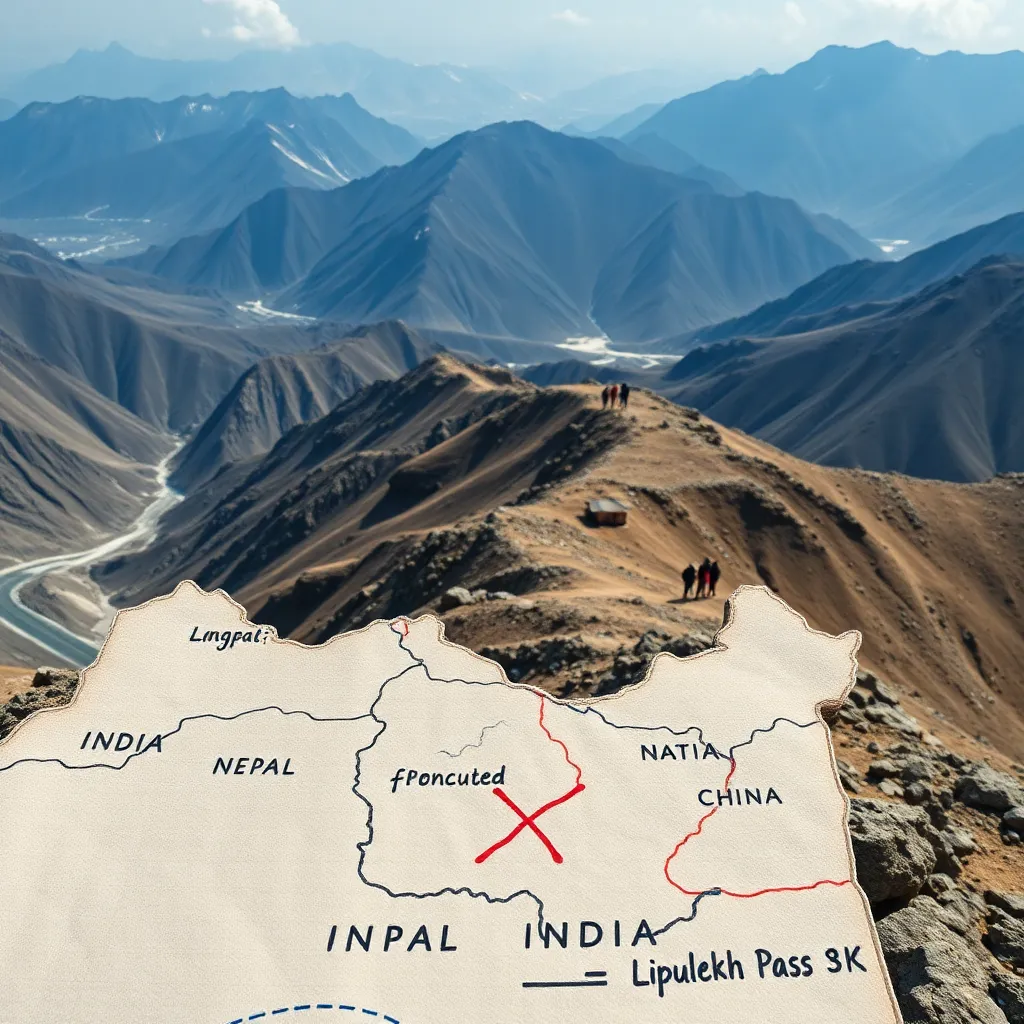
Nepal has raised diplomatic protests with India and China over the use of Lipulekh Pass in Uttarakhand for the Kailash Mansarovar Yatra, claiming the areas of Lipulekh, Limpiyadhura, and Kalapani belong to Nepal based on the 1816 Sugauli Treaty. India rejects these claims, stating the route has been used for pilgrimage since 1954 and denying Nepal's territorial assertions as historically unfounded. The dispute reflects ongoing complex border issues involving India, Nepal, and China.
On this page
Key Facts
- Lipulekh Pass is a high-altitude mountain pass located in the Pithoragarh district of Uttarakhand, India, near the tri-junction of India, China, and Nepal.
- The Kailash Mansarovar Yatra is an annual Hindu pilgrimage to Mount Kailash and Lake Mansarovar in the Tibet Autonomous Region of China, traditionally conducted via Lipulekh Pass.
- Nepal claims the territories of Lipulekh, Limpiyadhura, and Kalapani under the 1816 Treaty of Sugauli, asserting that these areas fall within its borders.
- India disputes Nepal's territorial claims, asserting that the Lipulekh Pass has been used as a pilgrimage route since 1954 and that Nepal's claims lack historical evidence.
- The 2026 Kailash Mansarovar Yatra is scheduled to proceed via Lipulekh Pass despite Nepal's objections, with ten batches planned.
Background & Context
The Treaty of Sugauli, signed on March 4, 1816, between the British East India Company and the Kingdom of Nepal following the Anglo-Nepalese War, established boundary lines, notably using the Kali River as the western boundary. However, the precise origin of the Kali River is disputed between India and Nepal, which fuels the ongoing border disagreement involving areas such as Lipulekh, Limpiyadhura, and Kalapani. India maintains sovereignty over these areas and has used the Lipulekh Pass for pilgrimage and trade routes since 1954. Nepal has lodged multiple diplomatic protests with India and China opposing infrastructure development and the use of Lipulekh for the Kailash Mansarovar Yatra, emphasizing resolution through dialogue based on historical evidence and treaties.
Why This Matters for Exams
This dispute is vital for understanding contemporary India-Nepal relations, the role of historical treaties in defining international boundaries, and geopolitical dynamics in South Asia. It highlights issues of territorial sovereignty, border management, and the significance of pilgrimage routes in regional diplomacy. Questions may focus on the Sugauli Treaty, boundary disputes, and the implications for regional cooperation and conflicts involving India, Nepal, and China.
Points to Remember
- Lipulekh Pass lies in Uttarakhand's Pithoragarh district close to the tri-junction with China and Nepal.
- The Kailash Mansarovar Yatra has been conducted via Lipulekh Pass since at least 1954, promoted by India.
- Nepal's territorial claims cite the 1816 Treaty of Sugauli, which defined the Kali River as the boundary; however, the river's source is contested.
- India rejects Nepal's claims, labeling them unilateral and lacking historical foundation.
- The Lipulekh-Limpiyadhura-Kalapani region remains a contested border area leading to diplomatic protests and calls for dialogue.
- The 2026 pilgrimage is planned via Lipulekh Pass despite Nepal's objections, underscoring ongoing boundary sensitivities.
Sources & Further Reading
| Document / Website | Link |
|---|---|
| Nepal Objects to Kailash Mansarovar Yatra via Lipulekh Pass - GKToday | Open Nepal Objects to Kailash Mansarovar Yatra via Lipulekh Pass - GKToday ↗www.gktoday.in |
| Lipulekh route dispute: Nepal protests Kailash Mansarovar Yatra corridor - India Today | Open Lipulekh route dispute: Nepal protests Kailash Mansarovar Yatra corridor - India Today ↗www.indiatoday.in |
| Treaty of Sugauli - Britannica | Open Treaty of Sugauli - Britannica ↗www.britannica.com |