
Pakistan Explores ‘Islamic NATO’ with Gulf States Including Qatar and Turkiye
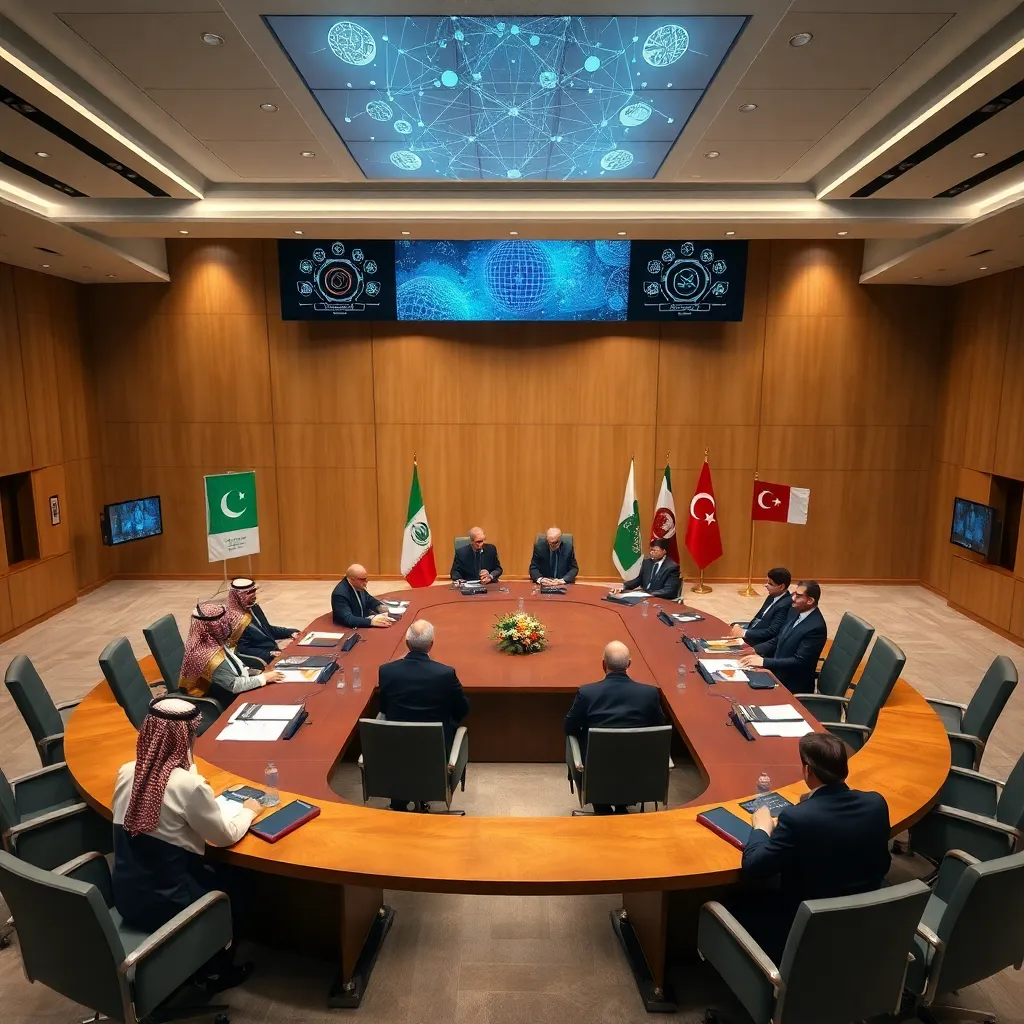
Following the Strategic Mutual Defence Agreement (SMDA) signed between Pakistan and Saudi Arabia in September 2025, Pakistan has initiated talks with Gulf nations, notably Qatar and Turkiye, to form an expanded regional defence and economic bloc often termed an 'Islamic NATO'. This alliance aims to ensure collective defence, regional stability, and reduced reliance on external powers. The concept gained momentum after a 2025 Israeli airstrike on Doha, highlighting Gulf states' security vulnerabilities. Turkiye's advanced military industry and Qatar's regional security involvement complement Pakistan and Saudi Arabia’s strategic partnership, potentially redefining security architecture in West Asia without targeting any specific country.
On this page
Key Facts
- Pakistan and Saudi Arabia signed a Strategic Mutual Defence Agreement (SMDA) on September 17, 2025.
- The SMDA commits both countries to treat aggression against one as aggression against both, embodying collective security.
- Pakistan is in discussions to include Qatar and Turkiye, aiming to expand the pact into a broader regional defence and economic arrangement conceptualized as an “Islamic NATO.”
- Turkiye is a NATO member with a significant defence industry and military modernization record.
- Qatar has actively participated in regional security dialogues within West Asia.
- The idea of an Islamic NATO intensified following the September 2025 Israeli airstrike on Doha, exposing Gulf security vulnerabilities and diminishing perceived reliability on the United States.
Background & Context
The longstanding strategic cooperation between Pakistan and Saudi Arabia culminated in the SMDA of September 2025, reflecting nearly eight decades of defence and economic collaboration. This agreement formalized a collective defence commitment amid shifting geopolitical dynamics in West Asia, including concerns about US security guarantees. The Israeli airstrike on Doha heightened Gulf states' urgency to enhance deterrence and regional collective security, prompting Pakistan to propose an inclusive bloc involving Qatar and Turkiye. This grouping intends to build regional stability, reduce dependency on external powers, and foster joint security cooperation without explicitly targeting any country.
Why This Matters for Exams / Exam Relevance
The Strategic Mutual Defence Agreement and the emerging concept of an Islamic NATO represent pivotal developments in West Asian security architecture. Competitive exams may test candidates on key dates, countries involved, the nature of mutual defence commitments, and implications for regional power dynamics and alliances. Understanding the role of Pakistan's nuclear capability, Turkiye’s NATO membership and military strength, and Qatar's diplomatic engagements enriches one’s grasp of contemporary strategic affairs in South and West Asia.
Points to Remember
- SMDA signing date: September 17, 2025.
- Signatories: Pakistan and Saudi Arabia formally committed to mutual defence.
- Proposed expansion includes Qatar and Turkiye to form an Islamic NATO-type alliance.
- Trigger event: Israeli airstrike on Doha in September 2025 underscored security concerns.
- Pakistan is a nuclear-armed country with ballistic missile capabilities.
- Turkiye is a NATO member, possessing advanced defence industry and a large armed forces.
- The new defense arrangement emphasizes regional stability without being directed against any specific country.
Sources & Further Reading
| Document / Website | Link |
|---|---|
| Pakistan Explores Islamic NATO Defence Cooperation – GKToday | Open Pakistan Explores Islamic NATO Defence Cooperation – GKToday ↗www.gktoday.in |
| Joint Statement Issued Following Pakistan Prime Minister State Visit to Saudi Arabia - SPA | Open Joint Statement Issued Following Pakistan Prime Minister State Visit to Saudi Arabia - SPA ↗www.spa.gov.sa |
| On The Way To An 'Islamic NATO'? Turkey Advances Towards Membership In Saudi-Pakistan Defense Pact - MEMRI | Open On The Way To An 'Islamic NATO'? Turkey Advances Towards Membership In Saudi-Pakistan Defense Pact - MEMRI ↗www.memri.org |