
Paninian India Unveils Indigenous Yantur 4.5 kN Turbofan Engine Programme
On 20 July 2026, Paninian India Private Ltd., headquartered in Bengaluru and Hyderabad, launched the Yantur 4.5 kN turbofan engine programme. This engine is designed for long-range autonomous platforms like combat drones and cruise missiles and aligns with India's Make-I initiative promoting indigenous defence technologies under the Ministry of Defence.
On this page
Key Facts
- Programme Launch Date and Location: 20 July 2026, New Delhi.
- Developer: Paninian India Private Ltd., with bases in Bengaluru and Hyderabad.
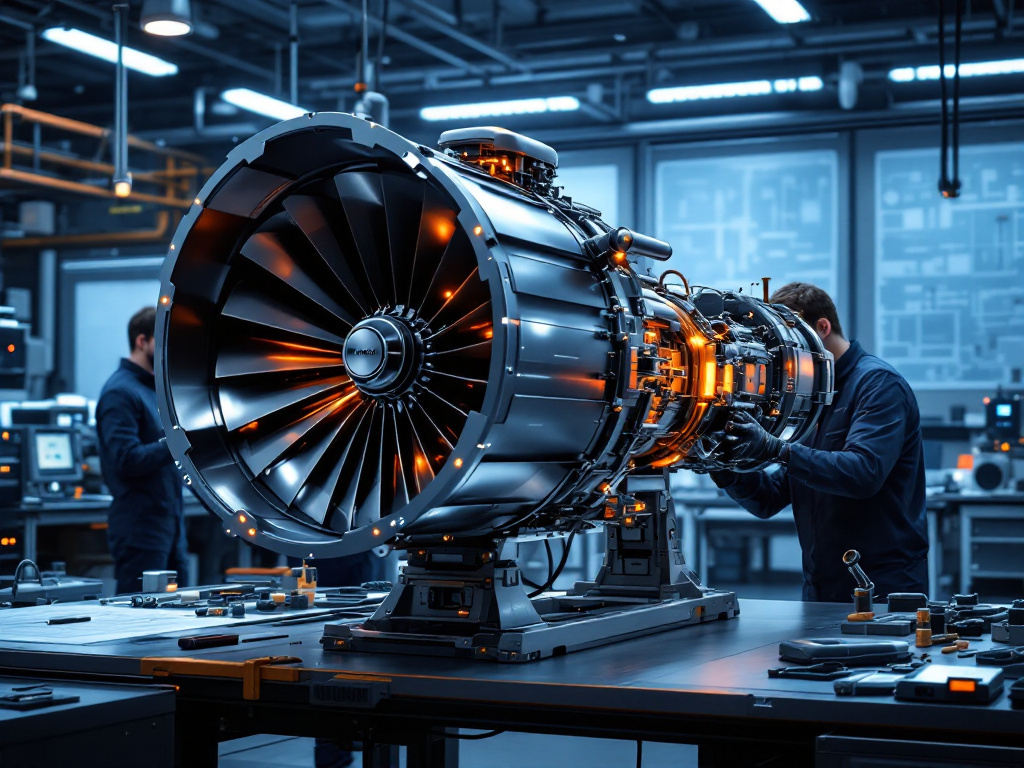
- Engine Type: Yantur turbofan engine with a core thrust of 4.5 kilonewtons (kN), scalable up to 12.5 kN for larger platforms like the Svayatt CCAV.
- Applications: Intended for powering long-range autonomous systems such as combat drones and the Svayatt L1 cruise missile platform.
- Technological Features: Use of digital twin technology for health monitoring; patented innovations in engine family architecture, combustor and diffuser-nozzle design, compressor technology, and advanced manufacturing techniques.
- Programme Progress: Completed conceptual and detailed design phases; currently in subsystem testing, validation, and engine certification stages.
- Funding: Approximately USD 3 million sought to accelerate engine testing and integration with the autonomous platforms.
- Associated Government Programme: Linked to the Ministry of Defence’s Make-I programme promoting indigenous defence manufacturing.
Background & Context
Turbofan engines are gas turbine engines that generate thrust primarily through a fan at the front, supplemented by core engine output. Compact turbofan engines efficiently combine thrust, fuel economy, and reduced size, making them suitable for unmanned aerial vehicles, cruise missiles, and related autonomous systems. India's aerospace propulsion sector encompasses both public and private entities focusing on jet engines, missile propulsion, and unmanned systems to achieve strategic self-reliance. The Yantur engine programme emphasizes private sector involvement in indigenous aerospace propulsion technology, an area traditionally dominated by government enterprises.
Why This Matters for Exams / Exam Relevance
This development illustrates India's ongoing efforts to build sovereign aerospace propulsion capability under the Make-I initiative of the Ministry of Defence, a critical aspect of India's defence manufacturing policy. Understanding this programme covers topics such as indigenous defence production, private sector role in strategic industries, and advances in aerospace technology, commonly tested in competitive exams. The launch's specifics, like dates, organizations, and associated platforms, are useful for current affairs and technology-related questions.
Points to Remember
- The Yantur turbofan engine produces 4.5 kN of thrust and is scalable to 12.5 kN.
- Programme was publicly unveiled on 20 July 2026 in New Delhi.
- Engine is targeted for autonomous long-range systems including the Svayatt L1 cruise missile.
- Paninian India Pvt. Ltd operates out of Bengaluru and Hyderabad.
- Programme involves completing design phases and moving into subsystem testing and certification.
- The programme includes five patent claims covering key technological aspects.
- Digital twin technology is used for engine health monitoring and validation.
- The Make-I programme is a Ministry of Defence initiative that promotes indigenous defence manufacturing.
- Funding of $3 million is being sought to accelerate development.
Sources & Further Reading
| Document / Website | Link |
|---|---|
| Indian Startup Unveils Yantur Turbofan Engine Programme - GKToday | Open Indian Startup Unveils Yantur Turbofan Engine Programme - GKToday ↗www.gktoday.in |
| Ministry of Defence - Make in India Policy | Open Ministry of Defence - Make in India Policy ↗mod.gov.in |
| Turbofan Engine Basics - Britannica | Open Turbofan Engine Basics - Britannica ↗www.britannica.com |