
Skyroot Aerospace and HEX20 ink Multi-Launch Agreement for Satellite Missions from 2027
Skyroot Aerospace, a Hyderabad-based private space company, has signed a Multi-Launch Agreement (MLA) with HEX20, a spacetech startup headquartered in Thiruvananthapuram, to launch Earth-observation satellites and payload demonstration missions. The contract includes three dedicated launches aboard Skyroot's Vikram series of orbital-class launch vehicles, planned to begin in the fourth quarter of 2027. This partnership reflects the growing collaboration between Indian private space startups and supports the expanding commercial space sector fostered by recent space policy reforms.
On this page
Key Facts
- Skyroot Aerospace, headquartered in Hyderabad, is a private Indian space company specializing in developing launch vehicles.
- HEX20 is a spacetech startup based in Thiruvananthapuram, Kerala, focused on Earth observation and in-orbit payload demonstration missions.
- The Multi-Launch Agreement (MLA) was signed on 6 August 2026 by Naga Bharath Daka (Co-founder and COO of Skyroot Aerospace) and M.B. Aravind (Co-founder and COO of HEX20).
- The agreement covers three dedicated satellite launches scheduled from the fourth quarter of 2027 onward aboard Skyroot’s Vikram series of launch vehicles.
- These missions will include rideshare opportunities, allowing additional third-party payloads to share launch capacity alongside HEX20's satellites.
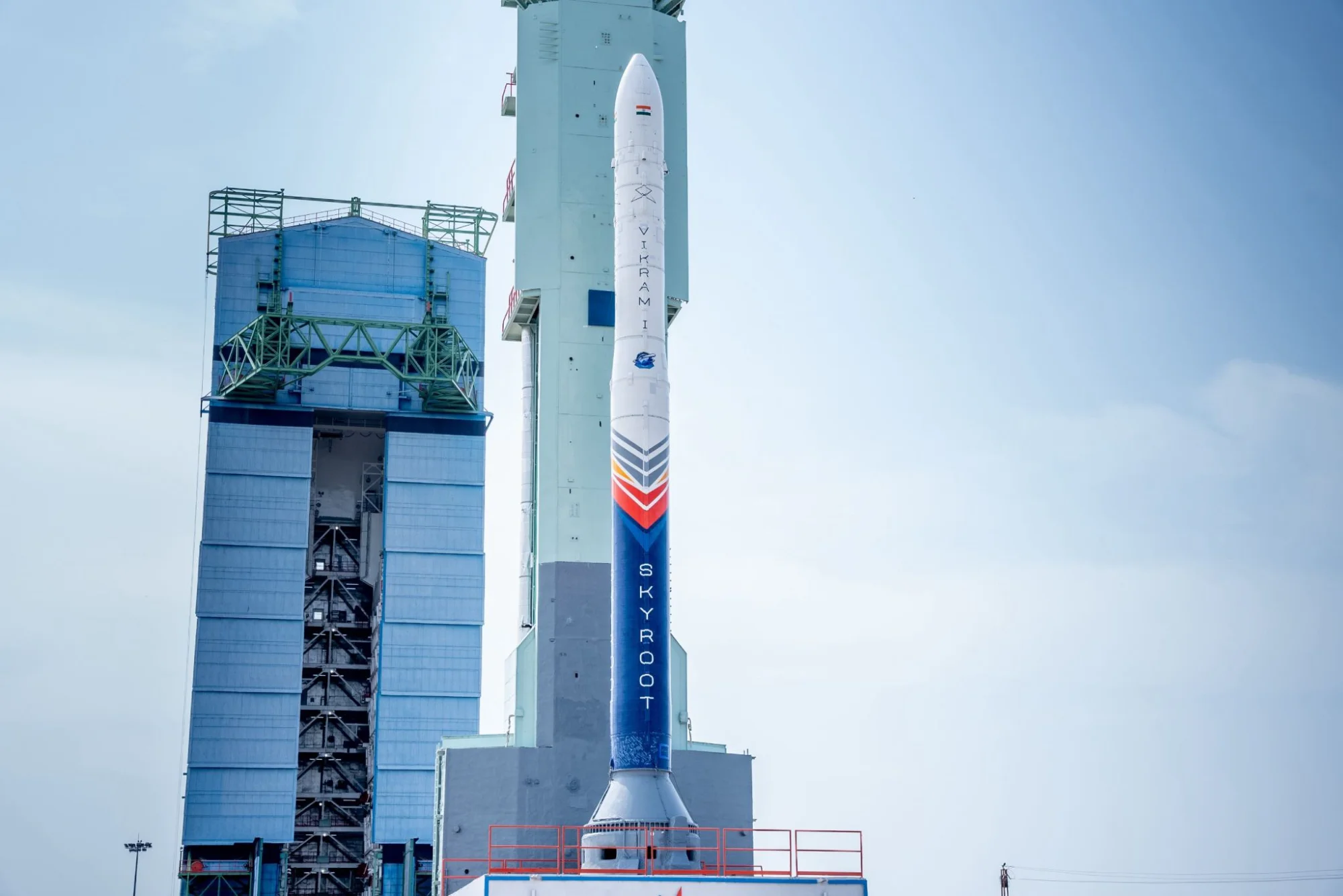
- Skyroot's Vikram-1 rocket successfully completed its maiden orbital flight on 18 July 2026 from Satish Dhawan Space Centre (SDSC) at Sriharikota, Andhra Pradesh.
- Satish Dhawan Space Centre is India’s primary orbital launch facility, located in Sriharikota.
- Low Earth Orbit (LEO) is defined here as altitudes roughly between 160 km and 2,000 km above the Earth’s surface, and is the target orbit for Vikram-1 launches.
- Skyroot aims to increase launch cadence, with ambitious targets of up to 12 launches per year in the future.
Background & Context
Since the introduction of the Indian space reforms from 2020 onward, private companies such as Skyroot Aerospace and HEX20 have emerged as key players in India's growing private space ecosystem. Skyroot Aerospace became the first private Indian company to launch a fully domestic orbital-class rocket (Vikram-1) successfully into orbit, demonstrating the capabilities of homegrown launch technology. HEX20, which has developed expertise in satellite platform development, mission services, and in-orbit testing, has also pioneered private-sector rideshare satellites in India. This MLA signifies active collaboration between private entities for spacecraft development, launch, and orbital operations, marking a strategic move to bolster India's competitiveness in commercial space activities.
Why This Matters for Exams
This development is important for understanding the evolution of India's space policy and industrial ecosystem. Competitive exams often probe recent advancements in science and technology, including India's strides in space technology and private sector participation. Key focus areas include knowledge of private space players like Skyroot Aerospace and HEX20, their major missions such as the Vikram-1 maiden flight, multi-launch agreements, roles of the Satish Dhawan Space Centre, and terms like Low Earth Orbit (LEO) and rideshare missions. These topics reflect India's strategic efforts to enhance its capabilities in space for commercial, scientific, and technological advantage.
Points to Remember
- Vikram-1's successful maiden orbital flight occurred on 18 July 2026.
- The Multi-Launch Agreement between Skyroot Aerospace and HEX20 was signed on 6 August 2026.
- The initial three dedicated launches under this agreement are scheduled to start from the fourth quarter of 2027.
- Skyroot Aerospace is headquartered in Hyderabad, Telangana; HEX20 is based in Thiruvananthapuram, Kerala.
- Launch operations take place primarily at the Satish Dhawan Space Centre in Sriharikota, Andhra Pradesh.
- Rideshare missions onboard Vikram series allow multiple customers to share launch costs and access space.
- The Vikram-1 rocket can place payloads up to approximately 350 kg into Low Earth Orbit.
- India’s private space policy reforms since 2020 have been instrumental in enabling such collaborations and ventures.
Sources & Further Reading
| Document / Website | Link |
|---|---|
| Skyroot Signs Multi-Launch Agreement After Vikram-1 Success | Open Skyroot Signs Multi-Launch Agreement After Vikram-1 Success ↗www.gktoday.in |
| Skyroot, HEX20 Sign Multi-Launch Agreement for 3 Vikram Missions | Open Skyroot, HEX20 Sign Multi-Launch Agreement for 3 Vikram Missions ↗analyticsindiamag.com |
| Vikram-1 - Wikipedia | Open Vikram-1 - Wikipedia ↗en.wikipedia.org |
| India's Maiden Private Rocket Launch - Drishti IAS | Open India's Maiden Private Rocket Launch - Drishti IAS ↗www.drishtiias.com |