
Usutu Virus Detected in Scotland for the First Time
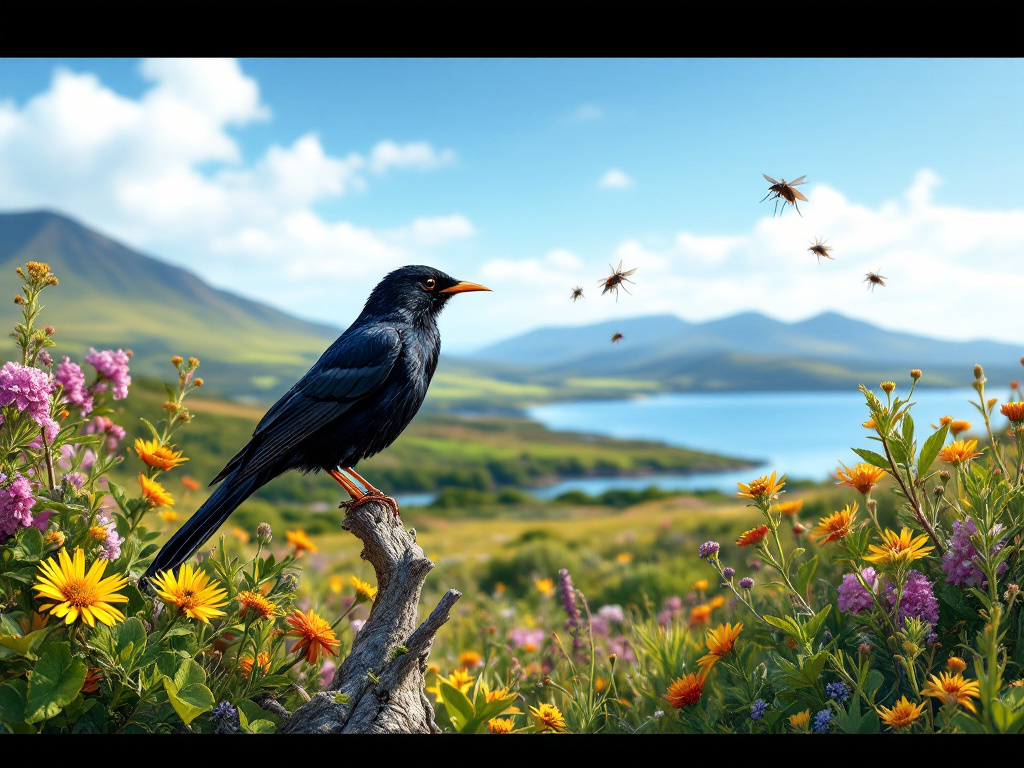
In summer 2025, Usutu virus (USUV), a mosquito-borne flavivirus infecting primarily wild birds, was confirmed in blackbirds on the Isle of Arran, Scotland. The detection, announced on April 1, 2026, marks the first record of USUV in Scotland. The virus has circulated in southeast England for six years prior to this finding, causing blackbird population declines. USUV rarely causes symptomatic infection in humans, and no human cases have been reported in the UK to date. This detection highlights the ongoing northward expansion of mosquito-borne viruses and the importance of bird and mosquito surveillance.
On this page
Key Facts
- First detection of Usutu virus in Scotland occurred in summer 2025; confirmed and publicly announced April 2026.
- Virus identified in blackbirds on the Isle of Arran through passive wild bird surveillance.
- Usutu virus is a mosquito-borne flavivirus primarily affecting birds, mainly genus _Turdus_ (blackbirds), transmitted by _Culex_ mosquitoes.
- It belongs to the Flaviviridae family, related to West Nile and Japanese encephalitis viruses.
- The virus has caused significant blackbird population declines in parts of Europe.
- In the UK, USUV had been circulating in southeast England for six years before detection in Scotland.
- Human infection is rare and typically asymptomatic or mild; no human cases reported in the UK.
- Detection and confirmation was performed by the Animal and Plant Health Agency (APHA), SRUC Veterinary Services, and the Mosquito Scotland research programme at the University of Glasgow.
- Phylogenetic analysis placed Scottish virus samples within the Africa 3.2 lineage, consistent with spread from existing UK strains.
- Multiple mosquito species capable of transmitting USUV were found near affected sites on the Isle of Arran.
- The UK public is encouraged to report dead or sick wild birds, especially songbirds and owls, and to eliminate standing water to control mosquito breeding during active season (April to October).
Background & Context
Usutu virus was first identified in 1959 near the Usutu River in Swaziland, Africa. It is a neurotropic flavivirus transmitted in an enzootic cycle between ornithophilic mosquitoes (especially _Culex_ spp.) and birds. It has spread through many European countries since the mid-1990s. In Europe, USUV causes epizootics with mortality, notably in blackbirds and some owl species. Its zoonotic potential is recognized, with occasional human infections reported mainly in immunocompromised individuals, but cases remain rare. Surveillance programs such as the UK's APHA national passive wild avian surveillance help monitor circulation and geographic spread. Recently, climate and environmental changes have facilitated the northward expansion of USUV and related arboviruses.
Why This Matters for Exams / Exam Relevance
The detection of Usutu virus in Scotland is significant for ecology, public health, and virology topics in exams. It illustrates virus ecology, host-vector interactions, arbovirus epidemiology, and the impact of environmental factors—including climate change—on disease emergence and spread. Understanding the transmission cycle, affected species, surveillance methods, and zoonotic implications is important for biology, environmental science, and health exams. Relevant details such as timelines, locations, agencies involved, and the low human health risk are potential factoids for questions.
Points to Remember
- Usutu virus is a mosquito-borne flavivirus affecting wild birds and rarely humans.
- First Scottish detection was in summer 2025 on the Isle of Arran; announced April 2026.
- Transmission via _Culex_ mosquitoes, with blackbirds being highly susceptible hosts.
- USUV circulation in southeast England for six years preceded this northern spread.
- No human cases reported in the UK; public health risk remains very low.
- Surveillance by APHA, SRUC, and University of Glasgow was critical for detection and confirmation.
- Phylogenetic analysis identified the Africa 3.2 lineage, consistent with northward spread from established UK foci.
- Measures to control mosquito breeding and report dead birds help monitor and reduce risk.
Sources & Further Reading
| Document / Website | Link |
|---|---|
| First detection of Usutu virus in Scotland - GOV.UK | Open First detection of Usutu virus in Scotland - GOV.UK ↗www.gov.uk |
| Human Usutu Virus Infections in Europe: A New Risk on Horizon? - PMC | Open Human Usutu Virus Infections in Europe: A New Risk on Horizon? - PMC ↗pmc.ncbi.nlm.nih.gov |
| Epidemiology of Usutu Virus: The European Scenario - PMC | Open Epidemiology of Usutu Virus: The European Scenario - PMC ↗pmc.ncbi.nlm.nih.gov |