
Uttar Pradesh Government Announces 21% Minimum Wage Hike Following Noida Workers' Protests
In response to violent worker protests in Noida in April 2026, the Uttar Pradesh government implemented an interim minimum wage hike across various worker categories, effective from April 1, 2026. Unskilled workers in Noida and Ghaziabad saw their monthly wages raised by 21%, from ₹11,313 to ₹13,690. Semi-skilled and skilled workers also received increased wages, with semi-skilled wages revised from ₹12,445 to ₹15,059 and skilled workers from ₹13,940 to ₹16,668. The government clarified that reports of a uniform ₹20,000 minimum wage were inaccurate. This interim measure precedes a broader wage revision linked to ongoing national Labour Code reforms aimed at standardizing wages.
On this page
Key Facts
- The interim minimum wage hike by Uttar Pradesh government took effect on April 1, 2026.
- Unskilled workers in Noida and Ghaziabad received a 21% increase, raising monthly wages from ₹11,313 to ₹13,690.
- Semi-skilled workers' wages were increased from ₹12,445 to ₹15,059.
- Skilled workers' wages rose from ₹13,940 to ₹16,668.
- Municipal areas saw a wage increase of approximately 15%, while other regions received about a 9% hike.
- Reports of a uniform ₹20,000 minimum wage fixed by the government are incorrect; the government clarified no such directive exists.
- The UP government plans to constitute a Wage Board that will review and recommend future wage structures taking stakeholder inputs.
- This interim hike is linked with ongoing national Labour Code reforms aimed at standardizing wage policies across India.
Background & Context
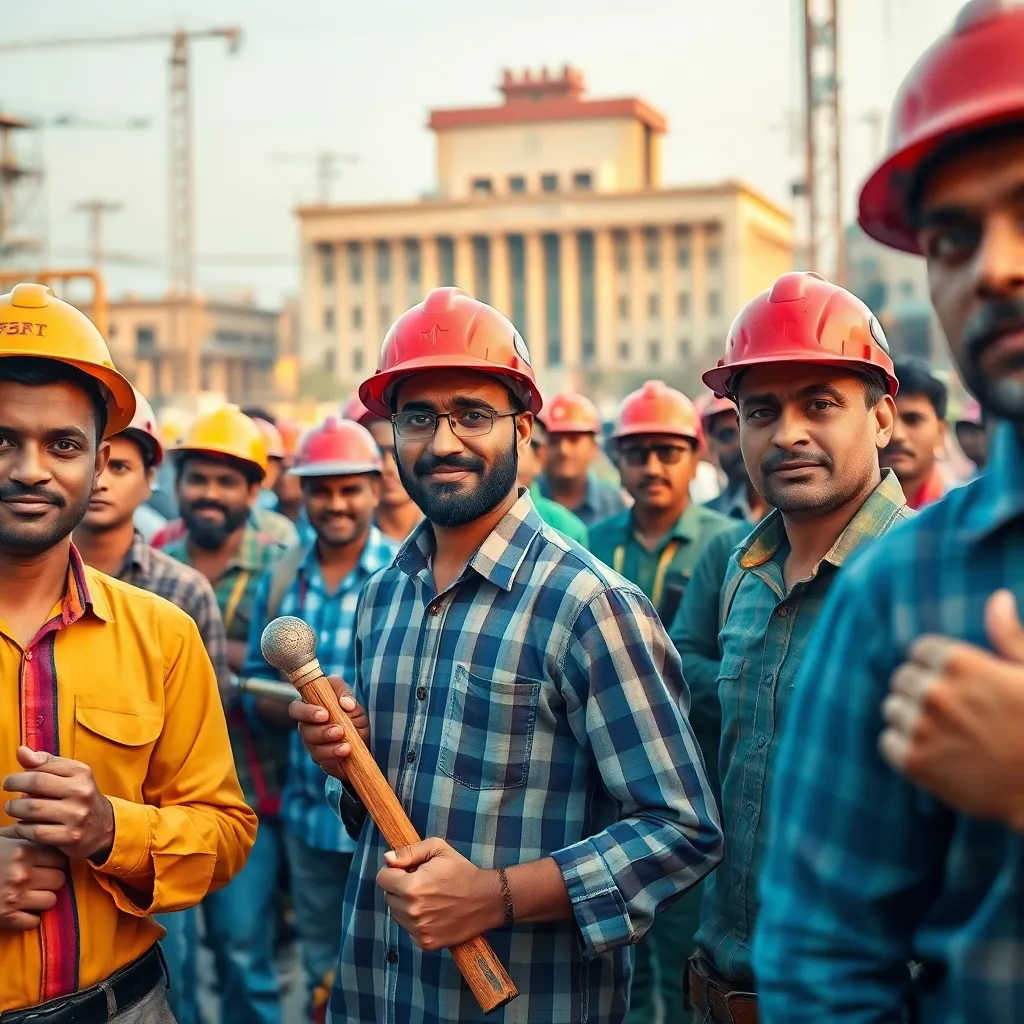
In April 2026, factory and industrial workers in Noida staged protests demanding higher wages and improved working conditions, citing disparities with neighboring Haryana state, where wages were comparatively higher. The protests turned violent, leading to property damage and police intervention. The unrest prompted the Uttar Pradesh government to announce an interim wage increase as a conciliatory measure to defuse tensions. The government simultaneously urged industries to uphold worker safety, timely wages, and labour law compliance, warning of strict actions against violence. These developments are part of a broader national effort under new Labour Codes to consolidate and revise labour laws, including minimum wage norms.
Why This Matters for Exams / Exam Relevance
This event and the policy changes are significant for competitive and civil service examinations relating to Indian polity, economy, labour welfare, and current affairs. Questions often address government responses to labour unrest, minimum wage policies, regional economic disparities, and reforms under the Labour Codes. Understanding the wage hike details, the context of Noida protests, and the linkage with nationwide labour law reforms is critical for exam preparation.
Points to Remember
- The wage hike took effect from April 1, 2026.
- The highest interim increase of 21% applies to unskilled workers in Noida and Ghaziabad.
- There is no fixed uniform minimum wage of ₹20,000 as misreported; official clarification denies this claim.
- The Wage Board is a statutory body constituted to analyze and recommend fair wage structures after stakeholder consultation.
- India's Labour Codes, which consolidate 29 labour laws into four codes, include provisions to unify and revise wage policies.
- Wage disparities between neighboring states often fuel industrial unrest.
Sources & Further Reading
| Document / Website | Link |
|---|---|
| UP govt raises minimum wages by 21% after Noida protests | Open UP govt raises minimum wages by 21% after Noida protests ↗www.gktoday.in |
| New Labour Codes in India: How Changes in Wages, PF and Gratuity Affect Salaries | Open New Labour Codes in India: How Changes in Wages, PF and Gratuity Affect Salaries ↗m.economictimes.com |
| Why Noida Workers' Protests Turned Violent: Wage Gap and Rising Anger | Open Why Noida Workers' Protests Turned Violent: Wage Gap and Rising Anger ↗timesofindia.indiatimes.com |