
Vietnamese President To Lam Receives Ceremonial Welcome in India During Maiden Visit
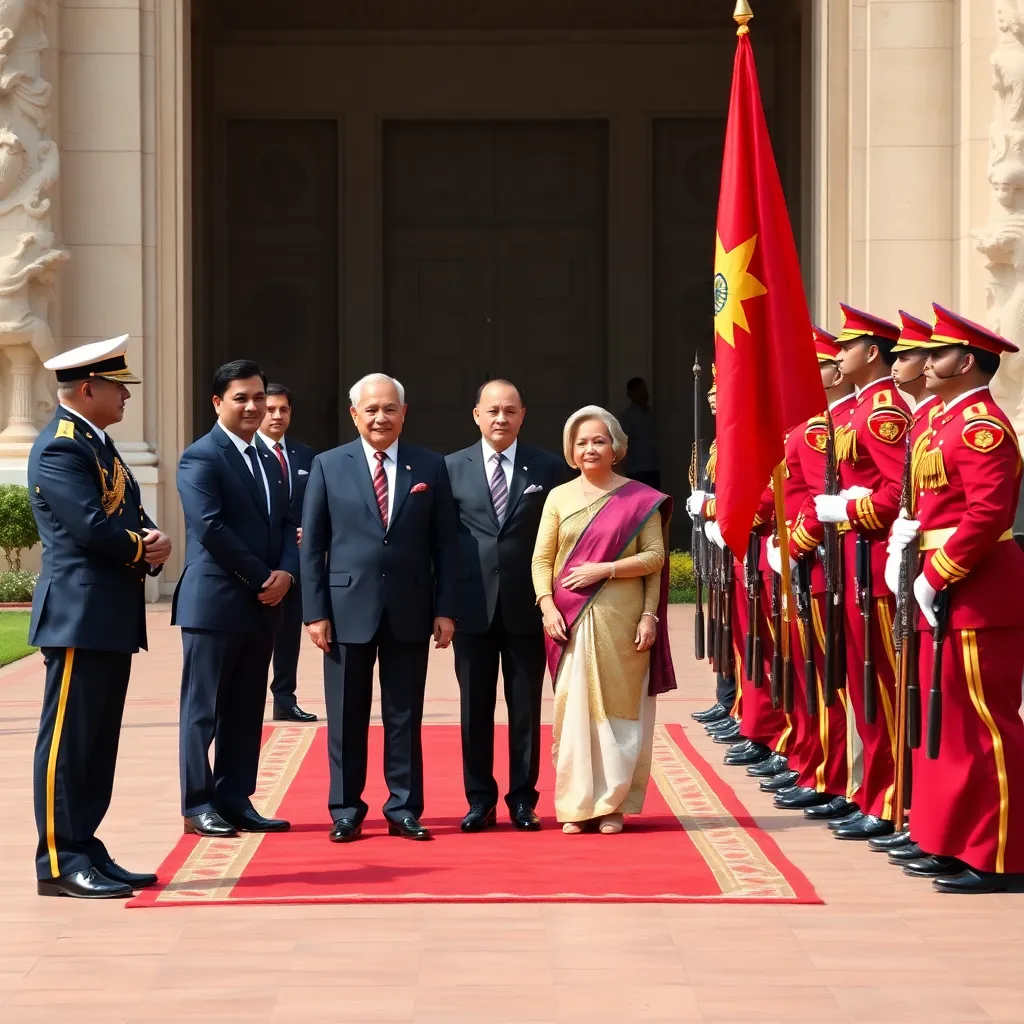
Vietnamese President To Lam received a ceremonial welcome at Rashtrapati Bhavan during his first official visit to India, symbolizing growing bilateral ties. India and Vietnam have maintained diplomatic relations since 1972, cooperating in defense, trade, energy, maritime security, and cultural exchanges. The ceremonial welcome included a guard of honour and formal greetings, reflecting diplomatic protocol for visiting heads of state. This visit reinforces the Comprehensive Strategic Partnership under India's Act East Policy, emphasizing engagement with ASEAN countries like Vietnam and shared interests in Indo-Pacific regional stability.
On this page
Key Facts
- Vietnam is a Southeast Asian nation with its capital at Hanoi.
- To Lam is the President of Vietnam, serving as the State Head during the visit.
- India and Vietnam established full diplomatic relations on 7 January 1972.
- The countries engage in broad sectors including political dialogue, defense cooperation, maritime security, trade, energy, and cultural exchanges.
- India’s Act East Policy is aimed at strengthening ties with ASEAN member states, including Vietnam.
- A ceremonial welcome for visiting heads of state customarily consists of a guard of honour, playing of national anthems, and formal official greetings, reflecting diplomatic protocol.
- India and Vietnam share strategic interests in the Indo-Pacific region and collaborate accordingly.
Background & Context
India and Vietnam have developed a Comprehensive Strategic Partnership (CSP) marked by sustained political and defense dialogues and a growing economic and cultural relationship. The President of Vietnam’s visit symbolizes a continued commitment to strengthening these ties. Diplomatic relations initiated in 1972 have grown to encompass multifaceted cooperation. The ceremonial welcome at Rashtrapati Bhavan is a formal expression of respect and diplomatic protocol accorded to visiting heads of state, underscoring the importance India attributes to its bilateral relations with Vietnam. India's Act East Policy, which promotes greater engagement with the Asia-Pacific region especially ASEAN countries, frames this engagement.
Why This Matters for Exams / Exam Relevance
This recent visit and the accompanying ceremonial welcome highlight the practical expression of India’s foreign policy objectives in the Indian Ocean and Southeast Asian region. Questions in exams often focus on the Act East Policy, India-Vietnam relations, ASEAN’s role in India’s diplomacy, the significance of ceremonial welcomes in diplomatic protocol, and the Indo-Pacific strategic context. Remembering key facts such as the year diplomatic relations were established, and the areas of cooperation, supports understanding of India’s external relations and regional strategy.
Points to Remember
- Year India-Vietnam diplomatic relations began: 1972 (7 January)
- Vietnam’s capital city: Hanoi
- Vietnamese President during visit: To Lam
- Significance of ceremonial welcome: guard of honour, national anthems, official greetings
- Key sectors of India-Vietnam cooperation: political dialogue, defense, maritime security, trade, energy, culture
- India's Act East Policy emphasizes engagement with ASEAN countries including Vietnam
- India and Vietnam collaborate within the broader Indo-Pacific strategic framework
Sources & Further Reading
| Document / Website | Link |
|---|---|
| Vietnam President To Lam accorded ceremonial welcome in India | Open Vietnam President To Lam accorded ceremonial welcome in India ↗www.gktoday.in |
| Bilateral Relations | Embassy of India Hanoi, Vietnam | Open Bilateral Relations | Embassy of India Hanoi, Vietnam ↗www.indembassyhanoi.gov.in |
| What is a State Visit? | The Royal Family | Open What is a State Visit? | The Royal Family ↗www.royal.uk |
| India’s Act East Policy | Open India’s Act East Policy ↗www.drishtiias.com |