
Ali Falih Kadhim al-Zaidi Assumes Office as Prime Minister of Iraq
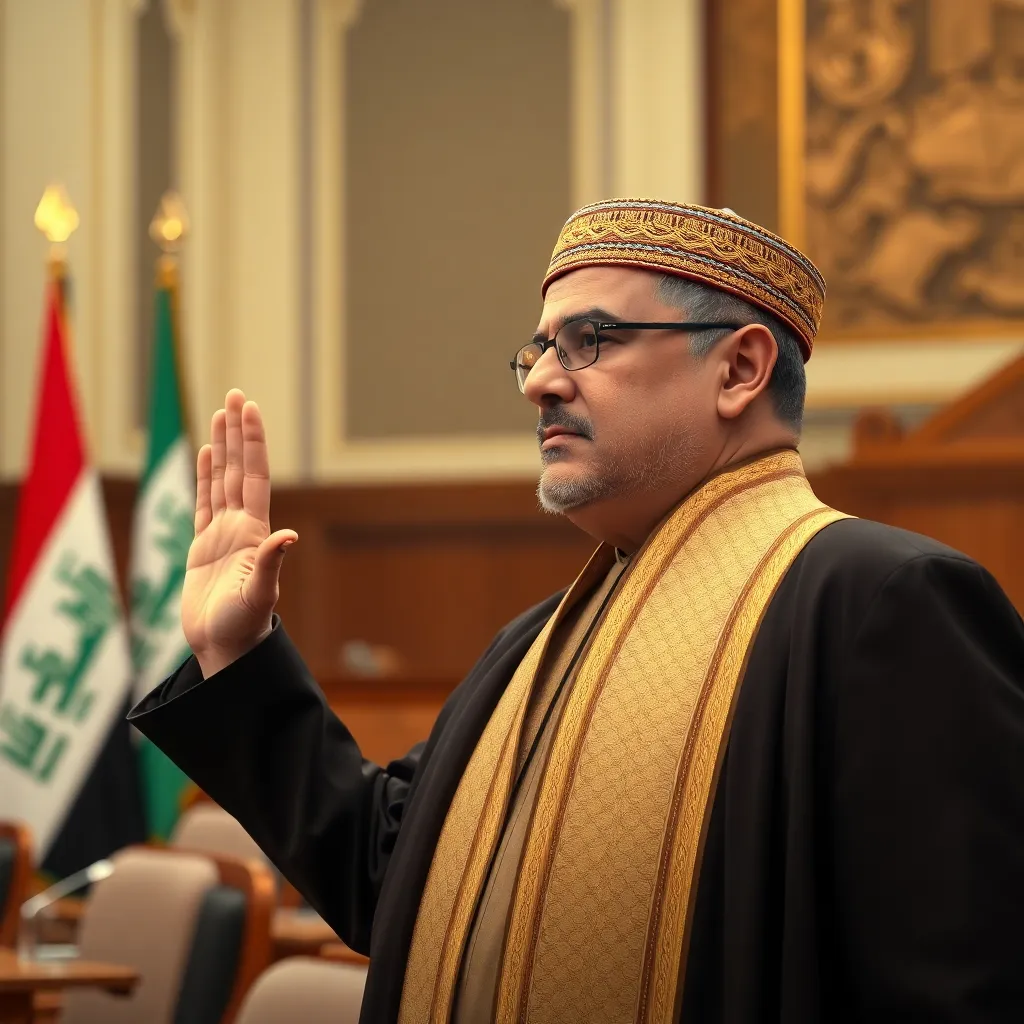
On 16 May 2026, Ali Falih Kadhim al-Zaidi was sworn in as the Prime Minister of Iraq following the parliamentary approval of a partial cabinet on 14 May 2026. Iraq operates as a federal parliamentary republic with a unicameral legislature known as the Council of Representatives. The partial cabinet includes 14 ministers, with the rest of the portfolios pending due to ongoing coalition negotiations. The Coordination Framework, a prominent Shia political alliance, nominated al-Zaidi in April 2026 to help resolve a political deadlock. India and Iraq maintain diplomatic relations focusing on cooperation in energy and trade.
On this page
Key Facts
- Ali Falih Kadhim al-Zaidi was sworn in as the Prime Minister of Iraq on 16 May 2026 following a parliamentary session on 14 May 2026.
- Iraq is a federal parliamentary republic with a unicameral legislature called the Council of Representatives, comprising 329 seats.
- The Council of Representatives approved a partial cabinet of 14 ministers on 14 May 2026; the remaining ministerial positions were delayed due to ongoing coalition negotiations.
- The Coordination Framework, an influential alliance of Shia political parties in Iraq, nominated al-Zaidi in April 2026 to break a political deadlock following internal discussions and meetings including at the residence of Popular Mobilisation Forces leader Falih al-Fayyad.
- The Prime Minister is the head of government, while the President serves as head of state; by convention, a Kurd is President, a Shia Muslim is Prime Minister, and a Sunni Muslim is Speaker of Parliament.
- India and Iraq maintain diplomatic relations that include cooperation in energy, trade, and people-to-people contacts; India values Iraq for energy security and regional engagement.
Background & Context
Following the 2005 Iraqi Constitution, Iraq is composed as a federal parliamentary republic where executive authority is vested in the Prime Minister, who forms the Cabinet subject to parliamentary confidence. The 2025 elections resulted in a fragmented parliament necessitating coalition building. The Coordination Framework, dominant among Shia factions and linked to the Popular Mobilisation Forces, played a key role in selecting al-Zaidi as Prime Minister-designate in April 2026 to overcome political deadlock. This process is constitutionally mandated whereby the President appoints the Prime Minister who then must secure parliamentary approval for the cabinet and government program within 30 days. The partial cabinet approval in May 2026 reflects ongoing complex coalition negotiations. The role of Popular Mobilisation Forces as influential political actors is notable.
Why This Matters for Exams / Exam Relevance
Knowledge of Iraq's political structure, recent political developments, and international relations is essential for exams in Indian polity, international relations, and current affairs. Understanding parliamentary democracy functioning in a volatile post-conflict context like Iraq, the cabinet formation process, the influence of political alliances like the Coordination Framework, and India-Iraq diplomatic ties aligns with syllabus topics on federalism, parliamentary processes, external affairs, and Middle East geopolitics. Additionally, key constitutional provisions and political practices reflected in Iraq's system provide comparative insights.
Points to Remember
- Ali Falih Kadhim al-Zaidi became Iraq's Prime Minister on 16 May 2026 after being nominated by the Coordination Framework and parliamentary approval of a partial cabinet.
- Iraq's legislative body is the unicameral Council of Representatives, with 329 seats, which plays a crucial role in government formation and confidence votes.
- Cabinet formation is a result of intense coalition negotiations; only 14 of 23 ministerial posts were approved initially, with the rest pending.
- The Coordination Framework is a significant Shia political alliance, influential in post-2025 election politics.
- Popular Mobilisation Forces, an umbrella group of armed factions formed in 2014, hold political influence with leaders such as Falih al-Fayyad.
- India values diplomatic and economic relations with Iraq, especially in energy security and trade, and maintains a large diaspora in West Asia.
Sources & Further Reading
| Document / Website | Link |
|---|---|
| PM Modi congratulates Ali Falih Kadhim al-Zaidi | Open PM Modi congratulates Ali Falih Kadhim al-Zaidi ↗www.gktoday.in |
| A new president and prime minister for Iraq: What challenges face the country in 2026? - House of Commons Library | Open A new president and prime minister for Iraq: What challenges face the country in 2026? - House of Commons Library ↗commonslibrary.parliament.uk |
| Iraq 2005 Constitution - Constitute Project | Open Iraq 2005 Constitution - Constitute Project ↗www.constituteproject.org |
| Prime Minister of Iraq - Wikipedia | Open Prime Minister of Iraq - Wikipedia ↗en.wikipedia.org |