
Andhra Pradesh Launches 'Farm to Home' Model for Direct Agricultural Produce Delivery
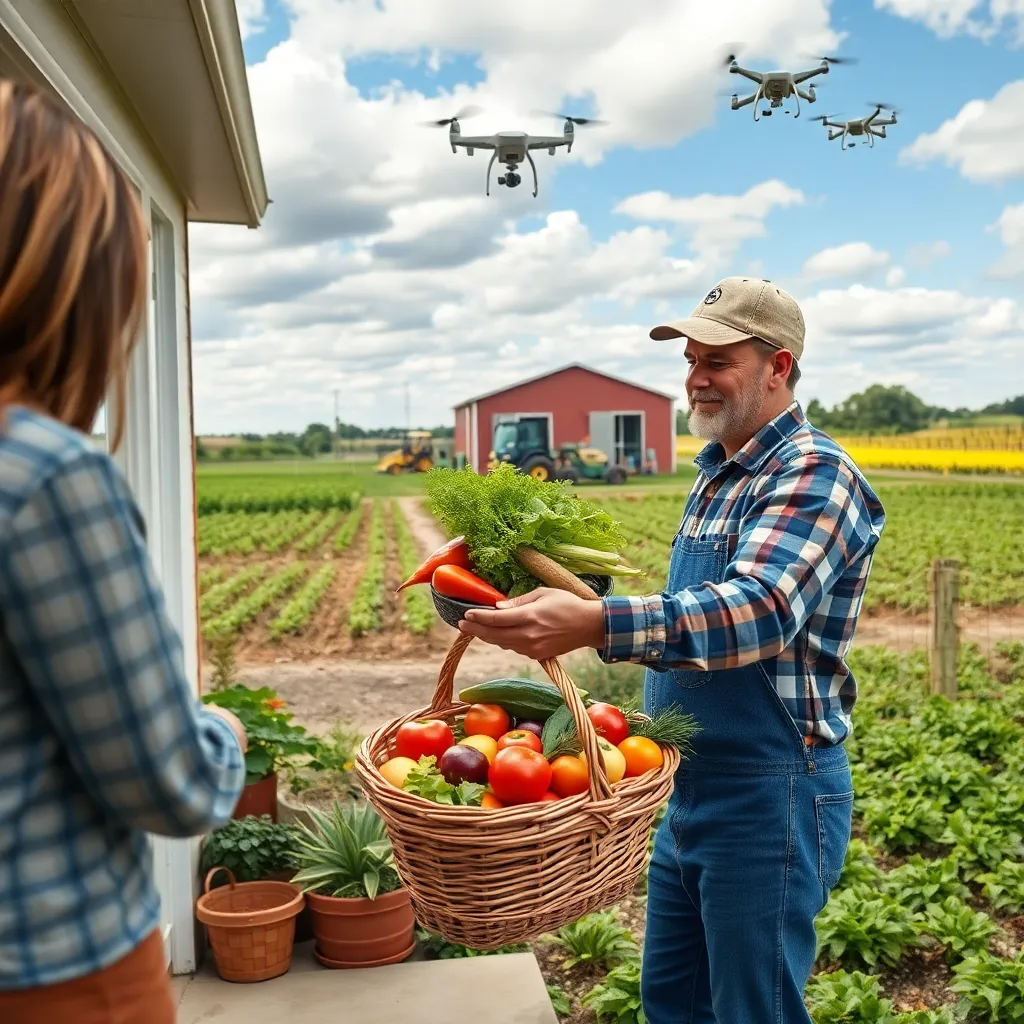
Andhra Pradesh has initiated the 'Farm to Home' programme to facilitate direct delivery of fruits and vegetables from Farmers Producer Organisations (FPOs) to consumers, minimizing intermediaries. This scheme is part of a wider strategy to improve farmers' incomes, promote sustainable natural farming, employ modern agricultural technology (such as drones and farm machinery), and integrate services via digital platforms like the Farmer App and Digi Rythu Bazaar app. Region-specific crop planning and price protection via Minimum Support Prices (MSP) are also emphasized, aiming to strengthen the agricultural supply chain and rural livelihoods in the state.
On this page
Key Facts
- Launched in 2026 by the Government of Andhra Pradesh under Chief Minister N. Chandrababu Naidu.
- The model facilitates direct delivery of fruits and vegetables from Farmers Producer Organisations (FPOs) to consumers’ doorsteps, reducing intermediaries.
- Emphasis on region-wise crop planning incorporating impacts of climatic events like El Niño.
- Promotion of natural farming techniques across districts to encourage sustainable and chemical-free agriculture.
- Assurance of Minimum Support Price (MSP) to safeguard farmer incomes against price volatility and climate-related risks.
- Integration of agricultural mechanisation, increased use of drones, and modern farm machinery to boost productivity.
- Deployment of digital platforms including the Farmer App for integrated agricultural services and Digi Rythu Bazaar app connected to modernised farmer retail markets (Rythu Bazaars).
- Plans for establishing a Cocoa City near Yadavolu in East Godavari district to develop horticulture and agro-processing infrastructure.
Background & Context
The agriculture sector in India, particularly in Andhra Pradesh, has historically faced challenges like multiple intermediaries which reduce farmers' returns and increase consumer prices. The "Farm to Home" model leverages cooperative Farmer Producer Organisations to aggregate produce and facilitate direct market linkages. This approach enhances farmers' bargaining power and income while improving consumer access to fresh produce.
Natural farming, reducing dependence on synthetic inputs, supports ecological health and sustainability. Usage of technology in agriculture (including drones and mechanised tools) and digital platforms streamlines operations, marketing, and information flow.
Why This Matters for Exams / Exam Relevance
This model integrates multiple important concepts such as agricultural marketing reforms, farmer empowerment, sustainable farming practices, use of technology in agriculture, and digital innovation—all key syllabus topics for state and national exams. Understanding such current initiatives aids students in answering questions related to policy measures, agricultural development, rural livelihoods, and government schemes.
Points to Remember
- Farm to Home is a 2026 Andhra Pradesh initiative for direct delivery of fruits and vegetables from farmers to consumers.
- Farmers Producer Organisations (FPOs) play a central role in aggregation, marketing, logistics, and supply chain management.
- Natural farming and region-wise crop planning, considering climate impact such as El Niño, are integral to the strategy.
- Minimum Support Price (MSP) is provided to protect farmers from price fluctuations and climate risks.
- Increased mechanisation and technology use, including drones, enhance agricultural efficiency.
- Digital platforms like Farmer App and Digi Rythu Bazaar connect services and modernize markets.
- Development of Cocoa City near Yadavolu aims to promote horticulture and agro-processing.
Sources & Further Reading
| Document / Website | Link |
|---|---|
| Andhra Pradesh Launches Farm to Home model | Open Andhra Pradesh Launches Farm to Home model ↗www.gktoday.in |
| CM Naidu Unveils Farm to Home Plan, Pushes Aqua Sector Growth in Andhra | Open CM Naidu Unveils Farm to Home Plan, Pushes Aqua Sector Growth in Andhra ↗www.newindianexpress.com |
| The Natural Farming Model of Andhra Pradesh: A Solution for Sustainable Agriculture | Open The Natural Farming Model of Andhra Pradesh: A Solution for Sustainable Agriculture ↗www.cgiar.org |