
Astrobase Unveils India's First Private 800 kN Full-Flow Staged Combustion Rocket Engine 'EVEREST'
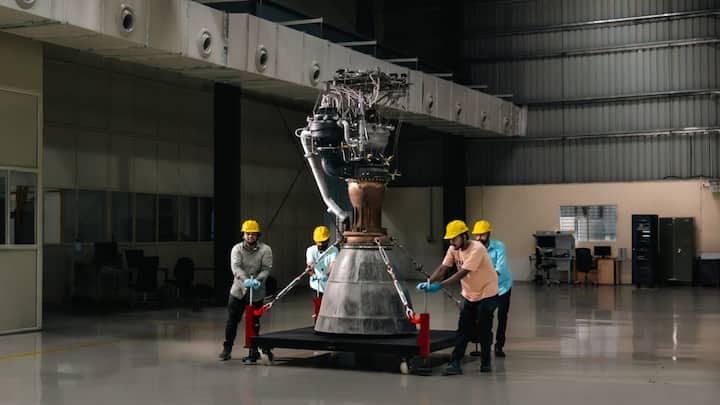
On 7 August 2026, Bengaluru-based startup Astrobase Space Technologies unveiled EVEREST, India's first privately developed 80-tonne-class Full-Flow Staged Combustion (FFSC) rocket engine. Fueled by liquid oxygen (LOX) and liquid methane, EVEREST produces 800 kilonewtons of thrust and achieves a specific impulse of about 340 seconds. Designed for reusable medium-lift launch vehicles, the engine supports thrust throttling from 50% to 110%, crucial for controlled ascent and recovery phases. Supported by IN-SPACe’s Technology Adoption Fund, EVEREST places India among the few nations developing this advanced propulsion technology, signaling a significant boost to the indigenous private space launch ecosystem.
On this page
Key Facts
- Engine Name: EVEREST
- Unveiled: 7 August 2026
- Developer: Astrobase Space Technologies, Bengaluru
- Engine Type: 80-tonne class Full-Flow Staged Combustion (FFSC) liquid rocket engine
- Propellants: Liquid oxygen (LOX) and liquid methane (methalox)
- Thrust: 800 kilonewtons (approximate force to lift 80 tonnes in vacuum)
- Specific Impulse: About 340 seconds
- Throttle Range: 50% to 110%, enabling reusable launch vehicle operations
- Primary Application: Medium-lift reusable launch vehicles designed for satellite deployment
- Support: Selected by IN-SPACe under Technology Adoption Fund on 10 June 2026
- Testing Milestones: Sub-scale hot-fire test in September 2025, turbopump trials January 2026, planned full-scale hot-fire tests later in 2026
- Facilities: 46,000 sq ft Bengaluru facility equipped with India’s largest industrial metal 3D printer; propulsion test site in Anantapur, Andhra Pradesh spanning 21.5 acres
Background & Context
Full-Flow Staged Combustion (FFSC) rocket engines are an advanced liquid engine cycle where both propellants (fuel and oxidizer) are passed through separate preburners before entering the main combustion chamber. This design significantly improves engine efficiency by allowing higher combustion pressure and reduces thermal and mechanical stress, leading to greater reliability and longer life. Globally, FFSC technology is rare and has been implemented in very few engines, such as SpaceX's Raptor.
Astrobase Space Technologies, founded in 2024 by former ISRO propulsion engineer Devakumar Thammisetty and CoinDCX co-founder Neeraj Khandelwal, aims to develop reusable, medium-lift launch systems for India's expanding private satellite launch market. Their use of methalox propellants (liquid methane and liquid oxygen) supports cleaner burning with higher efficiency compared to traditional kerosene-based fuels.
Why This Matters for Exams / Exam Relevance
The development and unveiling of EVEREST represent a major milestone in India’s private space sector, reflecting recent government reforms promoting private participation under IN-SPACe. It exemplifies cutting-edge rocket technology indigenous to India and highlights the country’s growing capabilities in high-performance, reusable propulsion systems.
Key exam topics include advances in Indian space technology, roles of government agencies like IN-SPACe, the significance of new engine technologies like FFSC, and notable figures in Indian aerospace innovation. Specifics such as engine thrust, propellant types, and technological advantages are commonly tested in science and technology sections of competitive exams.
Points to Remember
- EVEREST is India's first privately developed, fully integrated 80-tonne-class Full-Flow Staged Combustion rocket engine.
- The FFSC cycle involves both oxidizer- and fuel-rich preburners, improving efficiency, combustion stability, and turbine life.
- Uses liquid oxygen and liquid methane (methalox) propellant combination, favored for cleaner combustion and potential reusability.
- Developed under IN-SPACe’s Technology Adoption Fund with a focus on reusable medium-lift launch vehicles for satellite deployment.
- Thrust rating of 800 kN is approximately the force required to lift 80 tonnes in vacuum conditions.
- Throttle capability from 50% to 110% allows controlled ascent and landing maneuvers required for reusability.
- The engine represents India's entry into the elite global club developing advanced reusable rocket engines.
- Astrobase was founded by Devakumar Thammisetty (ex-ISRO propulsion engineer) and Neeraj Khandelwal (CoinDCX co-founder).
- Key testing milestones included sub-scale hot-fire in September 2025, turbopump tests in January 2026, with full-scale tests planned for late 2026.
- Facilities include a large-scale 3D metal printing manufacturing center and a dedicated propulsion test site.
Sources & Further Reading
| Document / Website | Link |
|---|---|
| Astrobase unveils India’s first private 800 kN FFSC rocket engine | Open Astrobase unveils India’s first private 800 kN FFSC rocket engine ↗www.gktoday.in |
| Startup Astrobase unveils India’s first full-flow rocket engine Everest - India Today | Open Startup Astrobase unveils India’s first full-flow rocket engine Everest - India Today ↗www.indiatoday.in |
| India enters elite rocket-engine club as Astrobase unveils 800 kN FFSC engine | Open India enters elite rocket-engine club as Astrobase unveils 800 kN FFSC engine ↗www.firstpost.com |
| Full-Flow Staged Combustion Cycle Explained - Everyday Astronaut | Open Full-Flow Staged Combustion Cycle Explained - Everyday Astronaut ↗everydayastronaut.com |