
Bangladesh-China Cooperation on Teesta River Comprehensive Management and Restoration Project
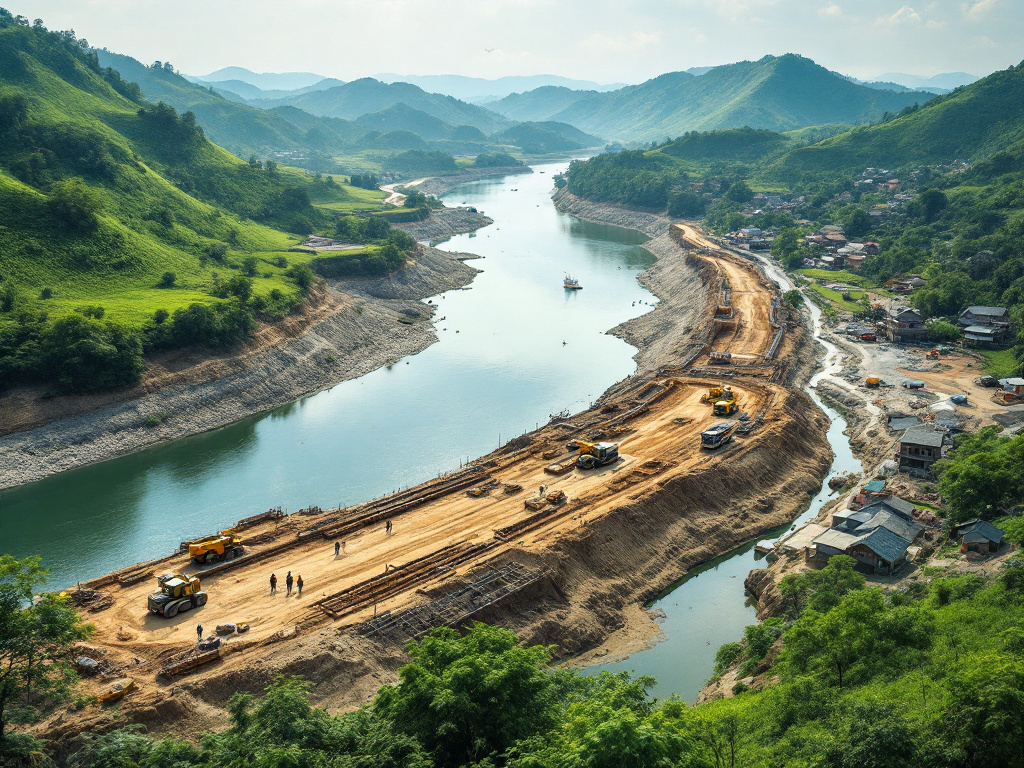
During Bangladeshi Prime Minister Tarique Rahman’s visit to Beijing from June 24-26, 2026, Bangladesh and China agreed to deepen cooperation on the Teesta River Comprehensive Management and Restoration Project. The project aims to address river management issues including dredging, embankment construction, land reclamation, and road development across the Teesta basin, a transboundary river shared with India. The initiative involves removing 140 million cubic meters of sediment, reclaiming 171 square kilometers of land, and enhancing infrastructure such as embankments and jetties. China offered technical expertise and training to Bangladeshi water management officials. This cooperation follows a 2016 MoU and a 2026 agreement extension. The project is geopolitically sensitive due to the Teesta River's location near India’s Siliguri Corridor and longstanding water-sharing complexities involving Bangladesh and India.
On this page
Key Facts
- Prime Minister Tarique Rahman of Bangladesh visited Beijing from 24 to 26 June 2026.
- Bangladesh and China agreed on 25 June 2026 to strengthen cooperation on the Teesta River Comprehensive Management and Restoration Project.
- The Teesta River is a transboundary river flowing from the eastern Himalayas through Sikkim and West Bengal in India before entering Bangladesh.
- The project includes dredging approximately 140 million cubic meters of riverine sediment and reclaiming 171 square kilometers of land.
- Plans involve repairing 110 kilometers of embankments, constructing 124 kilometers of new embankments, developing a 224-kilometer road network, and building 82 jetty facilities.
- An initial Memorandum of Understanding (MoU) was signed between Bangladesh and China in 2016; it was extended in January 2026 under the interim government led by Professor Mohammed Yunus.
- India offered technical and conservation assistance for the Teesta basin in 2024, reflecting its interest in supporting basin management.
- China emphasized that its cooperation is not directed against any third party and offered to share water management expertise and provide training to Bangladeshi officials.
Background & Context
The Teesta River is a critical transboundary river system in South Asia, flowing through India and Bangladesh. It is integral to agriculture, livelihoods, and ecosystems in the northern region of Bangladesh and Indian states of Sikkim and West Bengal. Water sharing for the Teesta River has historically been a contentious issue in India-Bangladesh relations, with upstream diversions in India reducing flow downstream into Bangladesh.
The Teesta River Comprehensive Management and Restoration Project aims to address issues such as sedimentation, erosion control, flood risk management, and river restoration to enhance water availability, infrastructure resilience, and environmental sustainability in the basin. Bangladesh's engagement with China on this project represents a strategic effort to mobilize technical and financial support to complement regional water management efforts, in the context of complex geopolitical sensitivities including India’s concerns over security and river management near the Siliguri Corridor.
Why This Matters for Exams
This project exemplifies key topics in South Asian geopolitics and environmental management, including transboundary water resource diplomacy, infrastructural development, and bilateral relations involving Bangladesh, India, and China. Understanding the chronology of agreements, project components, and geopolitical nuances is vital for competitive exams focusing on international relations, water cooperation, and regional security dynamics.
The Teesta River project illustrates:
- The complexities of transboundary river management among India, Bangladesh, and China.
- The role of memorandums and diplomatic visits in advancing water cooperation.
- Strategic significance of river projects near sensitive border regions.
- Implications of multilateral involvement in bilateral water disputes.
Points to Remember
- The Teesta River flows from Sikkim and West Bengal in India into Bangladesh.
- The 2016 MoU between Bangladesh and China initiated cooperation on the Comprehensive Management and Restoration Project (TRCMRP).
- The interim government of Bangladesh under Prof. Mohammed Yunus extended cooperation with China in January 2026.
- Prime Minister Tarique Rahman's Beijing visit on 24-26 June 2026 solidified enhanced cooperation.
- Project components include dredging 140 million cubic meters of sediment, land reclamation over 171 sq km, embankment repair and construction, road network development, and jetty construction.
- India provided technical support to Bangladesh in 2024 concerning Teesta basin management but historical water-sharing disputes persist.
- China stressed cooperation is for mutual benefit and not targeted at any third country, inviting Bangladesh for training in water resource management.
Sources & Further Reading
| Document / Website | Link |
|---|---|
| GKTODAY: China and Bangladesh discuss Teesta River project | Open GKTODAY: China and Bangladesh discuss Teesta River project ↗www.gktoday.in |
| Teesta project, Bangladesh-China river cooperation deepens during Rahman's Beijing visit - India Today | Open Teesta project, Bangladesh-China river cooperation deepens during Rahman's Beijing visit - India Today ↗www.indiatoday.in |
| Bangladesh, China agree to strengthen cooperation on Teesta river management: report - The Economic Times | Open Bangladesh, China agree to strengthen cooperation on Teesta river management: report - The Economic Times ↗m.economictimes.com |