Finland's Onkalo: The World's First Permanent Nuclear Waste Repository
Finland is set to operationalize Onkalo, the world's first deep geological repository for permanent storage of highly radioactive nuclear waste. Situated 400-450 meters underground beneath Olkiluoto Island, this facility is designed to safely contain approximately 6,500 tonnes of spent nuclear fuel for up to 100,000 years using multi-barrier systems including copper capsules and bentonite clay. This pioneering project addresses the global challenge of long-term nuclear waste management by isolating the waste from environmental hazards and human interference. Onkalo's successful implementation could provide a global blueprint for sustainable nuclear waste disposal, supported by Finland's policy requiring domestic management of all nuclear waste.
On this page
Key Facts
- Location: Olkiluoto Island, Finland
- Facility Name: Onkalo
- Depth: Approximately 400-450 meters underground
- Capacity: About 6,500 tonnes of spent nuclear fuel
- Designed Lifespan: Up to 100,000 years for safe containment
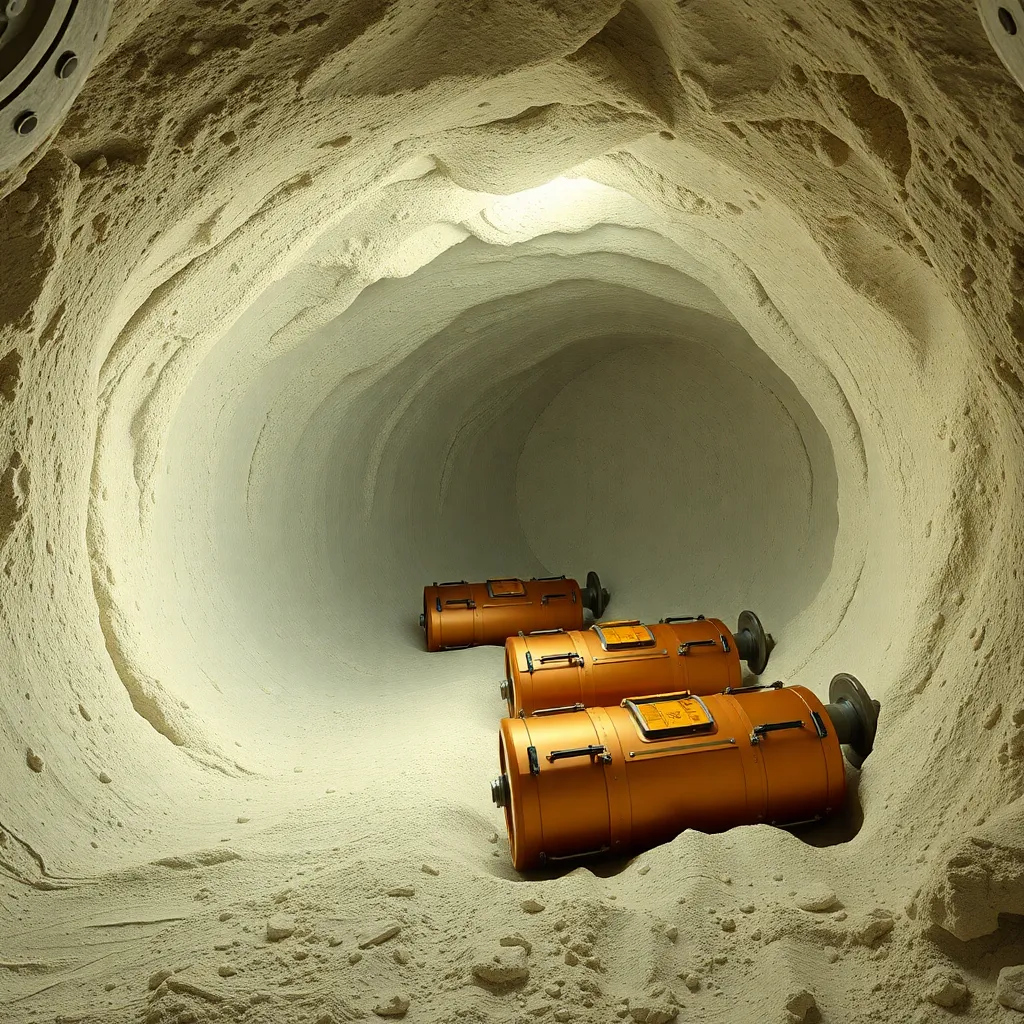
- Containment System: Spent fuel enclosed in metal canisters, sealed within corrosion-resistant copper capsules, surrounded by swelling bentonite clay
- Operational Timeline: Excavation began in 2004; final operating license expected by 2026; facility planned to be sealed indefinitely by the 2120s
Background & Context
Since the 1950s, globally nearly 400,000 tonnes of spent nuclear fuel have been produced from nuclear reactors. These fuels are highly radioactive and remain hazardous for thousands of years. Most countries store spent fuel temporarily in cooling pools or dry casks, safe only for limited durations. The primary challenge with nuclear waste disposal lies in preventing radiation leakage, environmental contamination, and human exposure over extensive time scales.
Finland responded to this issue by passing legislation in 1994 requiring all nuclear waste produced domestically to be permanently managed within its borders. After careful geological surveys and community consultations, Olkiluoto Island was chosen as the site for a deep geological repository using the KBS-3 method—originally developed in Sweden.
Onkalo employs a multi-barrier safety system: first, spent nuclear fuel assemblies are placed in robust metal canisters; these are sealed inside high-purity copper capsules that resist corrosion. The capsules are then surrounded by bentonite clay, which swells upon humidification to prevent water flow and thus radionuclide migration. Finally, the entire system is embedded deep within 1.9-billion-year-old stable bedrock that has been geologically stable for billions of years, protecting from earthquakes, extreme weather, human interference, and environmental changes.
The repository is designed to ensure 'passive safety,' meaning it will remain secure without the need for human supervision or active maintenance once sealed.
Why This Matters for Exams / Exam Relevance
This project is a key case study in nuclear energy policy, environmental science, and engineering exams. Areas often covered include:
- Deep geological disposal as a solution for long-term nuclear waste management
- Use of engineered barriers like copper capsules and bentonite clay in radioactive waste containment
- Geological considerations, such as stable bedrock age (~1.9 billion years) and depth (400-450 m), for repository safety
- Legislative and policy frameworks mandating domestic nuclear waste disposal
- Environmental and public safety challenges linked to radioactive waste and the importance of passive safety designs
Points to Remember
- Onkalo is the world's first permanent underground repository for spent nuclear fuel.
- Bentonite clay acts as a critical swelling barrier preventing groundwater penetration and radionuclide escape.
- Operation of Onkalo is slated to begin around 2026, with the site to be sealed by the 2120s.
- Finland’s nuclear waste law passed in 1994 requires all nuclear waste to be domestically managed and stored permanently.
- The repository utilizes multiple containment layers to ensure safety over extraordinarily long time frames.
- Onkalo's approach may serve as a global model for sustainable nuclear waste management policies and technologies.
Sources & Further Reading
| Document / Website | Link |
|---|---|
| Finland builds world's first permanent nuclear waste vault | Open Finland builds world's first permanent nuclear waste vault ↗www.gktoday.in |
| Onkalo spent nuclear fuel repository - Wikipedia | Open Onkalo spent nuclear fuel repository - Wikipedia ↗en.wikipedia.org |
| Storage and Disposal of Radioactive Waste - World Nuclear Association | Open Storage and Disposal of Radioactive Waste - World Nuclear Association ↗world-nuclear.org |