
Four New 'Namo Cities' Proposed Under NCR Regional Plan 2041
The National Capital Region Planning Board announced the proposal of four new greenfield cities called 'Namo Cities' under the NCR Regional Plan 2041 to promote balanced urban growth. One city will be developed in each NCR state: Delhi, Haryana, Uttar Pradesh, and Rajasthan. These cities will be Transit-Oriented Developments located near stations on the Namo Bharat Regional Rapid Transit System. A performance-linked fund of ₹5,000 crore over five years will support their development. Locations are to be selected competitively, with Uttar Pradesh and Rajasthan already suggesting possible sites like Jewar and Alwar. The plan aims to manage the NCR’s projected population rise to about 15 crore by 2041, maintaining its geographical extent and improving urban and transport infrastructure.
On this page
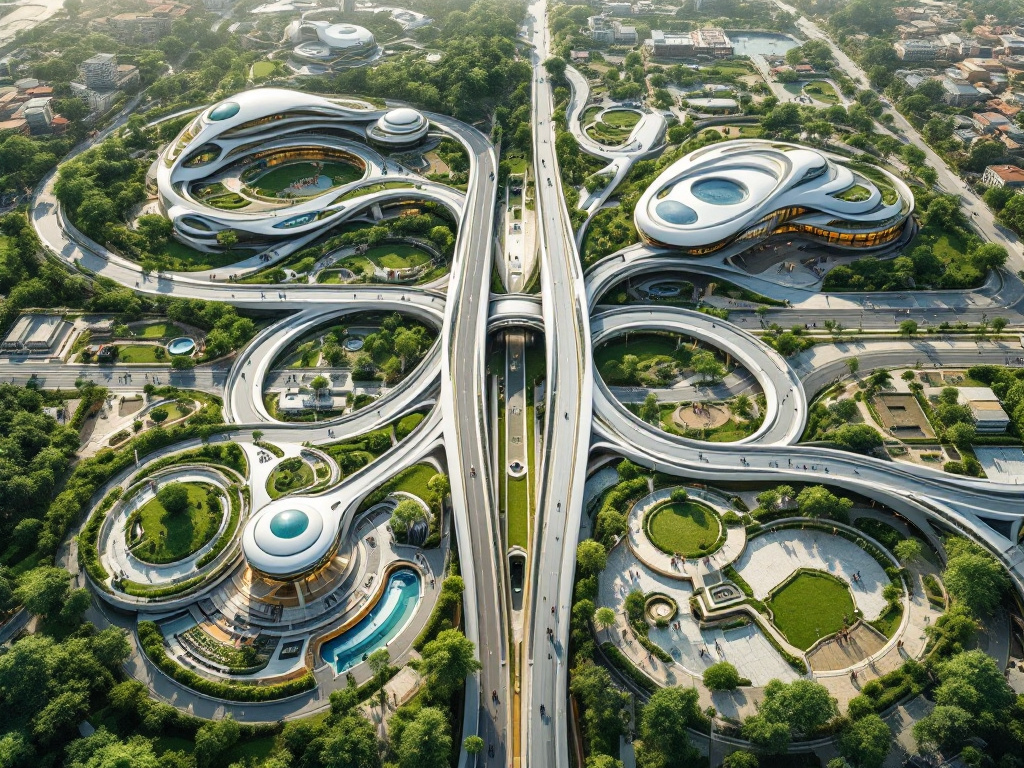
Key Facts
- On 16 June 2026, during the 42nd board meeting of the NCR Planning Board, the proposal for four new greenfield cities named 'Namo Cities' or 'Namo Nodes' was announced.
- One Namo City is planned in each of the four participating NCR states: Delhi, Haryana, Uttar Pradesh, and Rajasthan.
- These cities will be developed as mixed-use Transit-Oriented Developments (TOD) near existing or proposed stations of the Namo Bharat Regional Rapid Transit System (RRTS).
- Transit-Oriented Development ensures high-density mixed land use around transit stations, placing housing, offices, and public services within walkable distance to promote sustainable urban growth.
- Greenfield cities refer to planned urban settlements built on undeveloped land rather than expanding existing city cores.
- A performance-linked development fund totaling ₹5,000 crore, including a ₹1,000 crore grant, will be provided over five years for these cities.
- States will submit proposals; final locations will be selected through a competitive challenge-based process.
- Uttar Pradesh has proposed areas including Jewar, Dadri, Khurja, Bulandshahr, and Noida; Rajasthan is considering locations around Alwar and Bharatpur.
- Population of the NCR is projected to grow from approximately 7.5 crore in recent years to about 15 crore by 2041.
- The geographic extent of the NCR will remain unchanged as per the NCR Planning Board's decision.
Background & Context
The National Capital Region (NCR) encompasses Delhi and adjacent districts in Haryana, Uttar Pradesh, and Rajasthan, coordinated under the National Capital Region Planning Board Act, 1985. The NCR Planning Board formulates regional plans for land use, transport, urban growth, and infrastructure.
Rapid urbanization has placed substantial pressure on existing urban centers such as Delhi, Gurugram, and Noida. The new 'Namo Cities' aim to decentralize population and economic activity to balance regional development.
Namo Bharat is the brand name for the high-speed Regional Rapid Transit System (RRTS) designed to connect regional nodes across NCR efficiently.
Why This Matters for Exams
This initiative displays a significant urban planning and regional development strategy of the Indian government. Concepts like Transit-Oriented Development, greenfield urbanization, and the administrative framework of the NCR Planning Board are commonly tested topics in geography, polity, and current affairs examinations.
Points to Remember
- 'Namo Cities' are a major feature of the NCR Regional Plan 2041 aimed at balanced urban development.
- Transit-Oriented Development integrates land use and transport planning to enhance sustainability.
- Funding of ₹5,000 crore is allocated for developing these cities over the next five years.
- Four cities, each in Delhi, Haryana, Uttar Pradesh, and Rajasthan, are planned, with locations finalized competitively.
- The NCR Planning Board Act, 1985 governs the legal framework for planning in the region.
- The NCR's population is expected to rise to around 15 crore by 2041.
- The geographic boundaries of the NCR remain unchanged during this plan period.
Sources & Further Reading
| Document / Website | Link |
|---|---|
| Four new ‘Namo Cities’ proposed under NCR Regional Plan 2041 | Open Four new ‘Namo Cities’ proposed under NCR Regional Plan 2041 ↗www.gktoday.in |
| Namo Cities, Metro Corridors: Inside Ambitious NCR Regional Plan 2041 | Open Namo Cities, Metro Corridors: Inside Ambitious NCR Regional Plan 2041 ↗www.ndtv.com |
| NCR to get 4 new 'Namo’ cities; states vie for Rs 5,000 crore development fund - The Tribune | Open NCR to get 4 new 'Namo’ cities; states vie for Rs 5,000 crore development fund - The Tribune ↗www.tribuneindia.com |
| National Transit Oriented Development (TOD) Policy by Ministry of Housing and Urban Affairs | Open National Transit Oriented Development (TOD) Policy by Ministry of Housing and Urban Affairs ↗mohua.gov.in |