
Giant Metrewave Radio Telescope Discovers Five New Millisecond Pulsars in Globular Clusters Messier 69 and 70
On 10 June 2026, astronomers at the National Centre for Radio Astrophysics (NCRA), Pune, India, using the upgraded Giant Metrewave Radio Telescope (uGMRT), discovered five new millisecond pulsars in two ancient globular clusters, Messier 69 and Messier 70, located in the Sagittarius constellation. This discovery marks the first detection of pulsars in these clusters, expanding our understanding of stellar evolution, compact binaries, and neutron star formation in dense stellar environments of the Milky Way.
On this page
Key Facts
- Discovery date: 10 June 2026
- Discovering institute: National Centre for Radio Astrophysics (NCRA), Pune
- Telescope used: Upgraded Giant Metrewave Radio Telescope (uGMRT) located near Pune, Maharashtra, India
- Number of millisecond pulsars discovered: Five
- Host globular clusters: Messier 69 (NGC 6637) with 2 pulsars, and Messier 70 (NGC 6681) with 3 pulsars
- Significant pulsar: M69A has a close orbit with a companion star, likely a white dwarf, completing an orbit every few days
- Globular clusters are spherical, tightly bound star systems containing very old stars, located in the halo of the Milky Way galaxy
- This is the first detection of pulsars in Messier 69 and Messier 70
Background & Context
Millisecond pulsars (MSPs) are highly magnetized, rapidly rotating neutron stars with rotation periods of a few milliseconds. They are usually formed in binary systems through mass transfer-driven evolution, where angular momentum from a companion star spins up the neutron star to millisecond periods.
Globular clusters, such as Messier 69 and Messier 70, are ancient, dense star clusters with ages often exceeding 10 billion years. They are rich laboratories for studying stellar dynamics, formation, and evolution of exotic objects such as MSPs, due to close stellar interactions enhancing binary formation and evolution.
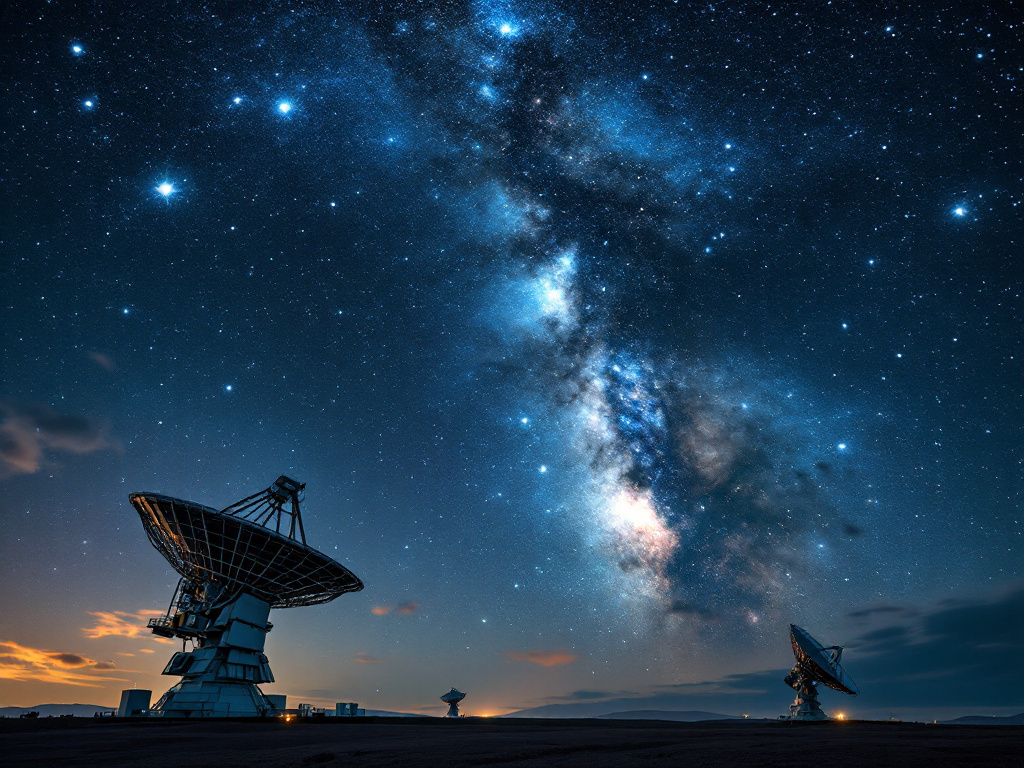
The Giant Metrewave Radio Telescope, situated near Pune, Maharashtra, India, is among the world's most sensitive telescopes operating at metre wavelengths. The recent upgrade to the uGMRT has significantly improved its sensitivity and frequency coverage, enabling detection of faint pulsars in distant globular clusters.
Why This Matters for Exams / Exam Relevance
This discovery demonstrates India's growing capabilities in advanced astronomical research and instrumentation. It exemplifies the use of national scientific infrastructure like NCRA and uGMRT in cutting-edge space science, relevant for competitive exam aspirants’ understanding of India’s contributions to global science and technology.
The concepts of millisecond pulsars, globular clusters, and radio telescopes form part of the general science and space science sections in competitive exams. Awareness of recent Indian scientific achievements boosts candidates’ knowledge base for current affairs and science & technology topics.
Points to Remember
- Millisecond pulsars are neutron stars spinning hundreds of times per second, often spun up in binary systems.
- Messier 69 (NGC 6637) and Messier 70 (NGC 6681) are ancient globular clusters located in the Sagittarius constellation.
- Five MSPs were newly discovered using the upgraded GMRT (uGMRT) in June 2026, first ever found in these two clusters.
- One notable pulsar, M69A, has a close orbit (period: a few days) with a likely white dwarf companion.
- The Giant Metrewave Radio Telescope is located near Pune, Maharashtra, and was recently upgraded to uGMRT to enhance pulsar detection capabilities.
Sources & Further Reading
| Document / Website | Link |
|---|---|
| Giant Metrewave Radio Telescope Discovers Five New Pulsars | Open Giant Metrewave Radio Telescope Discovers Five New Pulsars ↗www.gktoday.in |
| Discovery of five millisecond pulsars in M69 and M70 using uGMRT | Open Discovery of five millisecond pulsars in M69 and M70 using uGMRT ↗iopscience.iop.org |
| Millisecond Pulsars and Black Holes in Globular Clusters | Open Millisecond Pulsars and Black Holes in Globular Clusters ↗iopscience.iop.org |