
Godavari Flood Threat Intensifies in Andhra Pradesh in August 2026
In August 2026, heavy upstream rainfall led to a significant increase in flood threat along the Godavari river in Andhra Pradesh. The Andhra Pradesh State Disaster Management Authority (APSDMA) issued warnings as river discharge levels rose sharply, nearing the second warning level at the Dowleswaram Cotton Barrage. Several districts experienced critical water levels, resulting in the displacement of villages and deployment of disaster response teams. This highlights the vulnerability of flood-prone regions along the Godavari and underscores the importance of disaster preparedness.
On this page
Key Facts
- Date: 31 July to 1 August 2026
- Location: Andhra Pradesh, India
- River: Godavari
- Discharge Levels: Over 8.3 lakh cusecs at Dowleswaram Cotton Barrage by 1 August
- Warning Levels at Dowleswaram Cotton Barrage: First warning - 10 lakh cusecs; Second warning - 13 lakh cusecs
- Water Levels on 31 July: Bhadrachalam at 49.8 feet (above second warning level of 48 feet), Kunavaram at 16.3 metres, Polavaram at 10.2 metres
- Ramannagudem water level reached 75.47 feet, near third warning level of 75.82 feet
- Villages affected: 49 in Bhadrachalam division; 35 villages cut off in Mulugu district
- Response Teams: 3 National Disaster Response Force (NDRF) teams and 3 State Disaster Response Force (SDRF) teams deployed in key locations
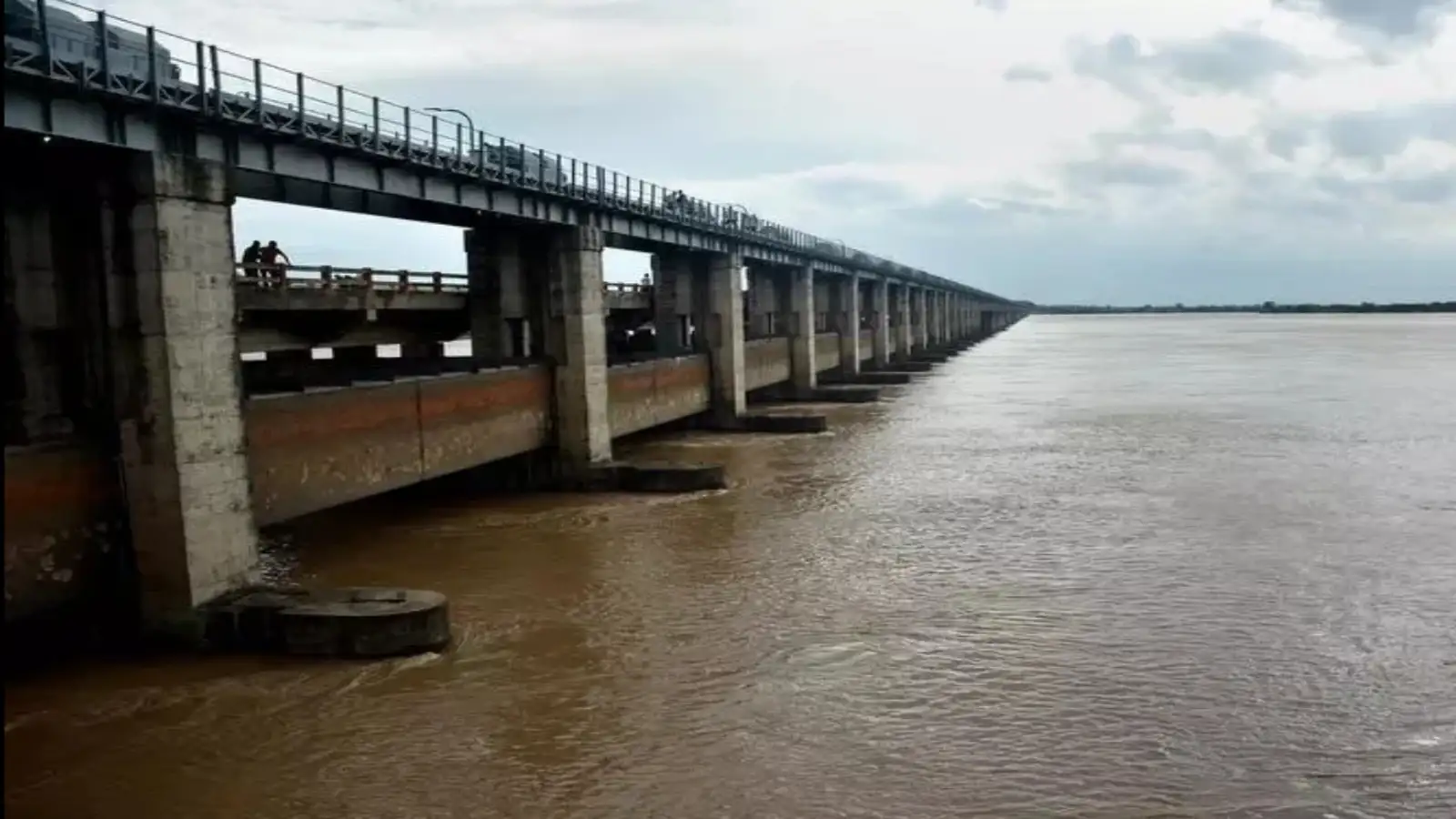
- Major Control Structure: Dowleswaram Cotton Barrage is a critical monitoring and control point on the Godavari river
- Sammakka-Sarakka Barrage at Tupakulagudem received about 14.03 lakh cusecs with an equivalent volume released downstream
Background & Context
The Godavari is the second-longest river in India, flowing through Maharashtra, Telangana, Chhattisgarh, Andhra Pradesh, and Odisha before emptying into the Bay of Bengal. It has a large drainage basin in central and southern India. The river is vital for irrigation, drinking water supply, and hydroelectric power generation. Flood warnings on the Godavari are linked to discharge levels at major monitoring points such as Bhadrachalam and the Dowleswaram Cotton Barrage. Due to monsoon rains upstream, the river is prone to flooding in its lower reaches, particularly in Andhra Pradesh and Telangana.
The Dowleswaram Cotton Barrage is a major control structure regulating river discharge and helps manage flood risk. Warning levels have been predefined — with the first warning level at 10 lakh cusecs and the second at 13 lakh cusecs at Dowleswaram. During the 2026 floods, sustained heavy rainfall upstream elevated river discharge, pushing water levels close to critical warning thresholds and affecting multiple districts.
Why This Matters for Exams / Exam Relevance
This event is significant for examining topics related to Indian geography, hydrology, and disaster management. Understanding the Godavari river basin’s flood dynamics, the role of infrastructure like the Dowleswaram Cotton Barrage, and the functions of disaster response agencies such as NDRF and SDRF are important. Questions may also explore river discharge measurement units like cusecs, and the role of monitoring points like Bhadrachalam in flood forecasting and warning systems.
Points to Remember
- The Godavari is India's second-longest river after the Ganga.
- Dowleswaram Cotton Barrage has defined flood warning levels: 10 lakh cusecs (first) and 13 lakh cusecs (second).
- On 31 July 2026, Bhadrachalam water level reached 49.8 feet, crossing the second flood warning level of 48 feet.
- Ramannagudem's water level neared the third warning threshold at 75.47 feet on the same day.
- Multiple villages were affected, evidencing the flood's impact on local populations.
- Disaster response teams including 3 NDRF and 3 SDRF units were deployed at strategic locations.
- Flood monitoring is critical for early warning and mitigation in flood-prone districts like East Godavari, West Godavari, Mulugu, and others.
- Understanding cusecs (cubic feet per second) as a unit of river discharge measurement is essential.
Sources & Further Reading
| Document / Website | Link |
|---|---|
| Godavari Flood Threat Intensifies in Andhra Pradesh - GKToday | Open Godavari Flood Threat Intensifies in Andhra Pradesh - GKToday ↗www.gktoday.in |
| River Godavari - Encyclopaedia Britannica | Open River Godavari - Encyclopaedia Britannica ↗www.britannica.com |