
IIT Roorkee Advances Solid-State Battery Research and Commercial Technology Transfer
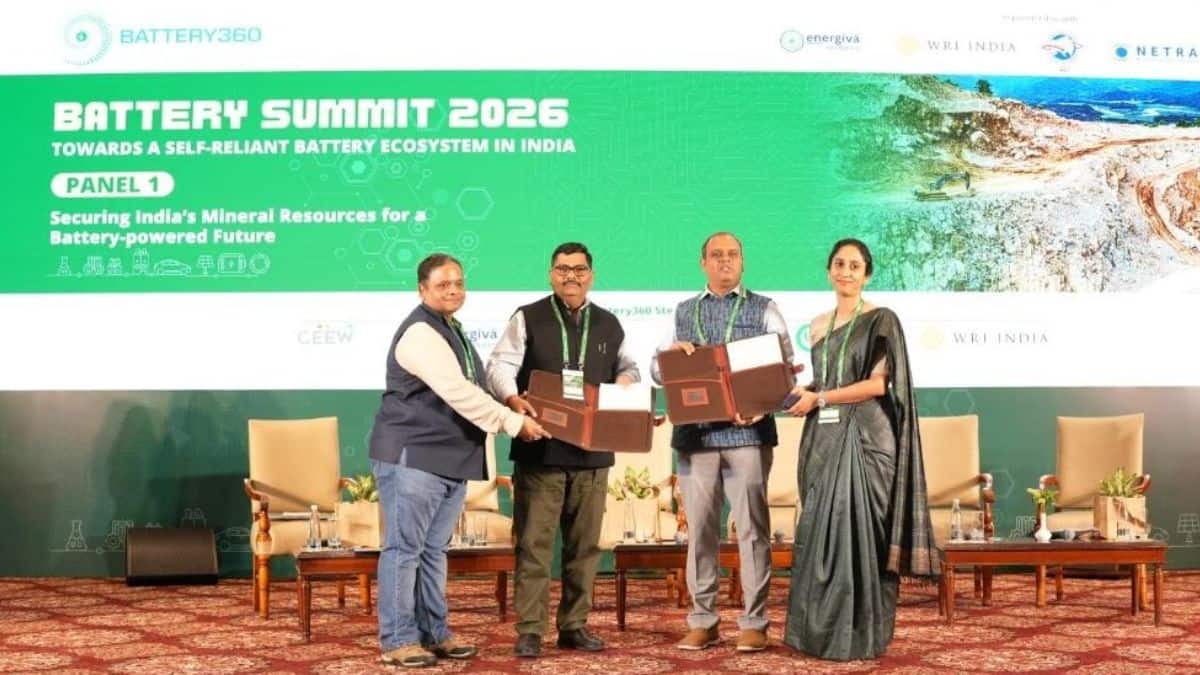
IIT Roorkee has made significant progress in solid-state battery research, focusing on lithium-ion transport in garnet-type solid electrolytes such as Li7La3Zr2O12, known for high ionic conductivity and stability. The research aims to improve battery safety by replacing liquid electrolytes to prevent risks like thermal runaway and dendrite formation. On 23 May 2026, IIT Roorkee commercially transferred two lithium-ion battery technologies developed by Prof. Anjan Sil to Cathion Energy Private Limited, enabling faster charging (under 10 minutes) and enhanced electrochemical performance. Furthermore, on 27 June 2026, IIT Roorkee signed an MoU with WRI India to promote sustainable battery ecosystems and the clean energy transition.
On this page
Key Facts
- Solid-state batteries use solid electrolytes instead of liquid or gel electrolytes to enhance safety and performance.
- Garnet-type solid electrolytes like Li7La3Zr2O12 are oxide-based materials known for their high ionic conductivity and chemical stability, studied extensively at IIT Roorkee’s Energy Storage Laboratory.
- Solid electrolytes help mitigate safety risks such as thermal runaway and dendrite formation common in conventional lithium-ion batteries.
- IIT Roorkee published a study in the Journal of the American Chemical Society introducing a time-scale renormalisation framework to understand lithium-ion transport in garnet electrolytes; this research was led by Prof. Swastika Banerjee from the Department of Chemistry.
- On 23 May 2026, IIT Roorkee transferred two lithium-ion battery technologies developed by Prof. Anjan Sil to Cathion Energy Private Limited, focusing on faster charging (reducing typical charging times from about one hour to under 10 minutes), higher power density, and improved electrochemical performance in rechargeable batteries.
- On 27 June 2026, IIT Roorkee signed a Memorandum of Understanding with WRI India to collaborate on sustainable battery ecosystems, circular economy approaches for critical minerals, and advancing the clean energy transition.
- IIT Roorkee has also incubated a startup, Indi Energy, which won the Best Startup award in the Energy Storage category at the National Startup Awards 2022 for developing sodium-ion batteries from farm waste; sodium-ion batteries provide a safer alternative with higher heat tolerance compared to lithium-ion batteries.
Background & Context
Solid-state batteries are an emerging energy storage technology designed to address limitations of conventional lithium-ion batteries, particularly concerning safety and energy density. Traditional lithium-ion batteries utilize liquid or gel electrolytes, which carry risks such as thermal runaway — a dangerous exothermic reaction that can lead to fire — and dendrite formation, where lithium grows needle-like structures causing short circuits and battery failure. Solid electrolytes, especially oxide-based garnet types like Li7La3Zr2O12, provide a chemically stable and high ionic conductivity medium that allows for safer and potentially higher performance batteries.
IIT Roorkee has contributed to understanding lithium-ion transport mechanisms within these solid electrolytes, introducing a theoretical framework to model ion diffusion dynamics which is critical for optimizing battery design. Additionally, the institution has developed and commercially transferred lithium-ion battery technologies aimed at faster charging and improved efficiency. Its partnership with WRI India, an organization focused on sustainable development and clean energy, underscores the importance of integrating battery innovations within broader environmental and economic sustainability frameworks.
Why This Matters for Exams / Exam Relevance
Innovations in energy storage and battery technologies are important topics for competitive exams covering science and technology, environmental studies, and economic development. IIT Roorkee’s recent advancements, including key dates, researchers (Prof. Swastika Banerjee and Prof. Anjan Sil), technology transfers, and partnerships with organizations such as WRI India, provide relevant examples of India's progress in clean energy technologies. Questions may focus on solid-state battery benefits, material properties of garnet electrolytes, technology commercialization, and institutional collaborations fostering sustainable energy solutions.
Points to Remember
- Solid-state batteries use solid electrolytes instead of liquid or gel electrolytes to mitigate safety risks.
- Garnet-type solid electrolytes (Li7La3Zr2O12) are oxide-based materials with high ionic conductivity and stability, researched at IIT Roorkee.
- Thermal runaway is a significant safety hazard linked to conventional lithium-ion batteries, which solid electrolytes can reduce.
- Prof. Swastika Banerjee leads research on lithium-ion transport within garnet solid electrolytes.
- Prof. Anjan Sil developed lithium-ion battery technologies with faster charging capabilities (under 10 minutes) commercially transferred on 23 May 2026.
- IIT Roorkee signed an MoU with WRI India on 27 June 2026 to collaborate on sustainable battery systems and clean energy transitions.
- Indi Energy, an IIT Roorkee incubated startup, won a National Startup Award in 2022 for innovative sodium-ion batteries made from farm waste, offering safer and heat-tolerant alternatives to lithium-ion batteries.
Sources & Further Reading
| Document / Website | Link |
|---|---|
| IIT Roorkee Advances Solid-State Battery Research | Open IIT Roorkee Advances Solid-State Battery Research ↗www.gktoday.in |
| Journal of the American Chemical Society – Lithium-Ion Transport in Garnet Electrolytes | Open Journal of the American Chemical Society – Lithium-Ion Transport in Garnet Electrolytes ↗pubs.acs.org |
| WRI India – Clean Energy Initiatives | Open WRI India – Clean Energy Initiatives ↗wri-india.org |
| National Startup Awards 2022 – Energy Storage Category | Open National Startup Awards 2022 – Energy Storage Category ↗startupawards.in |