
India-Africa Forum Summit (IAFS) and Enhanced Cooperation
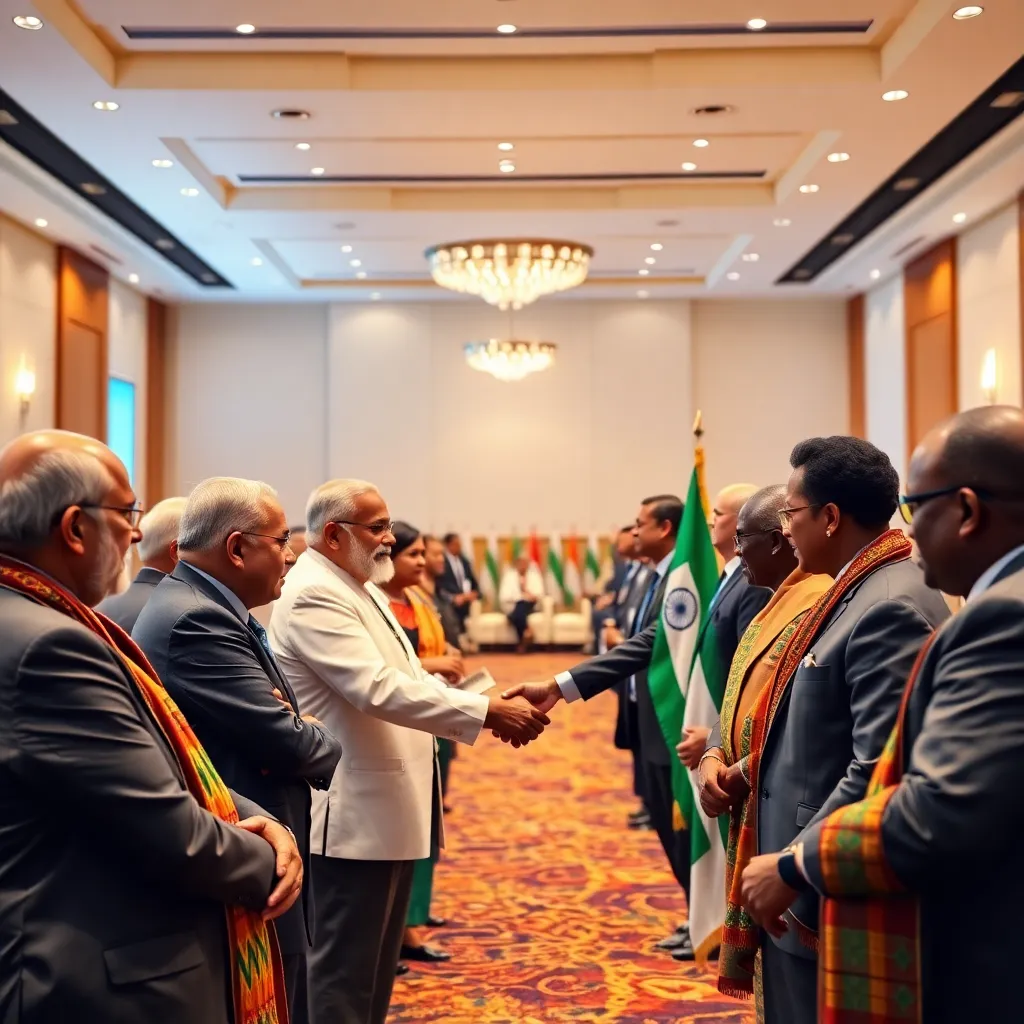
The India-Africa Forum Summit (IAFS), initiated in 2008 in New Delhi, serves as the principal multilateral platform fostering dialogue and cooperation between India and African Union member countries. The partnership spans political, economic, developmental, and institutional sectors. Key areas of cooperation include trade, investment, agriculture, health, education, and digital technology. India supports African nations through lines of credit, grants, and training under programs like the Indian Technical and Economic Cooperation (ITEC) started in 1964. The African Union (AU), a continental body of 55 member states formed in 2002 replacing the Organisation of African Unity, plays a central role in facilitating Africa-wide coordination with India. This cooperation is vital for energy security, maritime collaboration, and resource development, contributing to strengthened ties within the Global South framework.
On this page
Key Facts
- The first India-Africa Forum Summit (IAFS) was held in 2008 in New Delhi, marking the formal institutional mechanism for India’s engagement with Africa.
- The African Union (AU), a continental body consisting of 55 member states, was established in 2002, replacing the Organisation of African Unity (OAU).
- The Indian Technical and Economic Cooperation (ITEC) programme started in 1964 to facilitate capacity building and technical assistance in Africa.
- India-Africa cooperation covers multiple sectors: trade, investment, agriculture, health, education, digital technology, energy security, maritime cooperation, and mineral resource development.
- The partnership aligns with broader Global South cooperation, emphasizing multilateral dialogue, development, and institutional engagement.
Background & Context
India and African countries share long-standing historical ties, including connections through the Indian Ocean trade network, solidarity in anti-colonial movements, and the Indian diaspora's significant presence particularly in East and Southern Africa. The India-Africa Forum Summit was created to deepen this historic relationship into a comprehensive partnership.
The Delhi Declaration of the 2008 IAFS affirmed commitment to strengthening South-South cooperation, mutual respect for sovereignty, and shared developmental goals. The African Union plays a central role as a continental body facilitating policy coordination and integration among member states, which enhances Africa's collective engagement with India.
India provides development assistance through lines of credit, grants, and skilled manpower training, notably via the ITEC programme. Cooperation also extends to technological and digital collaboration, demonstrating evolving engagement beyond traditional aid to include capacity building and infrastructure development.
Why This Matters for Exams / Exam Relevance
Understanding the India-Africa partnership is critical for questions on India’s foreign policy, international relations, and South-South cooperation. The IAFS illustrates India’s strategic engagement with Africa on multiple fronts including trade, development assistance, and political cooperation. Key factual points such as the year the IAFS started (2008), the establishment of the African Union (2002), and the beginning of the ITEC programme (1964) are often tested in competitive exams. Additionally, awareness of the sectors covered in cooperation and the importance of the African Union enhances comprehensive exam answers.
Points to Remember
- The India-Africa Forum Summit started in 2008 in New Delhi.
- The African Union was established in 2002, replacing the Organisation of African Unity and comprises 55 member states.
- The Indian Technical and Economic Cooperation (ITEC) programme launched in 1964 has been a key instrument for capacity building in Africa.
- India’s cooperation areas with Africa include trade, agriculture, health, education, digital technology, energy security, maritime cooperation, and mineral resources.
- The partnership is a significant component of India’s pursuit of deeper South-South cooperation and Global South solidarity.
Sources & Further Reading
| Document / Website | Link |
|---|---|
| India and Africa seek stronger cooperation - GKToday | Open India and Africa seek stronger cooperation - GKToday ↗www.gktoday.in |
| Delhi Declaration India-Africa Forum Summit 2008 – The Embassy of India in Addis Ababa | Open Delhi Declaration India-Africa Forum Summit 2008 – The Embassy of India in Addis Ababa ↗eoiaddisababa.gov.in |
| Enhancing India-Africa development cooperation | Brookings | Open Enhancing India-Africa development cooperation | Brookings ↗www.brookings.edu |
| India–Africa Forum Summit - Wikipedia | Open India–Africa Forum Summit - Wikipedia ↗en.wikipedia.org |