
India Launches 'SHANTI' Campaign for UN Security Council Non-Permanent Seat 2028-29
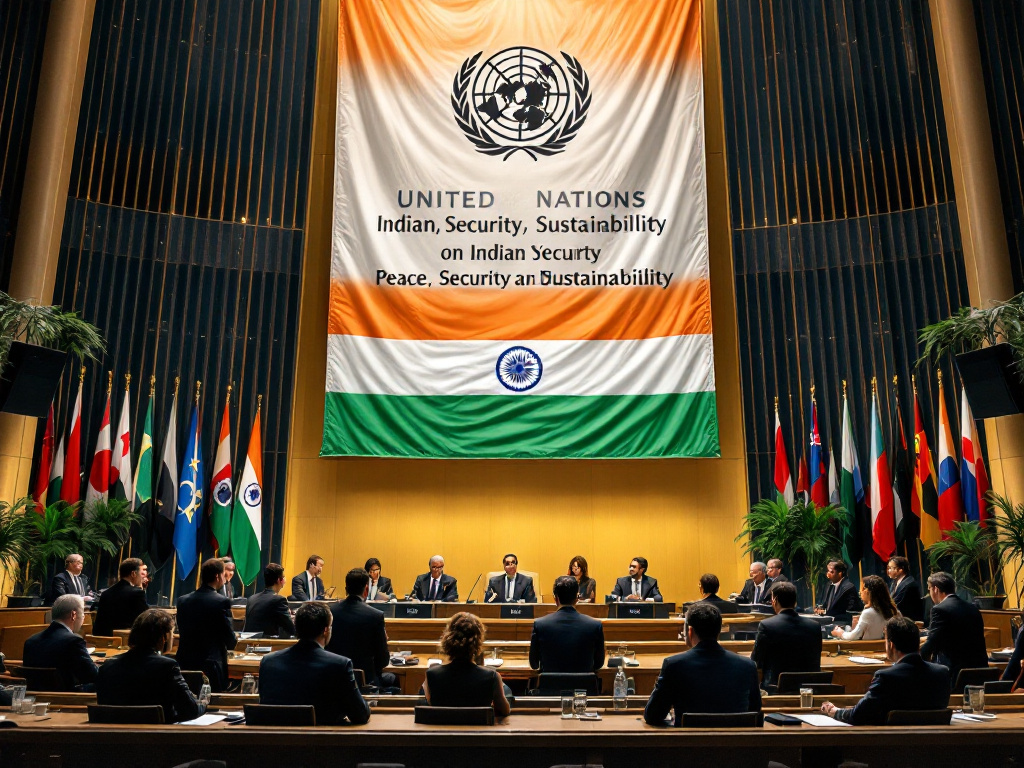
India launched its official campaign named 'SHANTI' on 13 July 2026 for a non-permanent seat on the United Nations Security Council for the 2028-29 term, unveiled by External Affairs Minister S. Jaishankar at the UN headquarters in New York. The campaign highlights India's commitment to peacekeeping, maritime security, terrorism financing control, responsible AI use, sustainable development, and global institutional reforms. India will compete with Tajikistan for the Asia-Pacific seat in June 2027 elections.
On this page
Key Facts
- India officially launched its campaign on 13 July 2026 to secure a non-permanent seat on the United Nations Security Council (UNSC) for the 2028-29 term.
- The campaign is named 'SHANTI', an acronym for Securing Holistic Advancement through Norms, Trust and Integrity.
- India will contest the Asia-Pacific Group's seat against Tajikistan in elections scheduled for June 2027.
- The UNSC consists of 15 members: 5 permanent members (China, France, Russia, the United Kingdom, and the United States) and 10 non-permanent members elected for two-year terms.
- India has served eight terms as a non-permanent member of the UNSC, including the 2021-22 term.
Background & Context
India was a founding member of the United Nations in 1945. It has actively participated in UN peacekeeping missions in Asia, Africa, and the Middle East. India supports reforms in global governance institutions, advocating for increased representation of developing countries in decision-making bodies. The SHANTI framework emphasizes India's commitment to key global issues such as peacekeeping, maritime security, combating terrorism and its financing, responsible use of artificial intelligence, sustainable development, and reforms in global institutions.
Why This Matters for Exams / Exam Relevance
India's bid for a non-permanent seat on the UN Security Council reflects its growing role and aspirations in global governance and international security. Knowledge about the UNSC's structure, India's participation and campaigns, and the SHANTI vision is important for exams focusing on international relations, Indian foreign policy, and world affairs.
Points to Remember
- Campaign launch date: 13 July 2026
- Meaning of SHANTI: Securing Holistic Advancement through Norms, Trust and Integrity
- 2028-29 Asia-Pacific UNSC seat contested by India and Tajikistan
- UNSC composition: 5 permanent and 10 non-permanent members
- India's last term on the UNSC: 2021-22
- Focus areas under SHANTI: peacekeeping, maritime security, counter-terrorism and terrorism financing, responsible AI use, sustainable development, and global institutional reforms
Sources & Further Reading
| Document / Website | Link |
|---|---|
| India launches Shanti campaign for UNSC bid | Open India launches Shanti campaign for UNSC bid ↗www.gktoday.in |
| United Nations Security Council - Structure and Function | Open United Nations Security Council - Structure and Function ↗www.un.org |