
India's First Seizure of Captagon under Operation Ragepill
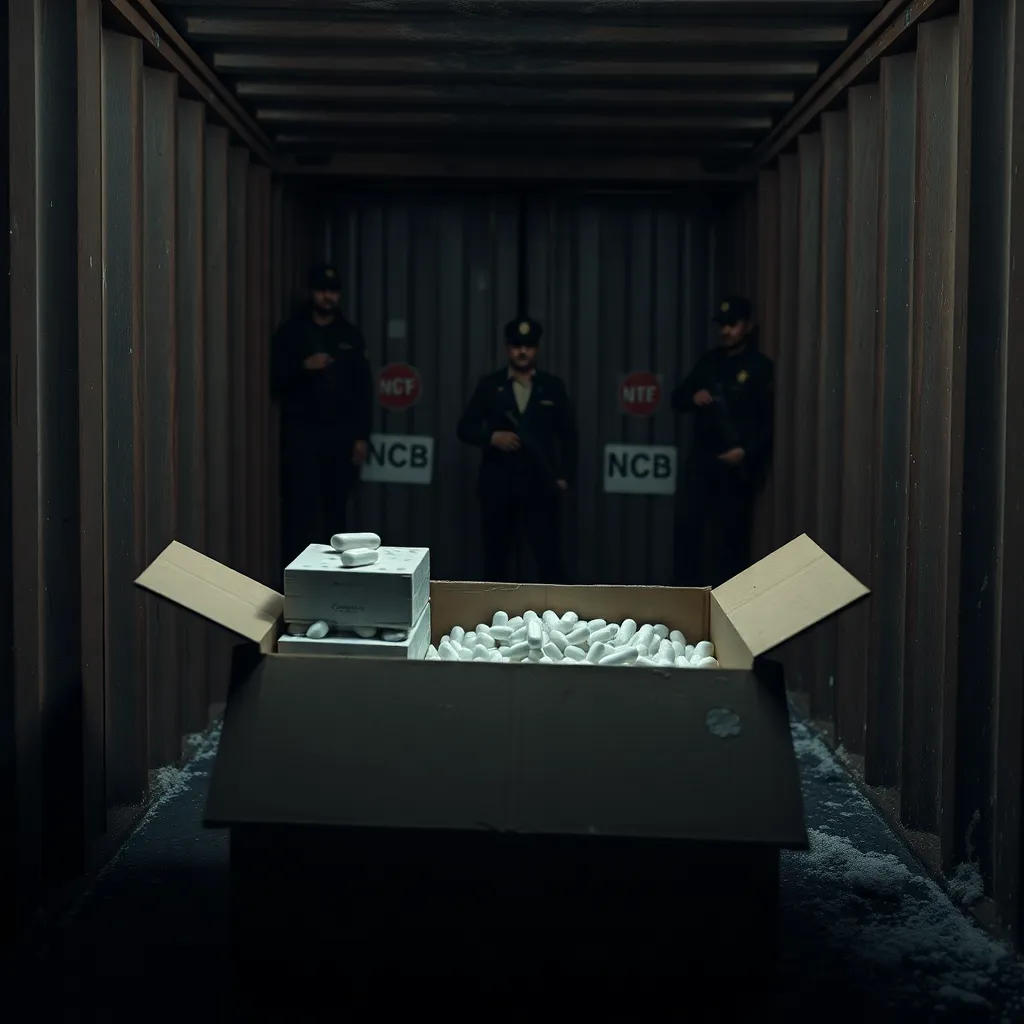
On 16 May 2026, the Narcotics Control Bureau (NCB) launched Operation Ragepill, resulting in the first-ever seizure of approximately 227.7 kg of Captagon tablets and powder in India, valued at ₹182 crore. The consignment was destined for the Middle East, with seizures occurring in Neb Sarai, New Delhi, and Mundra Port, Gujarat. A Syrian national overstaying in India was arrested, highlighting the drug trafficking network exploiting India as a transit route. Captagon, a psychostimulant linked to fenetylline and amphetamine, is commonly abused in West Asia and labeled the "Jihadi Drug" for its use by militant groups.
On this page
Key Facts
- Date of announcement: 16 May 2026
- Operation: Ragepill
- Quantity seized: Approximately 227.7 kg (31.5 kg tablets in Delhi, 196.2 kg powder at Mundra Port)
- Estimated illicit market value: ₹182 crore
- Arrested individual: Alabras Ahmad, a Syrian national overstaying his tourist visa
- Seizure locations: Neb Sarai (New Delhi), Mundra Port (Gujarat)
- Captagon: Synthetic stimulant drug linked to fenetylline and amphetamine
Background & Context
Captagon was developed in the 1960s as a pharmaceutical stimulant but became a banned substance internationally following its addictive properties. It resurfaced as a synthetic psychostimulant commonly abused in West Asia and North Africa, especially by militant and extremist groups who use it to maintain alertness, reduce fatigue, and suppress fear in conflict zones. The illegal manufacture and trafficking of Captagon are linked to transnational narcotics networks that operate extensively across the Middle East and have begun using India as a transit point for exporting the substance, especially to Gulf countries such as Saudi Arabia. The Syndicate involved in the recent Indian seizures had concealed Captagon tablets within exported commercial goods and smuggled powder in declared wool consignments from Syria.
Why This Matters for Exams / Exam Relevance
This operation marks India's first major interception of Captagon, reflecting a significant development in the country's efforts against international narcotics trafficking networks, especially those linked to militancy and global terror funding. The case is relevant for understanding India's drug enforcement framework, including the role of NCB and laws such as the Narcotic Drugs and Psychotropic Substances (NDPS) Act, 1985. It highlights issues relating to transnational crime, border security, drug policy, and India's geostrategic connectivity with West Asia.
Points to Remember
- Operation Ragepill was launched on intelligence leads from a foreign drug enforcement agency targeting Captagon traffickers.
- The consignment consisted of tablets and powder concealed in ordinary export cargo (chapati machines and wool consignments).
- Syria–India–Middle East formed a trafficking route for Captagon.
- Alabras Ahmad entered India on a tourist visa in November 2024 and overstayed.
- The Indian Narcotics Control Bureau coordinates anti-narcotics operations under the Ministry of Home Affairs.
- Captagon abuse is connected to militant activities, leading to its nickname as the “Jihadi Drug.”
- This case exposes emerging drug trafficking challenges linked to organised crime and terror financing.
Sources & Further Reading
| Document / Website | Link |
|---|---|
| India launches Operation Ragepill against Captagon network | Open India launches Operation Ragepill against Captagon network ↗www.gktoday.in |
| What Is 'Jihadi Drug' Captagon - NDTV | Open What Is 'Jihadi Drug' Captagon - NDTV ↗www.ndtv.com |
| NCB makes first-ever seizure of Captagon - The Hindu | Open NCB makes first-ever seizure of Captagon - The Hindu ↗www.thehindu.com |