
India-South Korea Defence Cooperation Expands with K9 Vajra-T Howitzer Programme
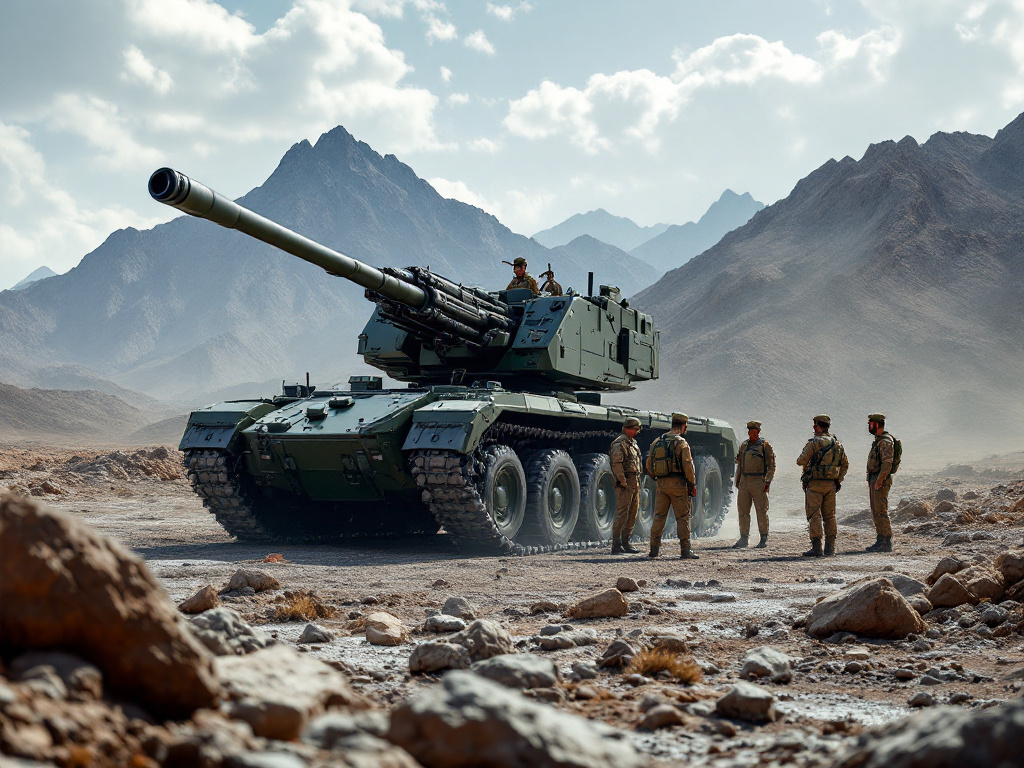
India and South Korea have strengthened their defence cooperation through the K9 Vajra-T self-propelled howitzer programme, an Indian adaptation of South Korea's K9 Thunder 155 mm artillery gun. Manufactured in India at Larsen & Toubro's facility in Hazira, Gujarat, this project emphasizes technology transfer and indigenous production, achieving 50-60% local components. The first contract for 100 guns was signed in 2017 (₹4,500 crore), followed by a second contract in 2024 for another 100 guns (₹7,629 crore), with a potential future order of 300 guns under a ₹23,000 crore modernisation plan. Deployed along northern and western borders including Ladakh, the K9 Vajra-T enhances India's artillery capabilities in high-altitude terrain. Future cooperation aims to include co-development of air defence systems and missiles, demonstrating a deepening strategic partnership.
On this page
Key Facts
- The K9 Vajra-T is an Indian variant of South Korea's K9 Thunder 155 mm self-propelled howitzer.
- Manufactured by Larsen & Toubro (L&T) in Hazira, Gujarat, under a technology transfer agreement with Hanwha Aerospace.
- The system includes around 50-60% indigenous components.
- First contract signed in May 2017 for 100 guns valued at ₹4,500 crore; deliveries completed ahead of schedule by 2021.
- A second contract for 100 additional guns was signed in 2024 for ₹7,629 crore, with local assembly of components supplied by Hanwha Aerospace.
- A possible future order for 300 more guns is pending, linked to a ₹23,000 crore modernisation programme.
- The K9 Vajra-T has been deployed along India's northern and western borders, including high-altitude regions like Ladakh.
- India and South Korea are in discussions to extend defence cooperation to co-development of air defence guns, missile systems, and other military hardware.
Background & Context
The K9 Vajra-T programme represents a successful India-South Korea defence partnership focused on indigenous production and technology transfer, aligning with India's Make in India and self-reliance (Aatmanirbhar Bharat) initiatives. India selected the K9 platform after extensive trials in 2015, outperforming other contenders, such as the Russian 2S19 Msta-S. Larsen & Toubro manufactures the howitzers at the Armoured Systems Complex in Hazira, Gujarat. The programme has enhanced India's self-reliant defence manufacturing capabilities and contributed significantly to its artillery modernization. Deployment of the system along India’s critical high-altitude borders demonstrates its operational suitability for challenging terrains.
Why This Matters for Exams / Exam Relevance
This defence collaboration is an illustrative example of India’s contemporary strategic partnerships and defence industrial policy, emphasizing technology transfer and indigenous manufacturing. Key aspects for examination include contract timelines, manufacturing details, defence procurement processes, and the strategic significance of enhanced artillery capabilities along sensitive borders. The cooperation also highlights evolving bilateral ties and future prospects for missile and air defence co-development, relevant for questions on international defence diplomacy and capability development.
Points to Remember
- K9 Vajra-T is an indigenous adaptation of South Korea's K9 Thunder 155 mm self-propelled howitzer.
- Manufactured by Larsen & Toubro at Hazira, Gujarat, with 50-60% local components.
- First contract in 2017 for 100 guns at ₹4,500 crore; second contract in 2024 for 100 guns at ₹7,629 crore.
- Future procurement may include 300 additional guns under a ₹23,000 crore artillery modernisation programme.
- Deployed along northern (Ladakh) and western borders; designed for high-altitude operations.
- India-South Korea defence collaboration is expanding toward co-development of air defence guns, missile systems, and other advanced military technologies.
Sources & Further Reading
| Document / Website | Link |
|---|---|
| K9 Vajra-T Defence Cooperation - GKToday | Open K9 Vajra-T Defence Cooperation - GKToday ↗www.gktoday.in |
| India Doubles K9 Self-Propelled Howitzer Order From South Korea | Open India Doubles K9 Self-Propelled Howitzer Order From South Korea ↗thedefensepost.com |
| Indian Army Plans Massive K-9 Vajra Expansion With 300 New Howitzers | Open Indian Army Plans Massive K-9 Vajra Expansion With 300 New Howitzers ↗thedefensepost.com |