
Iran-Oman Agreement on Strait of Hormuz Shipping Route
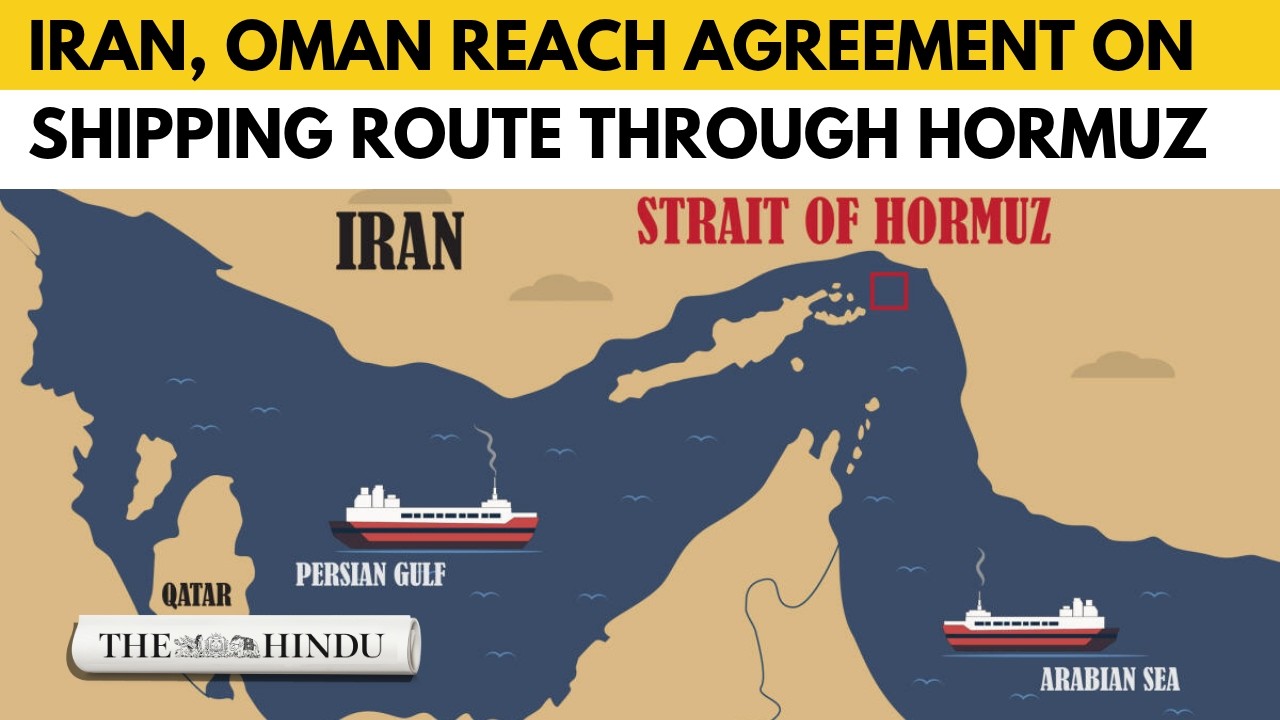
On 15 August 2026, Iran and Oman reached an independent bilateral agreement establishing a shipping route map to ensure safe navigation through the Strait of Hormuz, a vital maritime passage connecting the Persian Gulf with the Gulf of Oman and the Arabian Sea. The agreement focuses on protecting commercial shipping while preserving the sovereignty of both nations, amid ongoing regional maritime security concerns, with full reopening contingent upon lifting of the US naval blockade.
On this page
Key Facts
- The Strait of Hormuz connects the Persian Gulf, Gulf of Oman, and Arabian Sea.
- On 15 August 2026, Iran and Oman concluded an independent bilateral agreement on a shipping route map for the Strait of Hormuz.
- The agreement aims to protect commercial shipping and uphold the sovereignty of both countries.
- The technical plan was developed jointly by Iranian defence, security, environmental authorities and Omani representatives.
- Bilateral negotiations began on 18 June 2026 following a memorandum of understanding on safe navigation routes.
- Iran stated that full reopening and maritime security restoration depend on the United States lifting its naval blockade and ceasing military movements in the area.
- As of 11 August 2026, the International Maritime Organization reported 65 confirmed vessel incidents and 17 seafarer deaths in the Strait of Hormuz and the wider Middle East region.
Background & Context
The Strait of Hormuz is a strategically vital maritime chokepoint between Iran and Oman, serving as the sole sea passage connecting the Persian Gulf to the Gulf of Oman and the Arabian Sea. It is one of the world's most important oil transit routes with heavy commercial and tanker traffic, making maritime security critical in this narrow waterway. Historically, the strait has been a hotspot for geopolitical tensions and security challenges, affecting global energy markets. Cooperation between Iran and Oman, the two coastal states bordering the strait, is crucial for managing safe navigation and maintaining peace in the region. The 2026 agreement follows extensive technical planning and diplomatic negotiations to improve safety and cooperation amid ongoing challenges, including the US naval presence and blockade.
Why This Matters for Exams / Exam Relevance
This development is significant for understanding the geopolitics of West Asia, international maritime law, and energy security. Candidates should remember the following for competitive exams:
- The importance of the Strait of Hormuz as an energy transit chokepoint connecting key bodies of water.
- The bilateral cooperation between Iran and Oman highlighting regional approaches to maritime security.
- The role of memoranda of understanding and their use in diplomatic and operational negotiations.
- The influence of external powers (notably the United States) affecting regional maritime security.
- The International Maritime Organization's role in tracking maritime incidents and contributing to safety regulations.
Points to Remember
- The Strait of Hormuz is critical as approximately one-third of global oil shipments pass through it.
- Iran and Oman reached an independent agreement on 15 August 2026 to establish safe shipping routes and enhance maritime security.
- The agreement was preceded by a memorandum of understanding signed in June 2026 as a diplomatic step.
- Maritime security improvements are linked with broader geopolitical factors, including the US naval blockade.
- The International Maritime Organization reported significant maritime incidents and fatalities, underscoring ongoing security challenges.
Sources & Further Reading
| Document / Website | Link |
|---|---|
| Iran and Oman reach deal on Strait of Hormuz | Open Iran and Oman reach deal on Strait of Hormuz ↗www.gktoday.in |
| Strait of Hormuz - Strategic Importance Explained | Open Strait of Hormuz - Strategic Importance Explained ↗www.cenarios.com |
| International Maritime Organization and Shipping Safety | Open International Maritime Organization and Shipping Safety ↗www.imo.org |