
Kerala Vision 2031: A Roadmap to Becoming India's Most Women-Friendly State
Kerala's United Democratic Front (UDF) government has unveiled Vision 2031, a comprehensive policy roadmap aiming to make Kerala the most women-friendly state in India. It focuses on enhancing women's safety, public transportation, domestic violence prevention, gender budgeting, and women-inclusive tourism. Key features include proposed fast-track trials for crimes against women modeled after Andhra Pradesh's Disha Act, increased women police stations, a Distress Alert App for emergencies, pink night buses, and free travel for women and transgender persons on state buses from June 15, 2026. The Vision also promotes safe travel amenities for women and integrates gender budgeting with a Rs. 5,586.99 crore allocation for 2026-27, part of a Rs. 25,401 crore plan outlay.
On this page
Key Facts
- Kerala's Vision 2031 policy roadmap is proposed by the United Democratic Front (UDF) government to become India's most women-friendly state.
- The Vision includes measures to improve women's safety, public transport, prevention of domestic violence and dowry harassment, gender budgeting, and the promotion of gender-inclusive tourism.
- It proposes legislation inspired by Andhra Pradesh's Disha Act to ensure fast-track trials for specified offences against women. Under Andhra Pradesh's Disha Act (2019), special courts conduct trials within 21 days, expediting justice in cases such as rape and sexual offences.
- Vision 2031 plans to establish additional women police stations and to appoint more female police personnel as Station House Officers to enhance women's safety.
- A Distress Alert App will be introduced for women to alert emergency control rooms during critical situations.
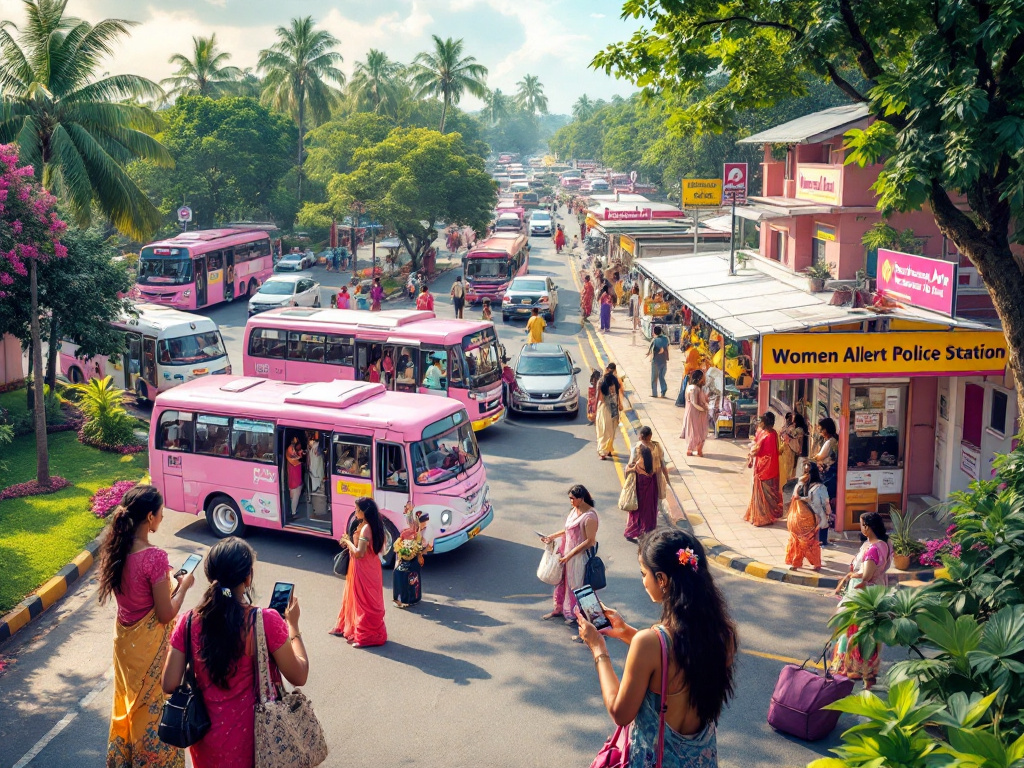
- Pink buses dedicated for women passengers will operate on main routes during nighttime to ensure safer travel.
- The Priyadarshini scheme will provide free travel for women and transgender persons on Kerala State Road Transport Corporation's ordinary buses, effective from June 15, 2026.
- The Avalkoppam initiative aims to prevent domestic violence and dowry harassment.
- Restrooms, eateries, and hostels aimed at women travellers will be developed in major towns to facilitate safe and comfortable travel.
- Kerala launched a gender-inclusive tourism policy in 2022 which has engaged over 17,600 women through women-led tour units, homestays, and souvenir shops.
- The state’s gender budget for 2026-27 is allocated at Rs. 5,586.99 crore, which is part of the total plan outlay of Rs. 25,401 crore, reflecting a significant financial commitment towards gender-sensitive policies.
Background & Context
Kerala’s Vision 2031 builds upon successful women safety models such as Andhra Pradesh's Disha Act, 2019, which mandates completion of investigation within seven days and trial within 14 working days (total 21 days) for specified offences against women, including rape and sexual offences. This legal framework incentivizes expedited justice.
The state's focus extends beyond justice delivery to encompass women’s mobility, safety in public spaces, and economic participation, including strengthening women-led tourism and providing safer travel options. Gender budgeting is aligned with national efforts to address structural gender disparities and allocate funds specifically for women-centered programmes.
Institutions like Kerala State Road Transport Corporation play a key role in implementing transport-related initiatives. The Kerala State Planning Board and Kerala State Women's Development Corporation are instrumental in policy development and implementation.
Why This Matters for Exams / Exam Relevance
Kerala Vision 2031 exemplifies a comprehensive gender-responsive policy approach, combining legal, social, infrastructural, and economic interventions to promote women's safety and empowerment. Understanding this policy is important for current affairs, governance, and social justice topics in competitive exams, especially relating to state government initiatives, women's rights, gender budgeting, and innovative safety measures.
Knowledge of Andhra Pradesh's Disha Act and its impact on legislative reforms in other states enhances understanding of legal frameworks addressing crimes against women. The integration of technology (Distress Alert App), dedicated transport (pink buses), and economic empowerment (gender-inclusive tourism) highlights multi-sectoral strategies.
Points to Remember
- Vision 2031 is proposed by Kerala's UDF government targeting to become the most women-friendly Indian state.
- Inspired by Andhra Pradesh's Disha Act, Vision 2031 proposes fast-tracking trials within 21 days for crimes against women.
- Introduction of more women police stations and female Station House Officers to improve safety.
- Launch of a Distress Alert App for women’s emergency communication.
- Pink buses for women operate on key routes at night to ensure safe travel.
- Priyadarshini scheme provides free bus travel to women and transgender persons from June 15, 2026.
- Avalkoppam initiative aims at preventing domestic violence and dowry harassment.
- Gender-inclusive tourism policy (started 2022) has engaged over 17,600 women in Kerala.
- Kerala’s gender budget for 2026-27 stands at Rs. 5,586.99 crore, part of a Rs. 25,401 crore overall plan.
Sources & Further Reading
| Document / Website | Link |
|---|---|
| Kerala Vision 2031 for Women-Friendly State | Open Kerala Vision 2031 for Women-Friendly State ↗www.gktoday.in |
| Kerala Vision 2031 Comprehensive Policy Document | Open Kerala Vision 2031 Comprehensive Policy Document ↗vision2031.kerala.gov.in |
| Disha Act and Andhra Pradesh’s Fast-Track Trials | Open Disha Act and Andhra Pradesh’s Fast-Track Trials ↗indianexpress.com |
| Gender Budgeting | Mission Shakti | Ministry of Women & Child Development, GOI | Open Gender Budgeting | Mission Shakti | Ministry of Women & Child Development, GOI ↗missionshakti.wcd.gov.in |