
Kumik Declared Ladakh’s First Heritage Village
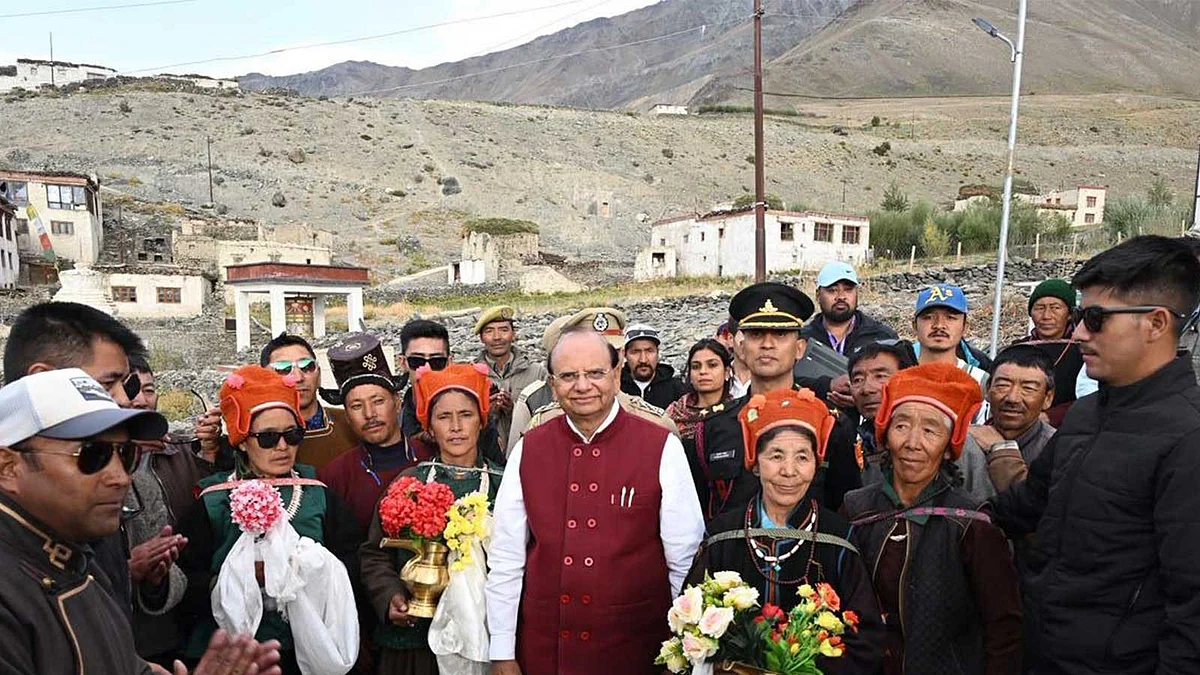
On 15 September 2026, Lieutenant Governor of Ladakh Vinai Kumar Saxena officially declared Kumik village in Zanskar as Ladakh’s first designated Heritage Village. This recognition highlights the village's rich cultural, architectural, and Buddhist textual heritage, including preservation of traditional mud houses, agricultural practices, and precious Kanjur Buddhist manuscripts. The declaration aligns with the Union Government’s vision of 'Vikas Bhi, Virasat Bhi', emphasizing development alongside heritage conservation.
On this page
Key Facts
- Kumik village was declared Ladakh's first Heritage Village on 15 September 2026.
- The declaration was made by Lieutenant Governor Vinai Kumar Saxena during the launch of the Ladakh Zanskar Festival 2026.
- Kumik is located in the high-altitude Zanskar region in Ladakh.
- The village is known for its traditional mud houses, sacred spaces, agricultural practices, and preservation of Buddhist traditions.
- Kumik holds important Buddhist textual heritage including Kanjur manuscripts.
- The designation supports the Union Government's 'Vikas Bhi, Virasat Bhi' vision integrating development and heritage conservation.
Background & Context
A Heritage Village is a settlement recognized for its cultural, architectural, religious, and traditional significance, often preserving vernacular architecture and living cultural traditions. Ladakh became a Union Territory on 31 October 2019 after reorganisation of Jammu and Kashmir.
Zanskar, a remote Himalayan region within Ladakh, has a strong Tibetan Buddhist cultural presence and serves as a centre of faith, scholarship, and manuscript preservation.
Traditional mud architecture in Ladakh uses local materials such as earth, wood, and stone suited for cold desert and high-altitude conditions. Buddhist manuscripts like Kanjur are canonically important texts within Tibetan Buddhism, preserved in monasteries and village collections.
Why This Matters for Exams
The declaration of Kumik as Ladakh’s first Heritage Village is current and relevant for competitive exams covering Indian geography, culture, and government initiatives on heritage conservation and tourism development.
Understanding the cultural significance of Ladakh and its regions like Zanskar helps in comprehending India’s diversity and policies promoting sustainable heritage tourism. This event highlights the integration of cultural preservation with modern development.
Points to Remember
- Kumik village is Ladakh’s first officially designated Heritage Village.
- Official declaration date: 15 September 2026.
- Declared by Lieutenant Governor Vinai Kumar Saxena.
- Kumik located in the Zanskar region of Ladakh.
- Known for traditional mud houses, Buddhist manuscript heritage including Kanjur, and agricultural traditions.
- Reflects the government vision 'Vikas Bhi, Virasat Bhi' combining development with heritage conservation.
Practice MCQs
Question 1
- On what date was Kumik declared Ladakh's first Heritage Village?
- 15 September 2026
- 31 October 2019
- 20 January 2025
- 1 December 2026
Answer: 15 September 2026
Question 2
- In which region is Kumik village located?
- Leh
- Zanskar
- Kashmir Valley
- Sikkim
Answer: Zanskar
Question 3
- Which of the following is NOT a heritage feature of Kumik village?
- Traditional mud houses
- Kanjur Buddhist manuscripts
- Modern picnic spots
- Agricultural practices
Answer: Modern picnic spots
Sources & Further Reading
| Document / Website | Link |
|---|---|
| Kumik Declared Ladakh’s First Heritage Village – GKToday | Open Kumik Declared Ladakh’s First Heritage Village – GKToday ↗www.gktoday.in |
| Kumik in Zanskar declared Ladakh's first-ever 'Heritage Village' | Open Kumik in Zanskar declared Ladakh's first-ever 'Heritage Village' ↗newsable.asianetnews.com |
| Kumik in Zanskar becomes Ladakh’s first Heritage Village | Open Kumik in Zanskar becomes Ladakh’s first Heritage Village ↗earthnewsladakh.com |
| Heritage Tourism in India: Challenges in Preservation and Prospects | Open Heritage Tourism in India: Challenges in Preservation and Prospects ↗ijrar.org |