
Ladakh Initiates Premium Apricot Exports to UAE from July 2026
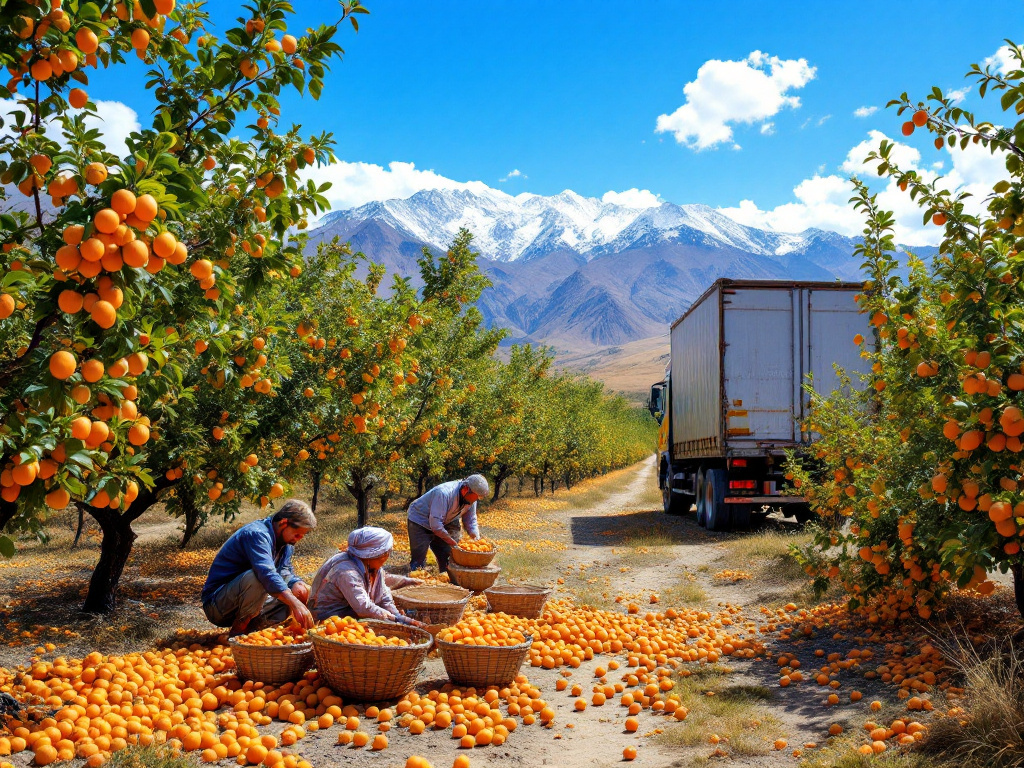
Ladakh is commencing its first large-scale fresh apricot export to the United Arab Emirates on 14 July 2026, marking a significant increase in horticultural exports from the region. This initiative involves the export of 1,000 metric tonnes of apricots, including the GI-tagged Raktsey Karpo variety and the local Halman variety, under a Memorandum of Understanding between the Ladakh administration and Lulu Retail. Supported by Agricultural and Processed Food Products Export Development Authority (APEDA) and the Ministry of Food Processing Industries, this export venture aims to enhance farmers' income and boost Ladakh’s fruit economy through improved procurement, processing, and marketing channels.
On this page
Key Facts
- The first fresh apricot export consignment from Ladakh to the United Arab Emirates (UAE) is scheduled for 14 July 2026.
- The export target is 1,000 metric tonnes of apricots, significantly higher than approximately 1,500 kilograms exported over the previous two years.
- Two apricot varieties included in exports: the Geographical Indication (GI)-tagged Raktsey Karpo variety and the local Halman variety.
- Key stakeholders include the Ladakh administration, Lulu Retail (a UAE-based retail group), APEDA (Agricultural and Processed Food Products Export Development Authority), and the Ministry of Food Processing Industries, Government of India.
- A dedicated cargo aircraft is planned to transport the inaugural consignment from Delhi to the UAE.
- Chief Secretary Ashish Kundra reviewed preparations related to procurement, grading, sorting, packaging, transportation, and export arrangements on 10 July 2026.
Background & Context
Ladakh's cold desert climate and high-altitude terrain provide ideal conditions for cultivating apricots, an important horticultural crop in the region. Apricots have traditionally been cultivated on a smaller scale with limited exports, amounting to about 1,500 kilograms over two years. The agreement signed through a Memorandum of Understanding (MoU) between Ladakh administration and Lulu Retail represents a strategic effort to expand the commercial and international presence of Ladakh's apricot production. APEDA and the Ministry of Food Processing Industries offer regulatory oversight and developmental support, facilitating improvements in procurement, processing, packaging, and export frameworks.
Why This Matters for Exams
This case study has relevance across multiple subjects, including agricultural exports, geographical indication (GI) tagging, government export promotion agencies, public-private partnerships, and regional economic development. Exam candidates should note precise dates (14 July 2026), involved institutions (APEDA, Ministry of Food Processing Industries, Lulu Retail), and indigenous apricot varieties (Raktsey Karpo). This example underscores the Government of India's initiative to boost regional economies by promoting niche agricultural products and fostering international trade linkages.
Points to Remember
- Raktsey Karpo is a GI-tagged apricot variety unique to Ladakh.
- The inaugural large-scale export to UAE is scheduled for 14 July 2026.
- Lulu Retail, headquartered in the UAE, is the key partner handling procurement, processing, packaging, and international marketing.
- APEDA stands for Agricultural and Processed Food Products Export Development Authority, responsible for export promotion.
- The Ministry of Food Processing Industries is the Government of India's central ministry focused on food processing sector development and export facilitation.
- The export volume target of 1,000 metric tonnes represents a significant leap over previous exports of about 1,500 kg in two years, indicating ambitious growth aspirations.
Sources & Further Reading
| Document / Website | Link |
|---|---|
| Ladakh Begins Premium Apricot Exports to UAE | Open Ladakh Begins Premium Apricot Exports to UAE ↗www.gktoday.in |
| GI Tags in India: Importance and Examples | Open GI Tags in India: Importance and Examples ↗www.gktoday.in |
| Role of APEDA in Agricultural Exports | Open Role of APEDA in Agricultural Exports ↗www.gktoday.in |
| Food Processing Industry in India | Open Food Processing Industry in India ↗www.gktoday.in |