
Maharashtra Completes Ground-Truthing of Over 23,400 Wetlands in 2026
Maharashtra has completed physical verification of 23,404 wetlands out of 23,415 identified wetlands by May 19-20, 2026. The remaining 11 wetlands are located in Pune district. This ground-truthing exercise enables the state to initiate notification under the Wetlands (Conservation and Management) Rules, 2017, ensuring legal protection. Maharashtra has the highest number of wetlands in Ahmednagar district (1,596), followed by Nashik and Chandrapur. The National Centre for Sustainable Coastal Management facilitated this exercise. This marks a significant step towards conserving vital wetland ecosystems that support biodiversity and environmental balance in the state.
On this page
Key Facts
- As of 19-20 May 2026, Maharashtra has completed ground-truthing (physical verification) of 23,404 wetlands out of 23,415 identified wetlands.
- The remaining 11 wetlands pending verification are in Pune district.
- Verified wetland maps will be sent to district administrations and the State Wetland Authority to initiate notification under the Wetlands (Conservation and Management) Rules, 2017.
- Ahmednagar district has the highest number of wetlands in Maharashtra, with 1,596 wetlands, followed by Nashik with 1,236 and Chandrapur with 1,231.
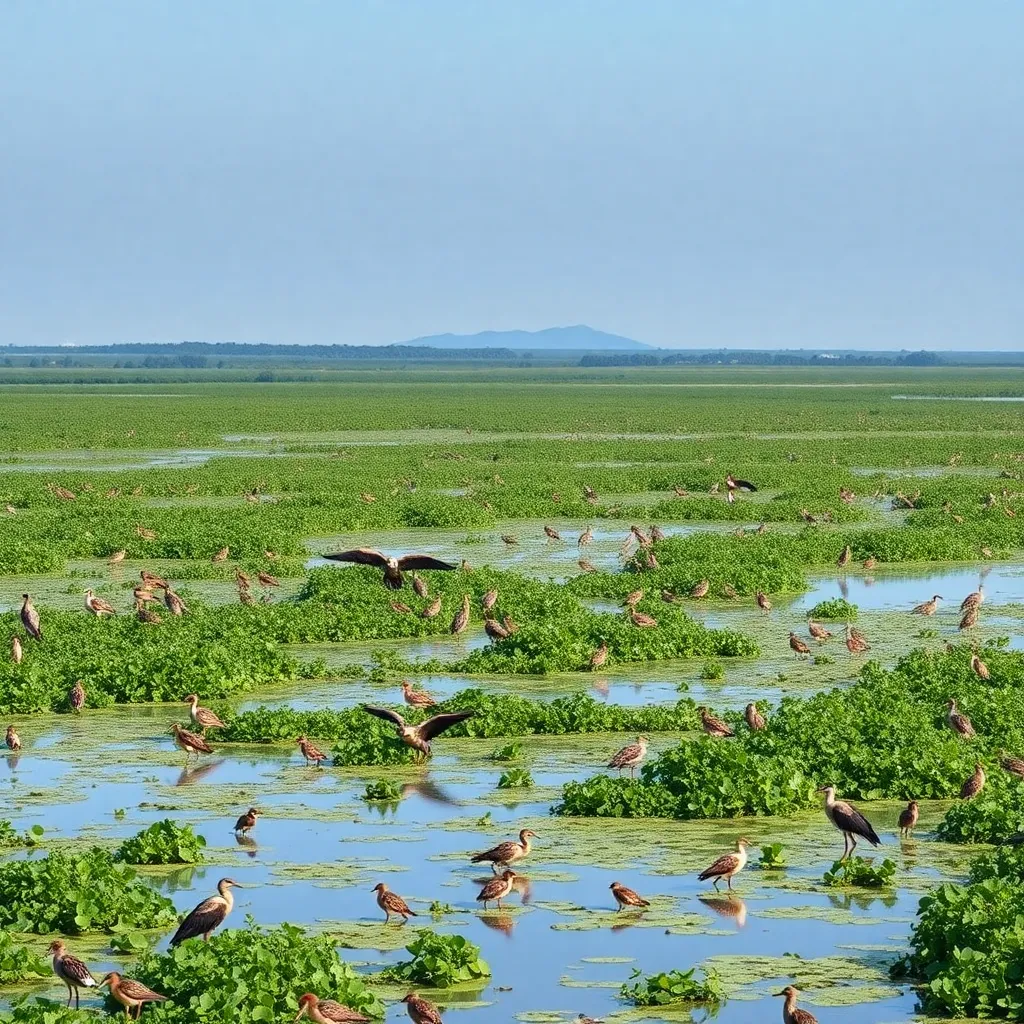
- Wetlands encompass diverse water bodies including lakes, marshes, ponds, mangroves, whether natural or artificial, permanent or temporary, fresh, brackish or saline.
- The National Centre for Sustainable Coastal Management (NCSCM), functioning under the Ministry of Environment, Forest and Climate Change (MoEFCC), facilitated this documentation and ground-truthing exercise.
- Wetland notification is a crucial administrative and legal step required for their conservation and management under the Wetlands (Conservation and Management) Rules, 2017.
Background & Context
Wetlands are ecologically important ecosystems that provide numerous environmental benefits including biodiversity support, water filtration, flood control, and climate regulation. India's National Wetlands Inventory and Assessment (NWIA) involves satellite mapping followed by field verification (ground-truthing) and inventory preparation as part of a nationwide effort to classify and protect wetlands.
Ground-truthing refers to the physical verification of wetland sites identified through remote sensing to confirm their existence, boundaries, and characteristics. This data is critical for preparing wetland notification proposals.
The Wetlands (Conservation and Management) Rules, notified in 2017 under the Environment (Protection) Act, 1986, provide the legal framework for wetland protection in India. State Wetland Authorities coordinate the notification process and oversee conservation measures at the state level.
Maharashtra's comprehensive wetland documentation and verification exercise by the NCSCM is an important step aligning with national mandates and Supreme Court directions to protect these ecosystems.
Why This Matters for Exams / Exam Relevance
This case offers relevant insights into India's environmental governance, laws, and conservation practices, especially for subjects focused on ecology, environmental law, and sustainable development. It demonstrates the role of scientific methods (satellite data and ground-truthing), institutional frameworks (NCSCM, State Wetland Authorities), and legal instruments (Wetlands Rules, 2017) in managing natural resources.
Competitive exam aspirants should note the following for potential questions:
- The definition and components of wetland ecosystems in India.
- Key institutions such as NCSCM and their roles.
- The process and significance of ground-truthing.
- Details of the Wetlands (Conservation and Management) Rules, 2017.
- District-wise wetland distribution in Maharashtra.
- The importance of notification for legal protection.
Points to Remember
- Ground-truthing means the physical site verification of wetlands mapped through satellite remote sensing.
- Wetlands include natural and artificial water bodies such as lakes, marshes, peatlands, ponds, lagoons, mangroves, brackish and saltwater areas with depth not exceeding six meters at low tide.
- The Wetlands (Conservation and Management) Rules, 2017, notified under the Environment (Protection) Act, govern wetland conservation and management in India.
- The National Centre for Sustainable Coastal Management (NCSCM) operates under the MoEFCC and assists states in wetland management, including documentation and ground-truthing.
- Maharashtra has identified 23,415 wetlands, with 23,404 verified so far (as of May 2026), and the remaining 11 wetlands are in Pune district.
- Ahmednagar district has the highest number of wetlands in Maharashtra with 1,596 wetlands.
- Wetland notification is mandatory before wetlands receive formal legal protection under the Wetlands Rules.
Sources & Further Reading
| Document / Website | Link |
|---|---|
| Maharashtra completes documentation of 23,404 wetlands - GKToday | Open Maharashtra completes documentation of 23,404 wetlands - GKToday ↗www.gktoday.in |
| Maharashtra completes documentation of over 23,000 wetlands - The Hindu | Open Maharashtra completes documentation of over 23,000 wetlands - The Hindu ↗www.thehindu.com |
| Wetlands in India - Ministry of Environment, Forest and Climate Change | Open Wetlands in India - Ministry of Environment, Forest and Climate Change ↗www.pib.gov.in |