
Mumbai-Ahmedabad High-Speed Rail (Bullet Train) Project Design Unveiled
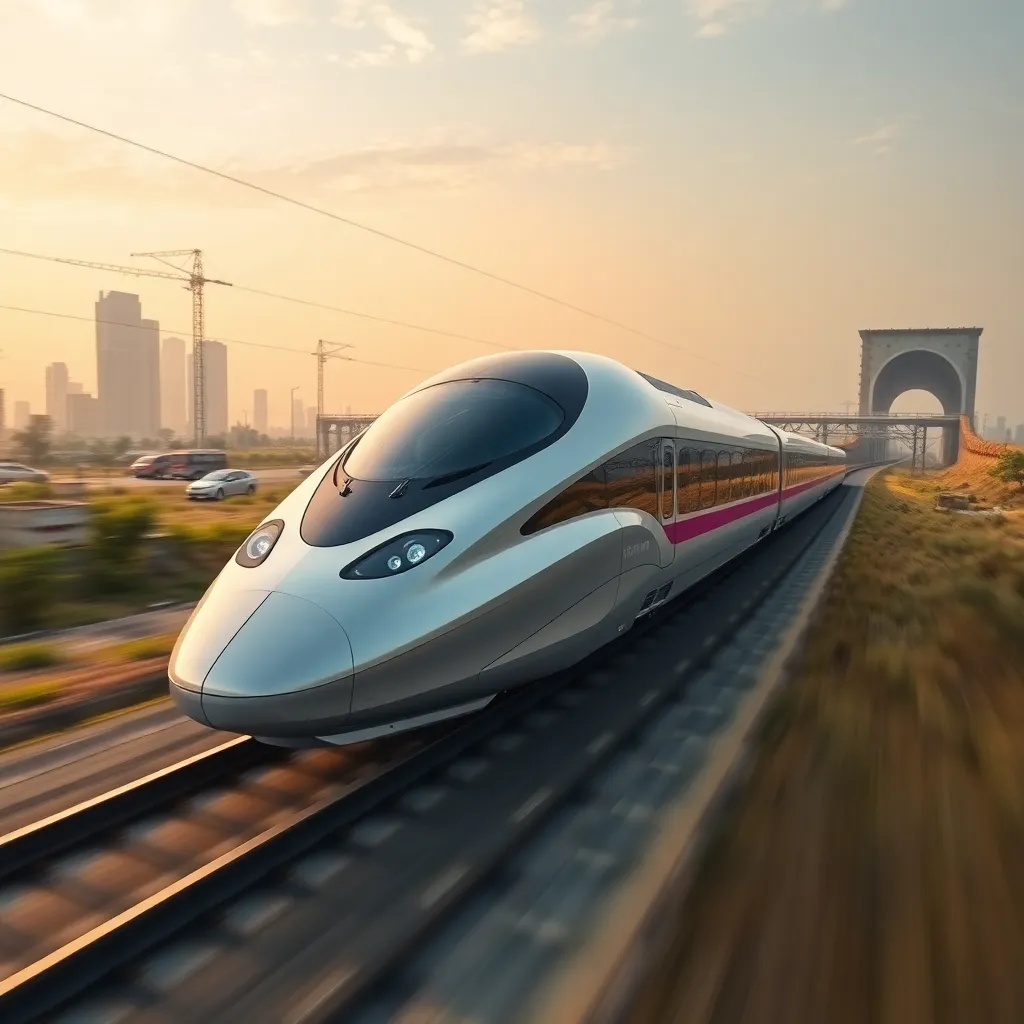
On 18 May 2026, the design of India's first bullet train for the Mumbai-Ahmedabad High-Speed Rail project was unveiled at the Ministry of Railways in New Delhi. This project spans 508 kilometres and connects 12 stations across Maharashtra, Gujarat, and the Union Territory of Dadra and Nagar Haveli. The train design features a streamlined, aerodynamic profile utilizing Japanese Shinkansen technology. Train sets are being developed under the Make in India initiative by Integral Coach Factory, Chennai, and BEML Limited, Bengaluru, with a design operational speed of 280 km/h. The Ahmedabad-Vapi section (~100 km) is targeted for operations by August 2027, with the full corridor expected to be operational by December 2029. The total estimated cost is ₹1.1 lakh crore (~US$15 billion). The project includes a 21 km tunnel in Mumbai, including a 7 km undersea section beneath Thane Creek, India's first undersea rail tunnel.
On this page
Key Facts
- Project length: 508 kilometres
- Number of stations: 12 (Mumbai to Ahmedabad)
- Design operational speed: 280 km/h
- Technology: Japanese Shinkansen
- Manufacturing: Under Make in India program by Integral Coach Factory (Chennai) and BEML Limited (Bengaluru)
- Project cost: Approximately ₹1.1 lakh crore (~US$15 billion)
- First operational section: Ahmedabad to Vapi (~100 km) by August 2027
- Full corridor operational by December 2029
- Includes 21 km tunnel in Mumbai including 7 km undersea tunnel beneath Thane Creek (India's first undersea rail tunnel)
Background & Context
The Mumbai-Ahmedabad High-Speed Rail project, India's first high-speed rail corridor, aims to revolutionize intercity connectivity and economic integration between the major cities of Mumbai and Ahmedabad. Assisted technically and financially by Japan, it adopts the proven Shinkansen technology known globally for safety and efficiency. The project is also a significant step for India's rail infrastructure modernization and self-reliance under the Make in India initiative.
Why This Matters for Exams
The Mumbai-Ahmedabad bullet train project represents a landmark in India's infrastructure development. Key details such as project length, stations, technology used, timelines, and funding sources are often included in current affairs and general studies examinations. Understanding the project's scope, significance, and technical aspects is crucial for exams concerning Indian infrastructure and development.
Points to Remember
- Route passes through Maharashtra, Gujarat, and Dadra & Nagar Haveli Union Territory
- 12 major stations including Bandra Kurla Complex (Mumbai), Thane, Virar, Boisar, Vapi, Bilimora, Surat, Bharuch, Vadodara, Anand, Ahmedabad, and Sabarmati
- Use of Japanese Shinkansen technology ensures safety and speed
- Train sets made in India under 'Make in India' initiative
- Design speed is 280 km/h, with eventual operational speed aiming around this figure
- Undersea tunnel beneath Thane Creek is a pioneering feature in India
- Estimated cost is ₹1.1 lakh crore funded largely by a low-interest Japanese loan
- Phased operationalization: Ahmedabad-Vapi section by August 2027; full corridor by December 2029
Sources & Further Reading
| Document / Website | Link |
|---|---|
| Mumbai-Ahmedabad High-Speed Rail (Bullet Train) Project Updates - Press Information Bureau | Open Mumbai-Ahmedabad High-Speed Rail (Bullet Train) Project Updates - Press Information Bureau ↗www.pib.gov.in |
| India’s First Indigenous Bullet Train Set For 2027 Debut - Outlook Traveller | Open India’s First Indigenous Bullet Train Set For 2027 Debut - Outlook Traveller ↗www.outlooktraveller.com |
| Complete Guide to Mumbai-Ahmedabad High-Speed Rail Project | Open Complete Guide to Mumbai-Ahmedabad High-Speed Rail Project ↗www.godrejproperties.com |